Moroccan Royal Protocol: Where Ceremony Becomes the Memory of a Nation
There are monarchies that survive through institutions. Others endure through political balance. Morocco’s monarchy, however, rests upon something older and far more subtle: the ability to transform history into living ceremony.
To witness a royal procession in Rabat, the solemnity of the Bay‘ah, or the disciplined elegance surrounding an official audience is to understand that Moroccan royal protocol was never designed merely to impress. It was shaped to preserve continuity — the continuity of the State, of dynastic memory and of a civilization that has long cultivated refinement as a form of authority.
In Morocco, ceremony is never entirely detached from emotion.
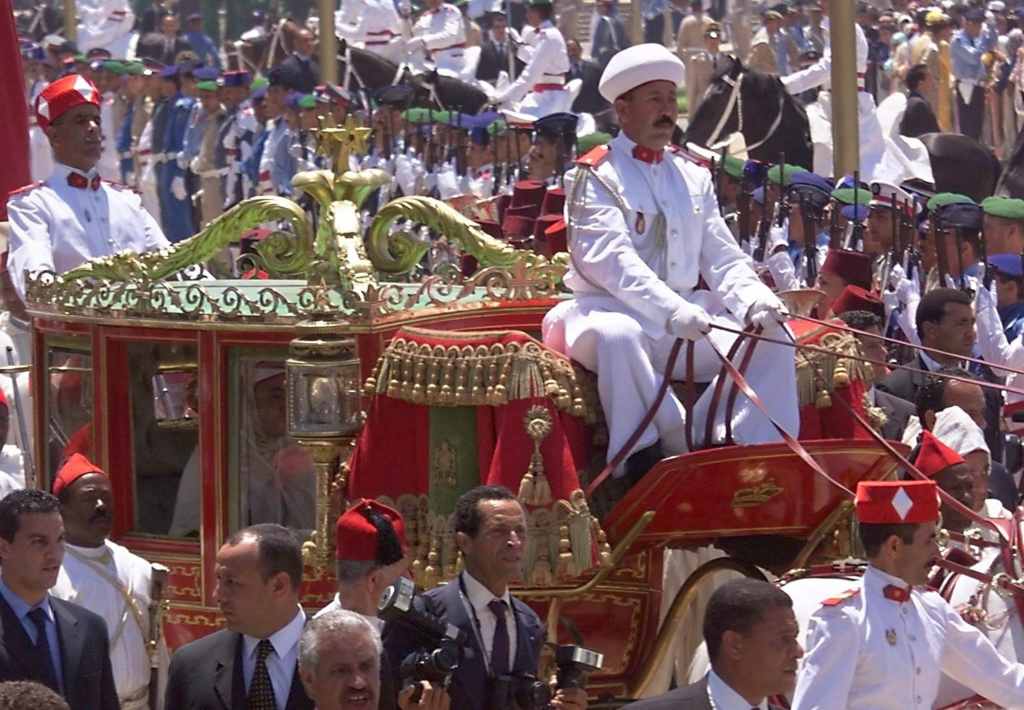
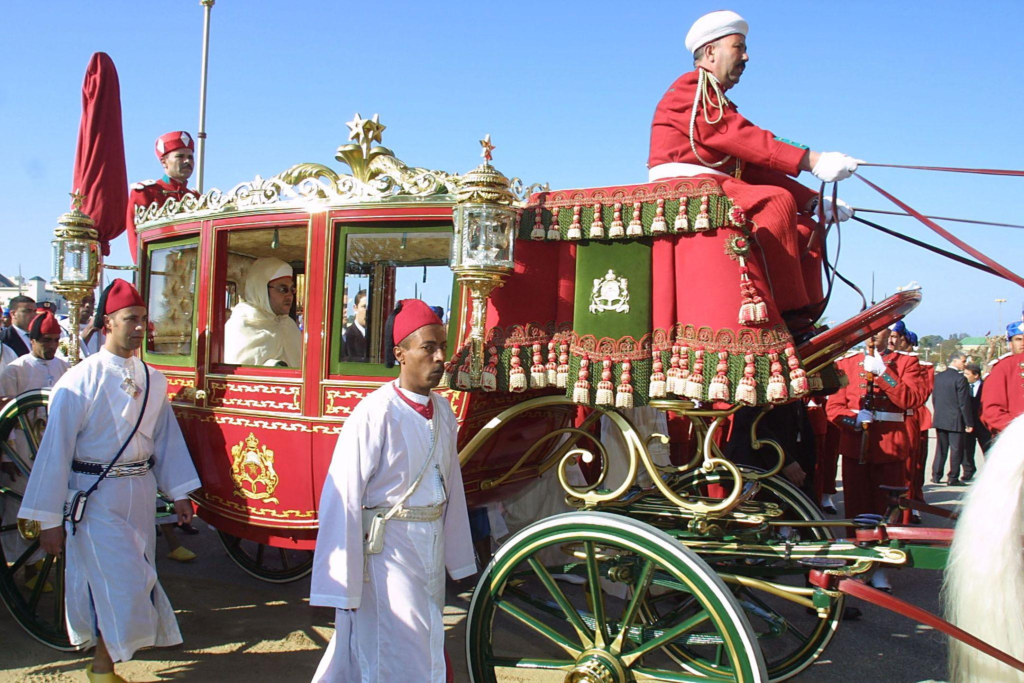
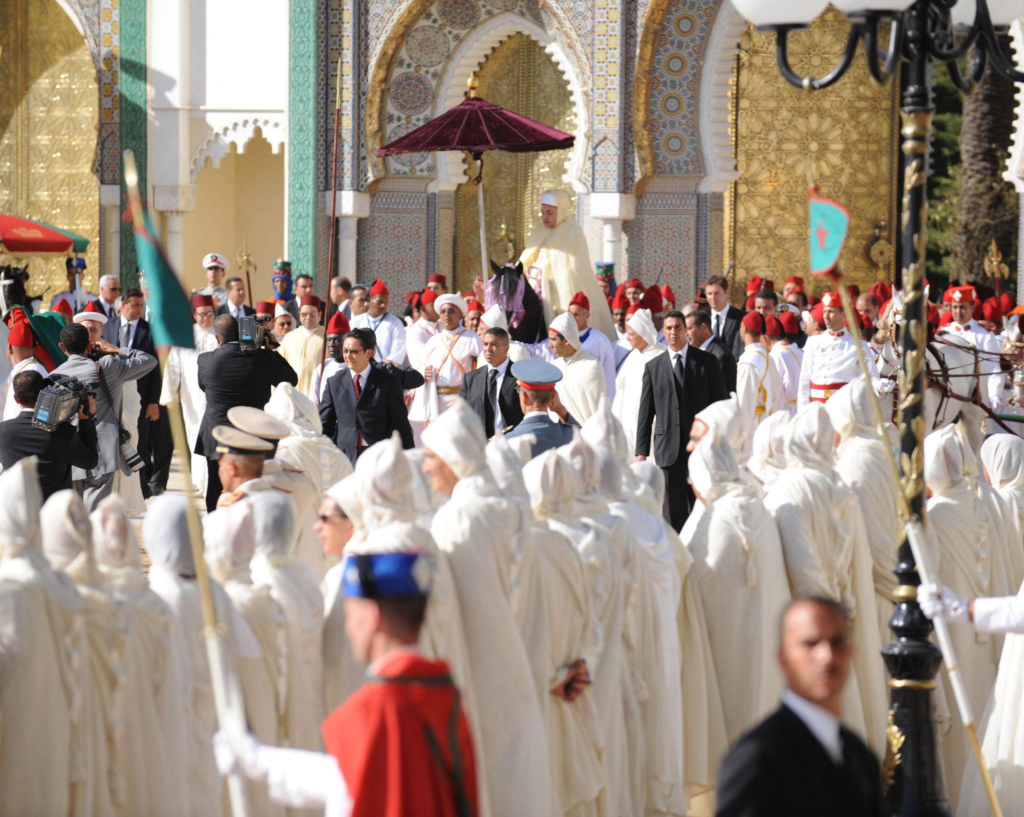
The measured rhythm of mounted guards advancing beneath the sun, the white burnous flowing during official rituals, the silence surrounding royal entrances, the grandeur of imperial palaces, the restrained dignity of traditional greetings — all these elements belong to a carefully preserved language through which the Kingdom expresses permanence.
This explains why Moroccan royal ritual continues to command such fascination. Beneath the elegance lies something deeper than protocol itself: the visible survival of historical memory.
A Monarchy Rooted in Historical Continuity
The Moroccan Throne occupies a singular place within the Arab and Islamic worlds. Across centuries marked by regional upheavals, colonial pressures and political transformation, the monarchy remained one of the principal forces preserving the continuity of the Kingdom.
That continuity did not emerge solely through political authority.
It was cultivated patiently through symbols, rituals and traditions capable of linking generations separated by time yet united through a shared national memory. The Alaouite Dynasty gradually became more than a ruling house. It evolved into a living reference point within Moroccan identity itself.
This is precisely why royal protocol matters.
In Morocco, ceremonial tradition was never conceived as decorative theatre detached from reality. It became one of the ways through which the State projected stability, legitimacy and continuity across generations.
Every major ceremony still carries traces of that historical depth.
The Silent Language of Ceremony
Modern politics often communicates through speeches and media narratives. Monarchies traditionally developed another language entirely: ritual.
Moroccan royal protocol functions through atmosphere as much as through formality. The order of movement, the discipline of ceremonial guards, the arrangement of official receptions and even the architecture surrounding royal appearances all contribute to a carefully orchestrated expression of sovereignty.
Nothing appears hurried.
Nothing appears improvised.
The calm dignity surrounding royal ceremonies is itself part of the message.
Moroccan royal ritual projects the image of an institution anchored deeply enough in history to remain composed amid change. That composure partly explains the emotional resonance these ceremonies continue to generate within Moroccan society.
People are not merely observing protocol.
They are witnessing continuity performed publicly.
The Bay‘ah and the Ritual of Allegiance
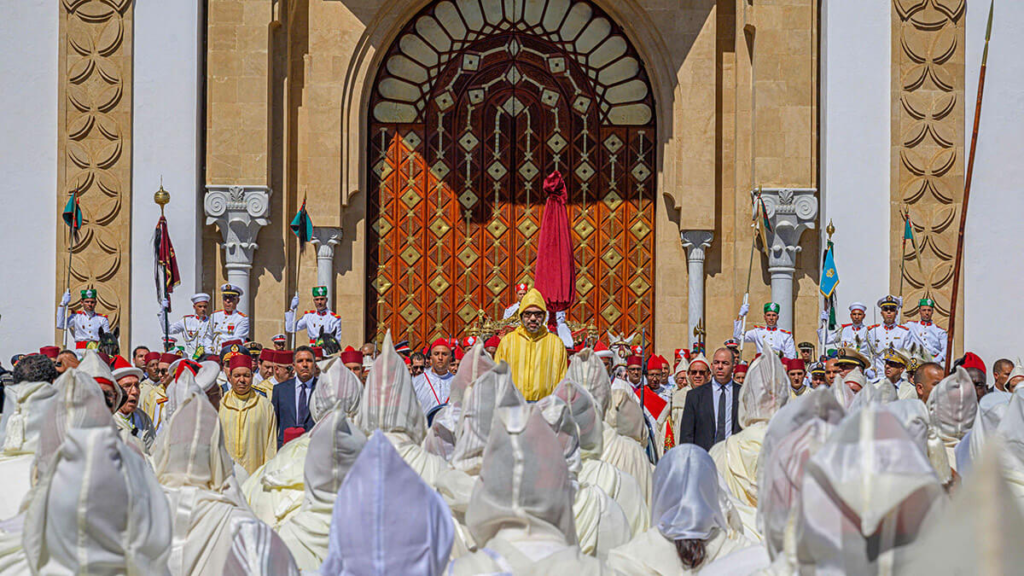
Few ceremonies embody the spirit of Moroccan royal tradition more profoundly than the Bay‘ah.
To foreign observers unfamiliar with Moroccan history, the ceremony may appear solemn, highly codified and almost timeless in its atmosphere. Within Morocco, however, the Bay‘ah carries a far deeper emotional and historical significance.
For centuries, the oath of allegiance represented a symbolic covenant between the Throne and the nation. Over time, it became one of the clearest ceremonial expressions of Morocco’s political and spiritual continuity.
The visual elements matter enormously:
- the mounted ceremonial units,
- the synchronized movement,
- the white traditional garments,
- the hierarchy governing participation,
- the solemnity surrounding the royal presence.
The ceremony transforms allegiance into collective memory.
One senses immediately that these rituals were not invented recently for public spectacle. They belong to a historical continuity patiently preserved across generations.
The Spiritual Dimension of the Moroccan Throne
Part of what distinguishes Moroccan royal protocol from many other monarchies lies in its spiritual foundation.
As Commander of the Faithful, His Majesty the King embodies a role extending beyond constitutional authority alone. The monarchy therefore occupies both political and spiritual space within Moroccan public life.
This dual dimension shapes royal ceremony profoundly.
Religious commemorations, Eid prayers and Quranic ceremonies carry an atmosphere different from ordinary state functions. The monarchy appears not simply as political leadership, but as guardian of a spiritual and historical continuity deeply embedded within the identity of the Kingdom.
In Morocco, religion and ceremony were never entirely separated from statehood.
That fusion contributes greatly to the dignity and emotional depth characterizing royal ritual.
Royal Processions and the Art of Presence
Moroccan royal processions possess a distinctive atmosphere difficult to replicate elsewhere.
The spectacle is undeniably majestic: mounted guards in traditional uniforms, ceremonial cavalry formations, disciplined movement unfolding against the backdrop of imperial architecture. Yet what leaves the strongest impression is often not grandeur alone.
It is composure.
The processions move with deliberate calm, almost untouched by the agitation of contemporary political life. One has the sense of witnessing a ritual refined slowly across centuries rather than designed for immediate effect.
The monarchy understands something essential about ceremony: dignity requires rhythm.
The measured pace of royal appearances allows the symbolism itself to breathe. Through repetition and discipline, the procession becomes more than movement. It becomes a visual affirmation of continuity.
The Palace as a Space of Memory
Moroccan royal palaces are not merely residences of power. They are spaces where architecture, ceremony and historical memory converge.
The carved cedarwood, intricate zellige mosaics, monumental gates and Andalusian influences all contribute to an atmosphere intended to inspire both refinement and reverence. Within these spaces, protocol unfolds with extraordinary precision.
Official audiences follow carefully maintained traditions:
- the order of entrance,
- the positioning of dignitaries,
- the sequence of greetings,
- the balance between formality and restraint.
The palace thereby becomes something larger than architecture itself.
It becomes the physical expression of continuity.
One immediately senses that these spaces were designed not merely to impress visitors, but to embody the permanence of the State.
Elegance as a Form of Sovereignty
Moroccan royal protocol also reflects a remarkably refined culture of elegance.
Traditional attire remains central to ceremonial life because clothing itself carries historical meaning. The Moroccan caftan, the burnous and the ceremonial djellaba all communicate continuity with a civilizational heritage rooted deeply in Moroccan identity.
Yet elegance within royal culture is never ostentatious for its own sake.
Its purpose is harmony.
Colors, fabrics, posture and ceremonial gestures all contribute to an atmosphere of measured dignity where refinement becomes inseparable from authority itself.
This is one of the monarchy’s most subtle strengths: the ability to project prestige without theatrical excess.
Royal Diplomacy and the Prestige of Ritual
Moroccan royal protocol also plays an important diplomatic role internationally.
Foreign leaders received within the Kingdom often encounter a ceremonial culture balancing historical depth with contemporary sophistication. Official receptions and royal audiences project an image of Morocco that is simultaneously modern and deeply anchored in its traditions.
This balance matters greatly.
In international diplomacy, ceremony often communicates what political language cannot fully express. Through its protocol, Morocco projects stability, continuity and sovereign confidence without needing to state these qualities explicitly.
The elegance of the ritual becomes the message itself.
Between Tradition and Modernity
Like every historical monarchy, Morocco’s royal institution faces the challenge of adapting to a rapidly changing world while preserving the symbolic depth that gives it meaning.
Too much rigidity risks creating distance. Excessive informality risks weakening the aura of continuity surrounding the Throne.
The Moroccan monarchy has largely navigated this balance with remarkable subtlety. Royal ceremonies continue evolving gradually while preserving their essential spirit.
This measured adaptation explains why the institution continues to resonate across generations. Younger Moroccans may inhabit a profoundly modern world, yet royal ritual still retains emotional significance because it connects the present to something historically deeper than immediate political life.
The Enduring Power of Moroccan Royal Ritual
Ultimately, the fascination surrounding Moroccan royal protocol emerges from something profoundly human.
Modern societies change rapidly. Political systems evolve. Public attention fragments constantly. Yet people continue searching for symbols capable of expressing continuity and collective memory.
Moroccan royal ceremony answers that need through ritual.
The processions, the palaces, the disciplined etiquette, the spiritual symbolism and the solemn beauty of official ceremonies all contribute to a larger narrative: the idea that the Kingdom remains connected to its historical foundations while continuing to move forward.
That is why Moroccan royal protocol continues to command such respect.
It does not merely preserve tradition.
It preserves the visible memory of the nation itself.
Major Rituals of Moroccan Royal Protocol and Their Historical Foundations
Moroccan royal protocol is built upon a series of ceremonies and symbolic rituals whose origins stretch across centuries of dynastic, religious and state tradition. These rituals continue to shape the ceremonial identity of the Kingdom today.
1. The Bay‘ah Ceremony
The Oath of Allegiance to the King
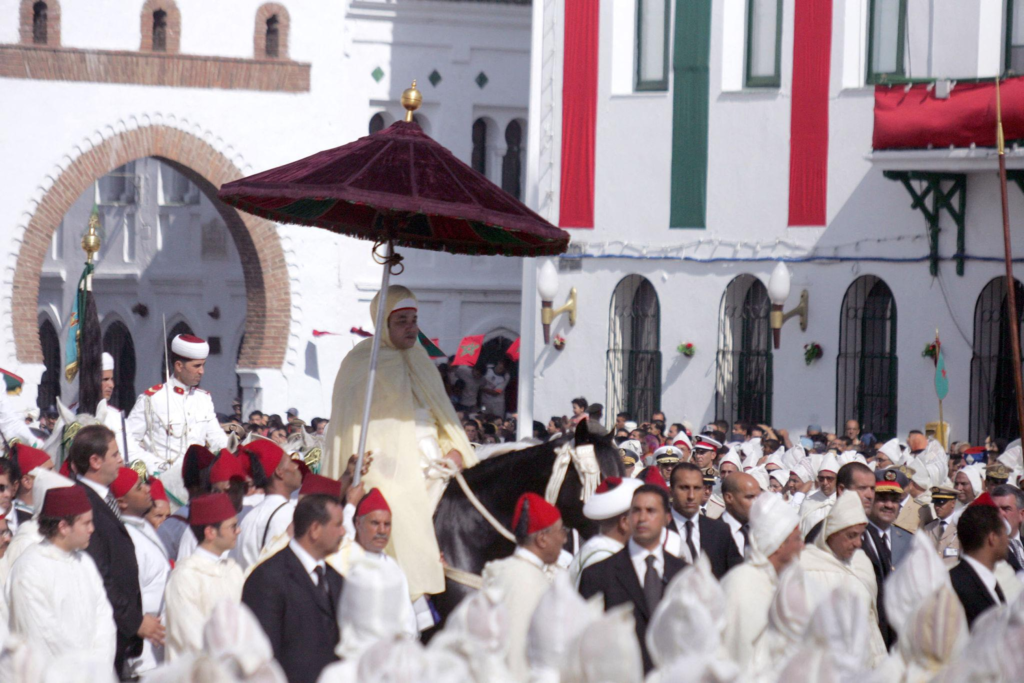
The Bay‘ah remains the most emblematic ritual of Moroccan royal protocol. During this ceremony, representatives of the nation renew their oath of allegiance to His Majesty the King.
Historical roots
The ritual originates in classical Islamic political tradition and was gradually institutionalized within Moroccan dynastic culture, particularly under the Saadian and Alaouite dynasties. The practice reflects the symbolic covenant between sovereign and nation.
Symbolic elements
- mounted ceremonial guards,
- white burnous garments,
- synchronized salutes,
- hierarchical positioning,
- solemn acclamations of loyalty.
Historical proof
Historical studies trace the modern ceremonial form of the Bay‘ah to traditions established under Sultan Ahmad al-Mansur in the sixteenth century.
2. Throne Day Celebrations
The Ritual of Dynastic Continuity
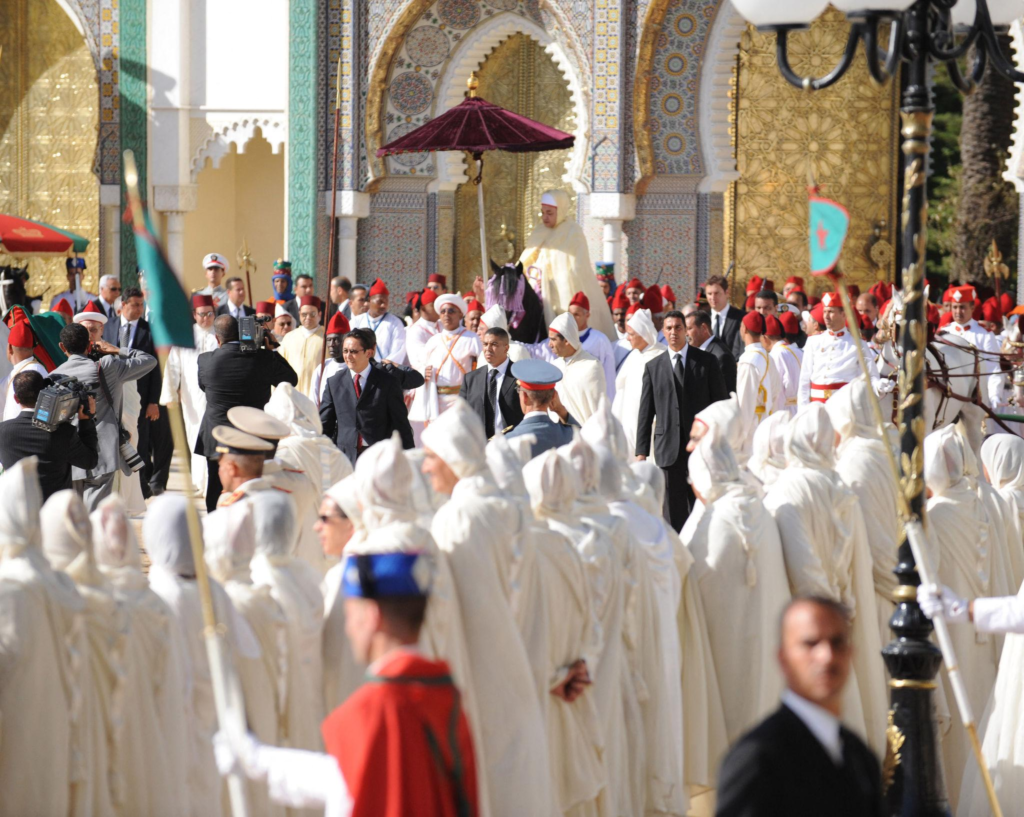
Every year, Morocco celebrates Throne Day, commemorating the accession of the sovereign to the Throne.
Historical roots
The modern national celebration began during the reign of Sultan Mohammed V in the 1930s and evolved into one of the Kingdom’s principal ceremonial events.
Main rituals
- royal speeches,
- military ceremonies,
- official receptions,
- royal pardons,
- allegiance ceremonies,
- state decorations.
Historical proof
Official Moroccan institutions and historical records identify Throne Day as a central symbol of continuity between the monarchy and the Moroccan nation.
3. The King as Commander of the Faithful
Spiritual Authority Within Royal Ceremony
One of the deepest foundations of Moroccan royal protocol lies in the sovereign’s religious role as Amir al-Mu’minin — Commander of the Faithful.
Historical roots
This tradition emerged from the historical relationship between Sharifian dynasties and Islamic legitimacy in Morocco. The Alaouite monarchy consolidated this spiritual dimension over centuries. (مؤسسة محمد السادس للعلماء الأفارقة)
Ceremonial manifestations
- Eid prayers,
- Quranic ceremonies,
- religious commemorations,
- Friday prayers,
- appearances during sacred occasions.
Historical proof
Religious and constitutional references continue to affirm the sovereign’s dual political and spiritual role. (مؤسسة محمد السادس للعلماء الأفارقة)
4. Royal Processions
Ceremony in Motion
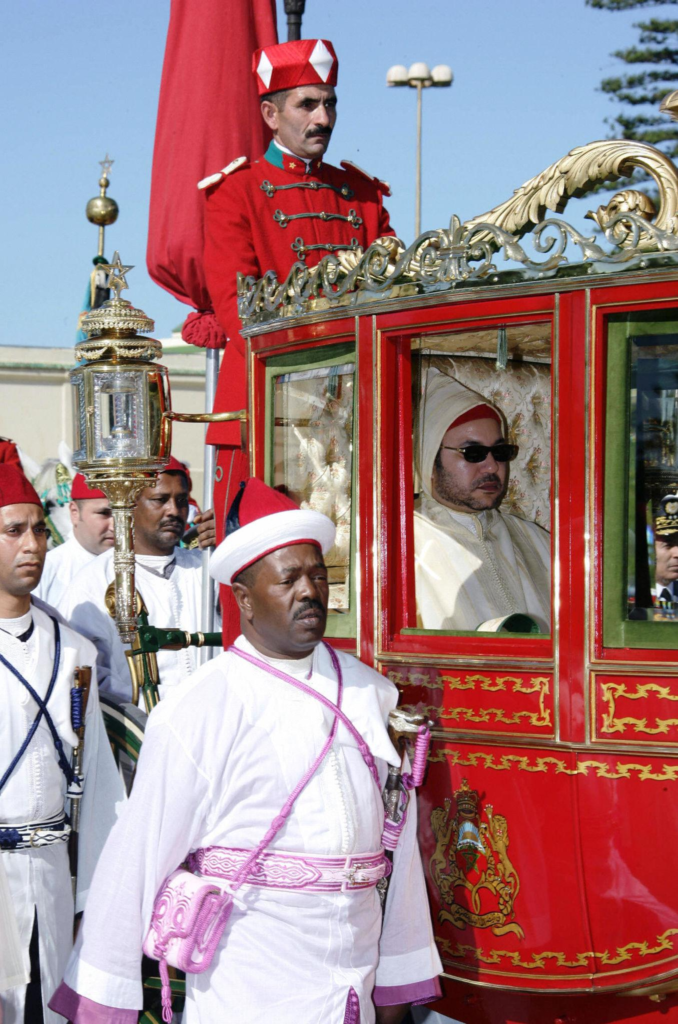
Royal processions remain among the most visually striking rituals of Moroccan monarchy.
Historical roots
These processions descend from imperial court traditions developed across the great Moroccan dynasties, particularly during periods when royal appearances symbolized both military and spiritual authority.
Ritual elements
- mounted cavalry,
- ceremonial horses,
- traditional guards,
- embroidered banners,
- disciplined formations.
Historical proof
The continuity of these ceremonial processions remains visible during Throne Day celebrations and major state ceremonies broadcast officially each year.
5. Royal Audiences
The Ritual of Presence and Authority
The royal audience (Audience Royale) represents one of the oldest forms of court ceremony in Morocco.
Historical roots
The practice derives from classical Islamic and Maghrebi court traditions where access to the sovereign followed precise ceremonial etiquette.
Ritual elements
- hierarchical entry order,
- formal greetings,
- ceremonial seating,
- controlled atmosphere,
- palace etiquette.
Historical proof
Historical descriptions of the Moroccan Makhzen emphasize the importance of ceremonial hierarchy surrounding the Sultan and later the King.
6. State Banquets and Diplomatic Receptions
Protocol as Diplomacy
Royal state dinners continue to play an important role in Moroccan diplomacy.
Historical roots
These ceremonies combine Moroccan court tradition with modern diplomatic protocol inherited partly from nineteenth- and twentieth-century statecraft.
Ritual elements
- ceremonial table arrangements,
- diplomatic hierarchy,
- traditional Moroccan refinement,
- symbolic hospitality,
- formal attire.
Historical proof
Official royal receptions for foreign dignitaries continue to follow highly codified ceremonial structures.
7. The Royal Palace Ceremony
Architecture as Protocol
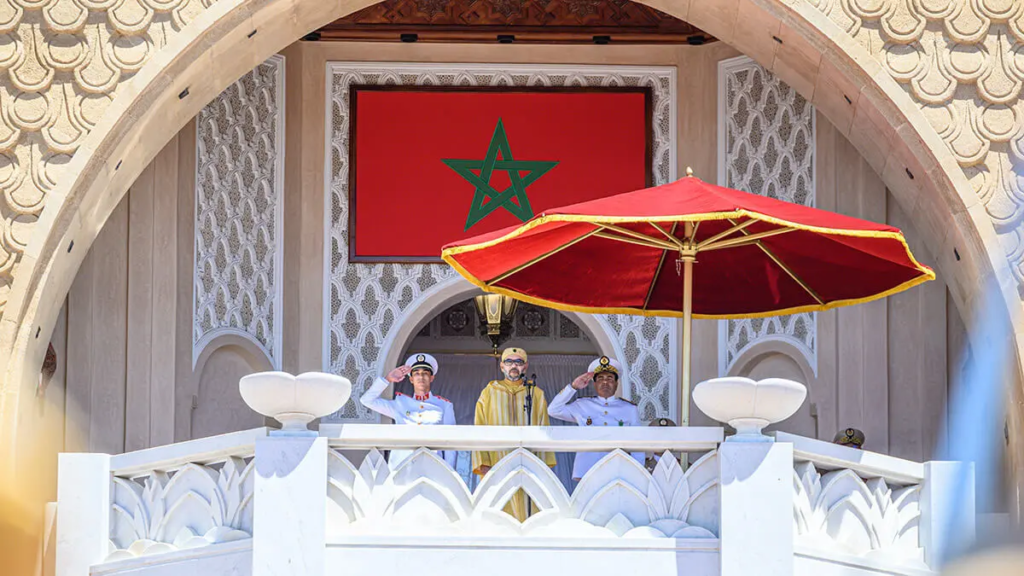
Moroccan royal palaces themselves participate in ceremonial tradition.
Historical roots
Imperial Moroccan architecture historically functioned as a visual extension of sovereignty and dynastic legitimacy.
Ritual elements
- monumental gates,
- zellige mosaics,
- ceremonial courtyards,
- throne halls,
- Andalusian-inspired décor.
Historical proof
The ceremonial use of palace architecture remains central to official royal receptions and state occasions today.
8. Military Rituals and Royal Guards
The Monarchy and Ceremonial Discipline
Military symbolism occupies a major place within Moroccan royal protocol.
Historical roots
Historically, loyalty of military and tribal elites formed one of the foundations of royal authority in Morocco.
Ritual elements
- ceremonial salutes,
- royal guards,
- mounted military escorts,
- official parades,
- formal inspections.
Historical proof
Military ceremonies remain integral to Throne Day celebrations and major state events.
9. Royal Decorations and Wissams
Ceremony of Recognition
Royal decorations such as the Order of the Throne and the Ouissam Alaouite form part of Morocco’s ceremonial culture.
Historical roots
These distinctions emerged formally during the twentieth century while drawing upon older dynastic traditions of royal recognition and prestige.
Ritual elements
- official decoration ceremonies,
- royal recognition,
- military and civil honors,
- ceremonial insignia.
Historical proof
The Orders remain active state distinctions awarded directly by the King.
The Deeper Meaning Behind Moroccan Royal Ritual
Moroccan royal protocol survives because it performs a function extending beyond ceremony itself.
These rituals:
- preserve historical continuity,
- reinforce national identity,
- embody dynastic legitimacy,
- connect political authority with spiritual symbolism,
- transform history into visible public experience.
In Morocco, protocol was never conceived merely as etiquette.
It became the ceremonial language through which the Kingdom expresses permanence across generations.