Board of Peace vs the United Nations
Speed, legitimacy, and the battle over who gets to manage peace
The international system was built to prevent the world from slipping back into catastrophe. After 1945, the United Nations became the architecture of that promise: collective security, legal legitimacy, universal membership, and a diplomatic language meant to hold even rivals inside the same room.
But the world that shaped the UN is not the world currently facing wars that spill across borders through finance, cyber pressure, proxy dynamics, migration shocks, and climate stress. In that environment, proposals that promise faster action tend to gain oxygen quickly.
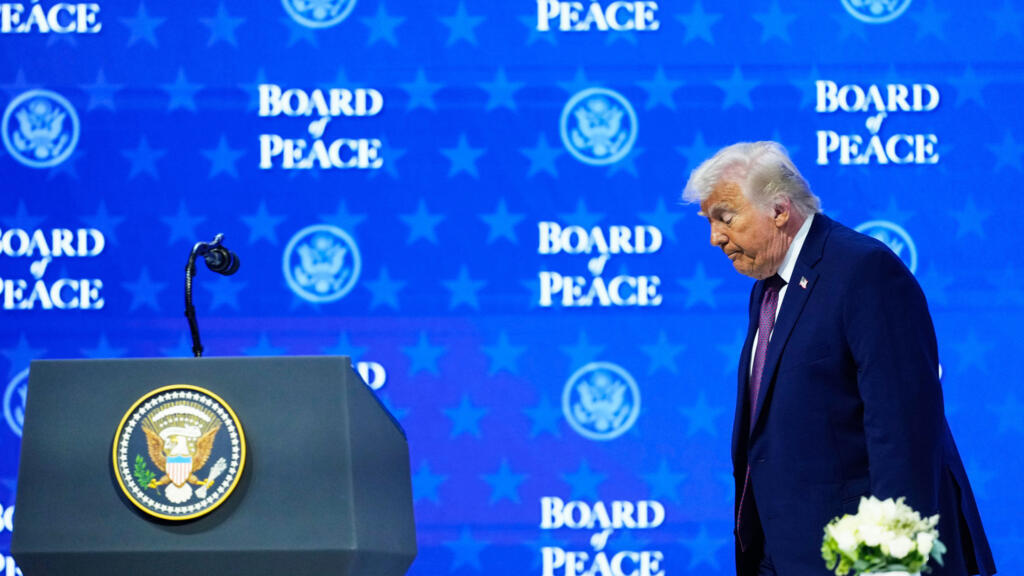
That is the context in which the Board of Peace arrived in early 2026, tied first to Gaza reconstruction and transitional governance, and then framed as a model that could scale beyond a single crisis. Whether one sees it as bold or alarming, the idea forces a sharper question than most diplomatic debates usually allow:
Peace is not only about what works. It is also about who has the right to decide.
The Board of Peace in plain terms
The Board of Peace has been presented as a coalition-led mechanism designed to move faster than traditional multilateral bodies. Its logic is managerial and operational: assemble willing states, raise large funding commitments, create a decision channel that is not slowed by endless procedure, and push reconstruction and stabilization forward with a single command structure.
Several reported design elements define its character:
- A leadership-centered structure, rather than a dispersed institutional system
- Membership shaped by participation and funding, rather than universal entry
- A mission-first posture, starting with Gaza, then extending its ambition outward
- Shorter decision cycles, built for execution, not prolonged consensus-building
In other words, it resembles a task force with global branding more than it resembles a treaty-based institution.
That difference matters, because institutions do not just coordinate action. They certify legitimacy.
The membership map tells its own story
Any new international body reveals its identity by who joins, who refuses, and who stays cautiously in the middle.
Reports around the Board of Peace describe three visible categories:
Members willing to sign on
A set of states across the Middle East and other regions were listed as founding participants, with particular visibility among countries that value pragmatic, deal-oriented diplomacy and are comfortable with coalition formats.
Major powers and Western blocs that did not join
Several Western governments and major non-Western powers were reported as declining membership, often signaling that a crisis framework of this scale should remain anchored in the UN system rather than moving into an initiative-led structure.
Observers who keep a foot in the room
The observer lane is the most revealing category. It suggests diplomatic caution: monitoring, attending, gathering intelligence, keeping lines open—without making the political choice that membership implies.
This split points to a world where alignment is less binary than it looks. The same state can want the benefits of speed without endorsing the philosophy behind the mechanism.
The real comparison is not bureaucratic
At first glance, comparing the Board of Peace to the United Nations can look like another argument about efficiency. The UN is often slow; the Board claims it will be fast. That frame is too shallow.
The deeper contrast is architectural.
United Nations
- Built on international law and sovereign equality
- Gains authority from near-universal membership
- Moves through formal mandates and institutions
- Pays a price in speed because legitimacy is procedural
Board of Peace
- Built on coalition capacity and executive direction
- Gains authority from participation and funding
- Moves through a mission-driven chain of command
- Pays a price in legitimacy because membership is selective
One system is a constitution-like framework for global order. The other is a purpose-built instrument designed to deliver outcomes.
Speed is not neutral
Fast action can save lives. It can also lock in political realities before they are debated.
That is why the Board of Peace raises immediate controversy. A mechanism that reconstructs a territory, governs a transition, or directs a post-war architecture is not merely “helping.” It is shaping sovereignty, recognition, and future power balances.
The UN is designed to slow that down, sometimes painfully so, because it tries to make global decisions appear as something more than the will of the strongest actors.
The Board model, by contrast, treats delay as a risk to be minimized. It approaches peace as a project to be managed.
Both instincts have logic. Both carry danger.
Legitimacy is the currency the UN was built to protect
The UN’s legitimacy is not a slogan. It is a structural asset.
- It allows weak states to sit at the same formal table as strong ones.
- It provides legal language that can outlast elections and political cycles.
- It anchors humanitarian action, monitoring mechanisms, and mandates inside internationally recognized frameworks.
- It constrains unilateral ambition, even if imperfectly.
The UN’s greatest frustration is also its greatest function: it is designed to be hard to capture.
That is why critics of the Board of Peace worry about precedent. A structure that concentrates direction in a narrow coalition can be efficient, but it can also become a template for bypassing universality whenever universality becomes inconvenient.
The Board of Peace reflects a different philosophy of order
The Board of Peace, as reported and presented, carries a modern managerial worldview:
- Build a coalition of the willing
- Tie influence to contribution
- Set measurable targets
- Deliver visible results
- Treat peace as stabilization plus reconstruction
In this worldview, legitimacy is earned through performance. If roads are rebuilt, services restored, and violence reduced, then the model claims moral weight.
The criticism is equally modern: performance is not the same as consent. Rebuilding can still be domination if the governed are not genuinely represented.
This is why the debate is not just policy. It is political theory.
Gaza is the test case, but the stakes are global
Even if the Board of Peace remained limited to one crisis, its existence would still matter because it introduces a competing template.
If it expands, it becomes more than an experiment. It becomes a signal that global governance is shifting from universal institutions to modular coalitions—flexible, fast, and deeply contested.
Three futures become plausible:
Complement model
The Board operates as an implementation engine while the UN remains the legal umbrella. This is the least disruptive path and the one most compatible with international stability.
Parallel model
The Board becomes an alternative arena, used when UN processes stall or when powerful actors prefer fewer constraints.
Precedent model
Other powers create their own boards for other regions, normalizing a world of competing peace architectures.
That last scenario is the most destabilizing, because it turns peace governance into geopolitics by design.
What this argument is really about
The conflict between these models comes down to one question that is uncomfortable precisely because it is so old:
Is peace a legal order, or is peace a managed outcome?
The United Nations answers with law, universality, and procedure.
The Board of Peace answers with execution, funding, and concentrated leadership.
Neither side owns the moral high ground by default. A slow legitimacy can fail real people in real time. A fast coalition can create stability that is not truly peace.
The world is watching which trade-off the international system will tolerate.
The Board of Peace vs the United Nations is not merely a comparison of institutions. It is a referendum on the future of global authority.
The UN trades speed for legitimacy. The Board trades universality for execution—designed to move quickly, even if that means choosing a narrower circle.
The decisive question is not whether peace should be faster. It is whether the world can accept a new structure that moves quickly while still being seen as rightful.
Because the moment peace becomes only a project to manage, the world risks forgetting why institutions were built in the first place.
Timeline: Davos → Washington → Subsequent Announcements
The concept is introduced at Davos
The Board of Peace is publicly framed as a reconstruction-and-stabilization mechanism, initially centered on Gaza, with ambitions presented as scalable beyond a single case.
First official meeting and early funding signals
The Board’s first high-visibility meeting is reported as a formal kickoff, accompanied by public messaging around funding commitments and operational intent.
A symbolic partnership narrative begins to form
Subsequent announcements highlight “soft power” and public-facing initiatives, including a reported collaboration with FIFA related to reconstruction support through sport.