
Who is the current Alaouite King : Practical Overview
Discover who King Mohammed VI is as the leader of Morocco and the modern face of the Alaouite dynasty—his role, influence, and the concrete ways his reign shapes daily life, development, and Morocco’s global standing.
Morocco’s monarchy is often discussed in headlines, but the real story is how it shapes daily life and national direction. Who is the current Alaouite King? It is Mohammed VI—and understanding his role goes beyond a name and a date. From the religious title Commander of the Faithful to the practical influence he holds over key institutions, his leadership sits at the crossroads of tradition, reform, and regional stability. This practical overview breaks down what the title means, why it matters today, and what it reveals about Morocco’s path in a fast-changing world.
Alaouite King Explained: The Title Behind Morocco’s Monarchy
When people refer to an “Alaouite King,” they are not simply naming a monarch—they are pointing to a living institution. It means the King of Morocco as a member of the Alaouite dynasty, the royal house that has ruled since the seventeenth century. The phrase carries an idea Moroccans understand instinctively: the throne is a bridge. It connects today’s Morocco—its laws, diplomacy, and public life—to a deeper historical continuity shaped over generations. With origins rooted in Tafilalt, the Alaouites gradually became associated with unity and state permanence, and the title still echoes that role: a head of state, yes, but also a custodian of a national story that remains active in the present.
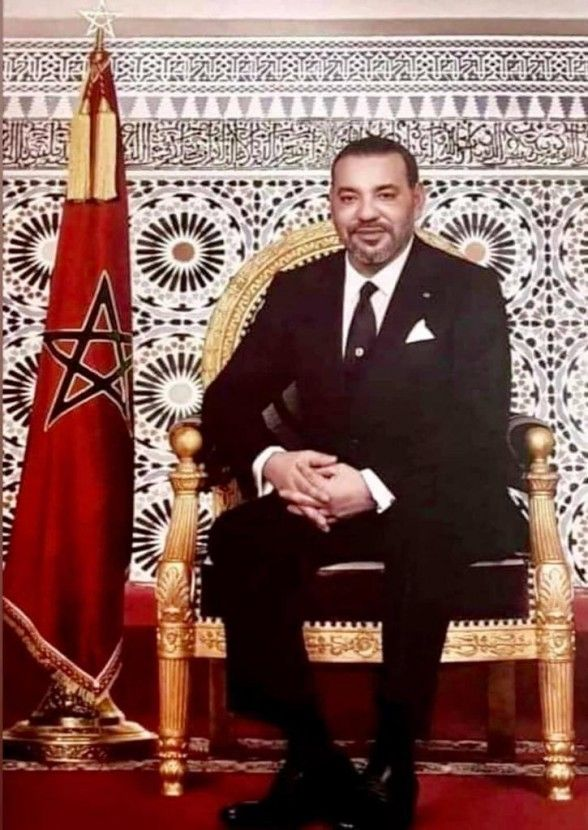
Identifying the Current King
In practical terms, the answer is clear: King Mohammed VI is Morocco’s current Alaouite monarch. He acceded to the throne on July 23, 1999, following the death of his father, King Hassan II. Yet for many Moroccans, that date is remembered not only as a constitutional fact, but as a moment of continuity without rupture—a transition that preserved the sense of an enduring state while opening a new era. Mohammed VI is often viewed through two lenses at once: the working responsibilities of leadership and the symbolic weight of representing national cohesion. In that balance—between governance and meaning—lies much of what the term “Alaouite King” truly conveys.
Role and Responsibilities of King Mohammed VI
When we describe Mohammed VI’s role, it sounds technical on paper—but in reality it is best understood through a few clear angles.
A spiritual guarantor of continuity. As “Commander of the Faithful,” the King is widely perceived as the guardian of Morocco’s religious equilibrium. This is not simply a title of prestige; it signals a duty to protect the country’s Islamic reference points and to preserve cohesion when religious questions become socially sensitive.
Mohammed VI’s Role — Defined Through Three Lenses
A constitutional actor at the center of the state. In practical governance, the King holds decisive levers: he appoints the Head of Government (Prime Minister) and senior officials, and he remains a key reference for the functioning of major institutions. The result is a monarchy that is not distant from government, but structurally embedded in how authority is organized.
A symbol that carries weight in daily life. Beyond law and procedure, the King represents a form of national continuity—an image of the state that persists across political cycles, often associated with stability, mediation, and long-term direction.
Mohammed VI’s Formation — Why His Studies Matter in Real Terms
If you want a meaningful way to read Mohammed VI’s education, think of it less as a résumé line and more as a lens on his governing style. Born in 1963, he was trained in law and economics—two fields that naturally encourage a preference for structure, measurable outcomes, and long-term planning.
From the legal angle, that background tends to cultivate an instinct for institutions: how authority is organized, how reforms are framed, and how continuity is maintained while change is introduced. From the economic angle, it reinforces a practical focus on development—jobs, investment, infrastructure, competitiveness—because these are the levers that shape everyday life far beyond political speeches.
This is why many observers describe his approach as pragmatic rather than theatrical: a style that often favors modernization through policy, projects, and gradual reform, aiming to align Morocco’s economy and society with the demands of a changing world.
Practical Impact on Morocco
Mohammed VI’s Reign — Seen Through Four Human Angles
If you step away from official phrasing, Mohammed VI’s reign is often understood through what changes people can actually feel—in how they move, work, learn, and plan for the future.
1) The country you can travel through
Large-scale infrastructure projects are not just “development”: they shorten distances, connect regions, and make services easier to reach—especially outside major cities.
2) A more resilient economy
The push for economic diversification is, at its core, an attempt to widen the number of doors Morocco can walk through—so growth is not tied to one sector, one season, or one external shock.
3) Investment as a tool, not a trophy
By actively promoting foreign investment, the monarchy aims to attract capital, technology, and partnerships that can translate into enterprises, supply chains, and employment—provided they are anchored locally.
4) Social progress that touches daily life. Initiatives in healthcare, education, and employment matter most when they show up as concrete improvements: better access, better quality, and better chances for households to move forward with dignity.
The 2011 Constitutional Reforms — What They Meant, and Why They Mattered
In 2011, Mohammed VI introduced constitutional reforms that were widely understood as a response to a clear public mood: a desire for greater political participation, stronger institutions, and more transparent governance. One useful angle is balance. The reforms broadened the formal role of elected institutions—most notably by strengthening parliamentary powers and adjusting how government authority is organized—while also reaffirming the monarchy’s central place in the state.
Another angle is signal and reassurance. In a period of regional tension, the reforms were read by many as an attempt to absorb pressure through institutional change rather than rupture. And then there is the everyday angle: talk of civil liberties and inclusion is not abstract when it shapes how citizens perceive accountability, representation, and the legitimacy of public decision-making—even if the monarchy continues to hold substantial influence.
Cultural and Religious Significance
The 2011 Constitutional Reforms — What They Meant, and Why They Mattered
To understand the 2011 constitutional reforms, it helps to imagine the atmosphere of the time: across the region, citizens were asking harder questions—about representation, accountability, and whether institutions truly reflected public life. In Morocco, Mohammed VI’s reforms were widely read as an answer to that moment: a promise that the system could evolve without collapsing, and that political inclusion could be strengthened within a framework of continuity.
Alaouite King
One angle is institutional rebalancing. The reforms expanded the formal space of elected governance—particularly by enhancing parliamentary and governmental roles—while keeping the monarchy firmly positioned as the state’s central pillar. It was, in effect, an attempt to redraw lines of responsibility without dismantling the structure itself.
Another angle is reassurance through reform. At a time when uncertainty was spreading, the changes signaled that Morocco would meet pressure with measured adjustment, not abrupt rupture.
And then there is the human angle. Concepts like civil liberties and transparency become real when they shape how citizens experience the state: whether they feel heard, whether decisions seem explainable, and whether public power appears answerable—even in a system where the monarchy continues to hold substantial influence.
The Alaouite monarchy
To understand who the current Alaouite King is, you have to look beyond a biographical fact and toward the role Mohammed VI plays in shaping Morocco’s direction. In everyday terms, he is not a distant symbol; he is a central reference point in how the state sets priorities, manages long-term choices, and responds to moments of pressure or transition.
One angle is continuity. The Alaouite monarchy carries historical weight, and Mohammed VI embodies that uninterrupted thread—an idea of the state that endures beyond political cycles and short-term debates.
A second angle is reform under constraint. His leadership is often defined by attempts to modernize—economically, socially, institutionally—while remaining attentive to the realities of governance: competing interests, regional disparities, and the limits of rapid change.
A third angle is Morocco’s place in a restless environment. In a complex social and geopolitical setting, his leadership is frequently perceived as a balancing act: protecting cohesion at home while positioning the country with strategic calm abroad. In that tension—between heritage and adaptation—lies the practical meaning of “current Alaouite King.”
Mohammed VI and Crown Prince Moulay Hassan: The Alaouite Legacy Built in Concrete and Vision
Under Mohammed VI, the Alaouite monarchy is often read through what people can see: major infrastructure, large-scale development sites, and long-term projects designed to modernize daily life. Alongside this, Crown Prince Moulay Hassan embodies the next link in continuity—an heir associated with the same strategic emphasis on nation-building. In this sense, the Alaouite succession is not only a family line; it is a visible statecraft tradition expressed through ambitious works and sustained national planning.
Mohammed VI and Moulay Ismail: Two Alaouite Kings Linked by Vision and Achievement
When Moroccans speak about the Alaouite dynasty, they often return to one idea: some reigns leave a mark you can still see. Moulay Ismail, the powerful seventeenth-century ruler, is remembered not only for strengthening royal authority, but for shaping Morocco through bold construction and lasting political order. His era left behind monumental sites and a sense of statecraft that still echoes in Morocco’s historical imagination.
King Mohammed VI, in a very different century, is frequently discussed through a comparable lens—continuity paired with forward movement. His reign is associated with major infrastructure projects, economic transformation, and a diplomacy that keeps Morocco visibly present on regional and global stages. The comparison is not about copying the past; it is about a shared signature: building the state, each in his time—through stone and cities for Moulay Ismail, and through development, investment, and strategic partnerships for Mohammed VI.
King Mohammed VI — Leader of Morocco and the Modern Face of the Alaouite Dynasty
When people call King Mohammed VI the leader of Morocco, they are rarely thinking only of constitutional wording. They are pointing to a figure many Moroccans experience as a constant—someone who embodies continuity while the country continues to evolve, adjust, and make room for new realities. As an Alaouite sovereign, he also carries a dynastic legacy that reaches back centuries, which helps explain why the monarchy still feels, for many, like an anchor in Morocco’s public life.
Yet conversations about his reign quickly become tangible. People cite the infrastructure that changes daily routines, the investments that shift a region’s prospects, and the diplomacy that keeps Morocco present at key tables abroad. In that sense, Mohammed VI is often understood through a simple balance: history and legitimacy on one side, practical state-building on the other—a ruler associated with preserving what endures while pushing forward what needs to grow.
Leader of Morocco and Modern Face of the Alaouite Dynasty
When people describe King Mohammed VI as the leader of Morocco, they usually mean more than a constitutional role. For many Moroccans, he is a steady reference point—someone who represents continuity while the country keeps moving, adapting, and negotiating change. As a member of the Alaouite dynasty, his position also carries the weight of a long historical line, which gives the monarchy a sense of permanence in public life.
At the same time, his reign is often discussed in very concrete terms: roads and rail projects people use, investments that reshape regions, and diplomacy that keeps Morocco visible and listened to beyond its borders. That mix—heritage on one side, practical state-building on the other—is why Mohammed VI is so often portrayed as a figure who holds tradition and modern ambitions in the same frame.