Modern Moroccan Bedroom: From ceremonial beauty to lived-in elegance
A Moroccan bedroom has never been a simple room. It has long carried a sense of shelter, dignity, and quiet beauty. In older homes, especially in riads, kasbah-inspired residences, and traditional family houses, the bedroom often reflected a deeper idea of domestic life: a private space shaped by craftsmanship, climate, memory, and ritual. Today, that same room has changed in visible ways. It feels lighter, more open, more restrained. Yet it has not lost its soul. The modern Moroccan bedroom stands at the meeting point of two worlds: the ornamental richness of the past and the calm practicality of contemporary living.
This evolution is one of the most interesting stories in interior design. Morocco has always absorbed influences, transformed them, and given them its own language. Andalusian refinement, Amazigh symbolism, Arab-Islamic geometry, Mediterranean ease, French modernism, and global minimalist trends have all, in different moments, left traces in Moroccan homes. The bedroom became one of the clearest places where these layers met. What was once deeply decorative has gradually become more edited. What once filled the eye now aims to soothe it. And what once signaled status alone now often seeks comfort, authenticity, and emotional warmth.
The modern Moroccan bedroom does not turn away from tradition. It refines it, rebalances it, and gives it a calmer expression. The textures remain, as do the intelligence of craftsmanship, the subtle play of light, and the intimate atmosphere that has long defined Moroccan interiors. What changes is the overall cadence of the space. The room feels more open, more breathable, and more composed. Ornament appears with greater restraint, colors settle into softer tones, and furniture adopts cleaner lines. Yet through all these shifts, the identity of the space remains deeply and unmistakably Moroccan.
The traditional Moroccan bedroom as a world of meaning
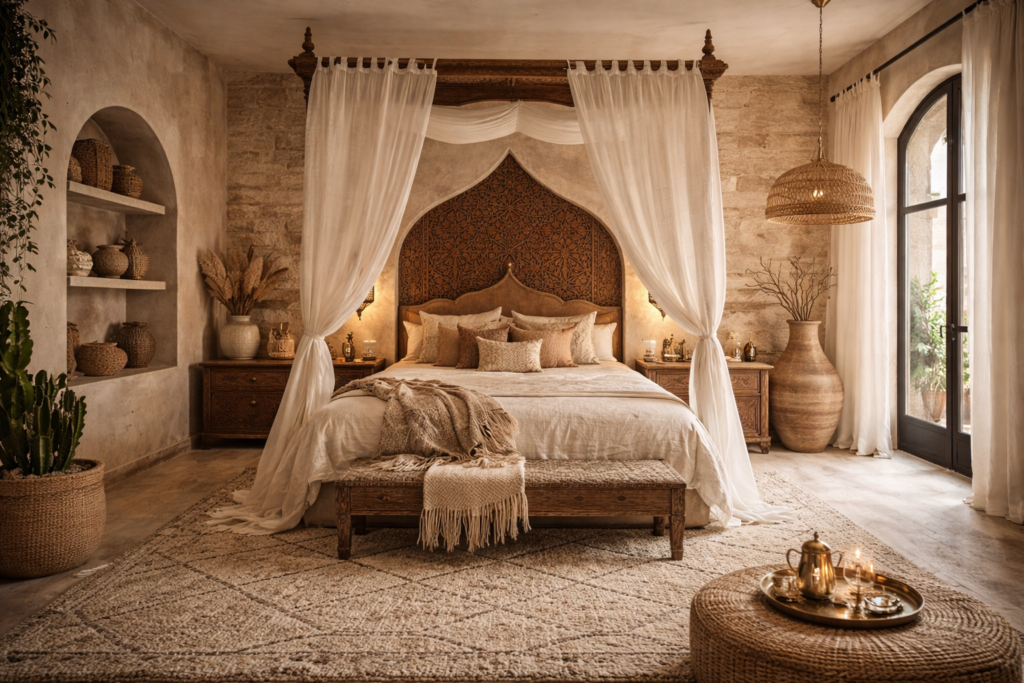
To understand the modern Moroccan bedroom, it helps to begin with what came before it. In older Moroccan homes, the bedroom was part of a larger visual and cultural universe. Rooms were created with a strong awareness of craftsmanship, and every surface had the potential to become expressive. Walls could be finished with tadelakt, cedar ceilings might be carved by hand, niches could frame objects or lamps, and floors often carried tiles, rugs, or woven mats that contributed both beauty and comfort.
Textiles played a major role. Beds were dressed generously, sometimes with layered blankets, embroidered fabrics, richly colored cushions, and handwoven pieces that connected domestic life to regional traditions. In many homes, sleeping spaces also served multiple functions. A room might welcome rest at night and gathering during the day. That flexibility influenced the layout and the use of low seating, stacked textiles, and movable decorative elements.
The traditional bedroom was never only decorative. Its beauty was tied to use. Mashrabiya-inspired woodwork, screens, shutters, alcoves, and fabric layers all helped shape privacy, ventilation, and temperature. In a climate where heat, light, and seasonal variation mattered greatly, design choices had a practical intelligence. The room had to feel protective. It had to soften the outside world.
There was also an emotional dimension. Bedrooms carried traces of family identity. Handwoven rugs, heirloom chests, embroidered covers, and artisan-made lamps were not just beautiful objects. They spoke of lineage, region, and care. In many Moroccan interiors, art lived through daily use rather than distant display. A blanket, a tray, a carved headboard, or a ceramic basin could all carry memory. That closeness between beauty and life remains one of the strongest inheritances in Moroccan design.
The arrival of change
During the twentieth century, Morocco entered new architectural and social rhythms. Urban development accelerated. Apartments became more common. International design magazines, hotels, imported furniture styles, and changing ideas of domestic comfort all influenced the way interiors were imagined. With these shifts came a new relationship to space. Rooms became smaller in some urban settings, more function-driven, and more aligned with global standards of convenience.
The bedroom changed with them. Heavy layering gradually gave way to simpler arrangements. Furniture rose higher and became more structured. Built-in storage, sleeker wardrobes, and streamlined bed frames entered the scene. Decorative abundance began to recede, especially in homes influenced by European modernism or contemporary urban architecture. Yet Morocco did not simply imitate outside models. It filtered them.
This is what makes the Moroccan evolution distinctive. Rather than replacing tradition with modernity, many interiors began to combine them. A room might feature a clean contemporary bed, yet still include a handwoven blanket from the Atlas, a brass pendant recalling old lantern forms, or a tadelakt wall that brought depth and softness to the space. The transformation was gradual, uneven, and highly creative. In some homes, tradition remained dominant. In others, only a few references survived. But in the most compelling modern Moroccan bedrooms, the dialogue between old and new became the defining feature.
From visual richness to curated calm
One of the clearest differences between older and newer Moroccan bedrooms lies in the handling of visual intensity. Traditional interiors often embraced abundance. Color, pattern, texture, and ornament coexisted generously. Modern Moroccan bedrooms, by contrast, tend to prefer restraint. The room still feels warm and layered, though the composition is more selective. Fewer elements are asked to do more.
Walls, for instance, are often kept in shades of sand, off-white, soft beige, clay, warm gray, or muted terracotta. These tones create a restful envelope and allow other details to stand out gently. Instead of covering large surfaces with dense ornament, designers may now reserve pattern for a headboard wall, a tiled niche, a single rug, or a limited number of cushions. This change gives the eye more silence, and that silence is part of contemporary comfort.
The effect is not cold minimalism. A well-designed modern Moroccan bedroom still feels tactile and inhabited. Linen, cotton, wool, cane, cedar, ceramic, plaster, and brushed metal all help maintain warmth. The room may look simpler than its historical predecessors, yet it rarely feels empty. The best examples understand that Moroccan design has always depended on atmosphere. Modernity works here when it preserves that atmosphere rather than flattening it.
The enduring role of craftsmanship
Even as styles evolve, craftsmanship remains the emotional center of the Moroccan bedroom. This continuity is essential. Without it, the room might borrow Moroccan motifs without carrying Moroccan depth. Handwork gives the space its human presence. It slows the room down. It introduces irregularity, texture, and a sense of place that factory-perfect interiors often lack.
Today, this craftsmanship appears in more edited ways. A single carved wooden panel may replace an entire decorated wall. A handmade rug may anchor a room otherwise composed with simplicity. A pendant lamp may reinterpret traditional pierced metal patterns with a softer, more contemporary line. Zellige may appear not across every surface, but as a refined accent behind a bedside table or inside an architectural niche.
Tadelakt holds a special place in modern Moroccan interiors because it suits contemporary sensibilities while preserving a strong link to heritage. Its smooth, mineral surface feels both timeless and strikingly relevant, bringing quiet depth and a gentle relationship with light. At once understated and expressive, it carries forward the legacy of Moroccan building traditions in a way that blends effortlessly with more pared-back interiors.
That balance helps explain why the modern Moroccan bedroom resonates so strongly beyond Morocco itself. It offers a rare combination of calm and identity, showing that simplicity can still feel warm, textured, and culturally grounded. Rather than stripping a room of meaning, this approach reveals how a minimalist space can remain rich in memory, materiality, and character.
Light, intimacy, and atmosphere
Lighting has always shaped Moroccan interiors, and the bedroom is perhaps where that influence feels most intimate. Historically, lanterns, filtered openings, and layered textiles helped create a soft and private glow. Light was not merely functional. It was emotional. It framed the room, softened its edges, and made evening feel ceremonial.
Modern Moroccan bedrooms continue this principle, though with updated forms. Pendant lights inspired by traditional lantern silhouettes now appear in simplified brass, black metal, or matte finishes. Wall sconces may echo geometric cutwork while offering gentler and more practical illumination. Bedside lighting is often warmer and more adjustable than in older interiors, reflecting contemporary expectations of comfort and ease.
Natural light also plays a growing role. Modern layouts often seek openness and visual calm, so windows are treated with lighter fabrics, wooden screens, sheer curtains, or linen drapes that allow daylight to filter through without harshness. The goal is balance. A Moroccan bedroom should protect intimacy, yet it should also welcome light in a controlled and graceful way. That balance has always been part of the tradition. Contemporary design simply expresses it with greater simplicity.
A new palette for a new rhythm of life
Color tells the story of this evolution very clearly. Traditional Moroccan bedrooms often embraced strong reds, blues, golds, emeralds, saffron tones, and richly layered contrasts. These colors carried beauty, symbolism, and theatrical presence. In the modern bedroom, the palette tends to soften. Earth tones, chalky neutrals, dusty rose, olive, muted rust, and warm ivory now dominate many interiors.
This shift reflects more than fashion. It mirrors a broader change in how the bedroom is understood. The room is now often seen as a retreat from overstimulation. Urban life is faster, noisier, and more demanding. In response, the bedroom becomes a place of visual relief. Neutral tones create a calmer background for rest, while small doses of traditional color keep the room from becoming generic.
That balance matters. A bedroom that is too ornamental may feel busy. A bedroom that is too minimal may feel disconnected from Moroccan identity. The most successful modern Moroccan interiors find a middle path. They use color with intelligence rather than volume. A woven throw, a ceramic vase, a patterned cushion, or a subtle headboard textile can carry the spirit of tradition without overwhelming the room.
Materials that bridge eras
The evolution of the Moroccan bedroom also appears in the choice of materials. Traditional homes relied on what was local, durable, and responsive to climate: cedar, clay, plaster, wool, leather, stone, and woven plant fibers. Modern interiors continue to value these materials, though often in more refined combinations and alongside newer solutions.
Wood remains central, especially in natural or lightly finished tones. It brings warmth and weight to contemporary rooms. Matte ceramics, artisanal tiles, lime-based finishes, natural textiles, and handwoven rugs all help keep the room connected to craft traditions. At the same time, modern life introduces new needs: easier maintenance, lighter furniture, durable finishes, better insulation, and more adaptable layouts.
As a result, many modern Moroccan bedrooms blend artisanal surfaces with contemporary practicality. A room might pair a handcrafted bench with clean built-in wardrobes. It might combine traditional plaster textures with modern bedding and discreet storage. It might use recycled wood or contemporary ceramics that echo old forms without reproducing them exactly.
This material dialogue is one of the strongest reasons the modern Moroccan bedroom feels authentic when done well. It is not a themed set. It is a living environment shaped by both inheritance and everyday reality.
Why the modern Moroccan bedroom resonates today
The appeal of the modern Moroccan bedroom extends beyond design trends. It speaks to a wider desire for interiors that feel calm, rooted, and meaningful. Around the world, many people have grown tired of spaces that look polished but emotionally empty. Moroccan design offers an alternative. It suggests that beauty can be warm, that minimalism can carry memory, and that craftsmanship still matters in modern life.
For Moroccans, this transformation can be understood as a continuation of cultural memory rather than a break from it. It suggests that heritage stays vibrant when it evolves, finds new forms, and responds to changing ways of living. Whether in city apartments, contemporary villas, boutique guesthouses, or international design settings, Moroccan identity can remain fully present without relying on the exact codes of the past. Beyond Morocco, this aesthetic speaks to others for a different reason: it offers interiors that combine refinement with warmth, and elegance with a genuine sense of life.
Creating a modern Moroccan bedroom today
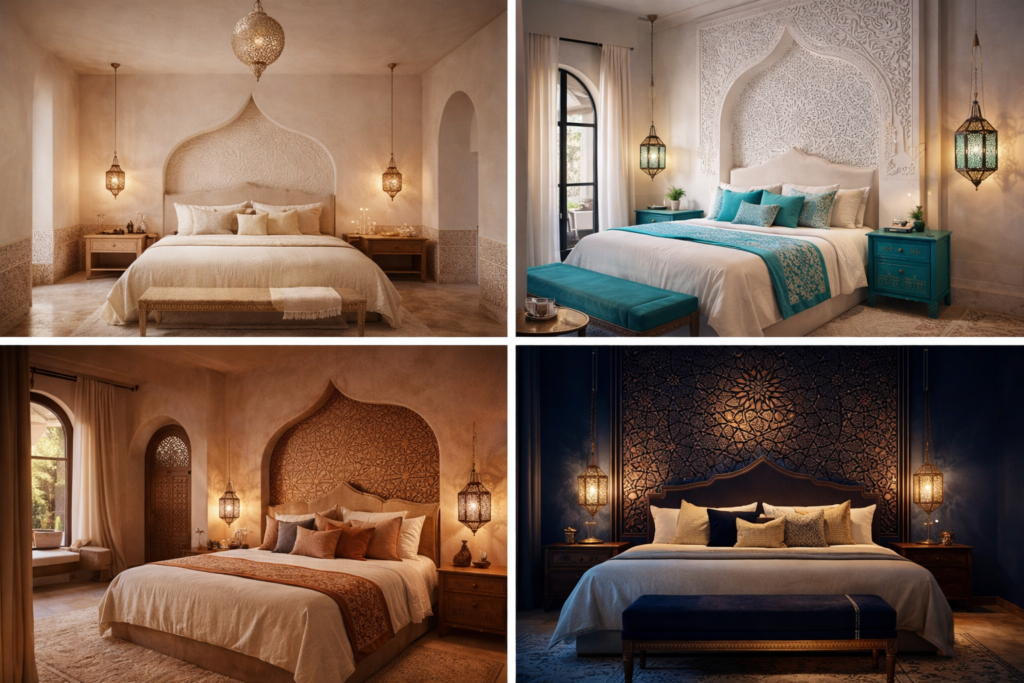
Designing a modern Moroccan bedroom begins with restraint and intention. Start with a calm base: walls in cream, sand, soft clay, or warm white. Choose furniture with simple lines and real presence, ideally in natural wood or other tactile materials. Then introduce Moroccan character through selected pieces rather than decorative overload.
A handwoven rug can ground the room beautifully. A lantern-inspired light fixture can shape the mood. Linen bedding in neutral tones can be layered with one or two patterned cushions or a textured throw. A niche, ceramic object, carved stool, or artisanal mirror can add depth without turning the room into a showroom of references.
The aim is not to reproduce the past exactly, but to carry forward what made it meaningful. Craftsmanship should appear with intention, texture should bring quiet depth, and light should shape a gentle atmosphere. Above all, the room should offer ease and calm before it seeks to impress.
That, in the end, is the true evolution of the modern Moroccan bedroom. It has moved from spectacle to subtlety, from opulence to balance, from decorative fullness to curated warmth. Yet through every transformation, it has kept what mattered most: intimacy, artistry, and a deeply rooted sense of home.
Frequently Asked Questions About the Modern Moroccan Bedroom
This FAQ section answers the most specific questions readers often have when exploring modern Moroccan bedroom design, traditional influences, materials, colors, and styling ideas.
What defines a modern Moroccan bedroom?
A modern Moroccan bedroom blends the warmth of Moroccan craftsmanship with a calmer, more contemporary layout. It usually combines natural materials, soft earthy colors, refined lighting, and a few carefully chosen artisanal details rather than heavy ornament throughout the room.
How is a modern Moroccan bedroom different from a traditional Moroccan bedroom?
A traditional Moroccan bedroom often features stronger colors, denser patterns, carved details, layered textiles, and a more decorative atmosphere. A modern Moroccan bedroom keeps the cultural essence but presents it with more visual calm, cleaner furniture lines, and a more restrained use of pattern and color.
Which colors work best in a modern Moroccan bedroom?
The most effective palette often starts with sand, cream, warm white, clay, beige, muted terracotta, soft olive, or dusty rose. These tones create a peaceful base. Richer Moroccan colors can still appear through cushions, ceramics, rugs, or a single accent wall.
Can a bedroom feel Moroccan without looking overly ornate?
Yes. That is exactly what many modern Moroccan interiors achieve. A room can feel deeply Moroccan through texture, lighting, plaster finishes, handmade textiles, and artisan-made pieces, even when the overall design remains simple and uncluttered.
What materials are commonly used in a modern Moroccan bedroom?
Natural wood, tadelakt-style plaster, matte ceramics, linen, cotton, wool, woven fibers, brass, and carved or hand-finished surfaces are all common. These materials help the room feel tactile, authentic, and connected to Moroccan design traditions.
What is tadelakt and why is it popular in Moroccan bedrooms?
Tadelakt is a traditional Moroccan lime plaster known for its smooth, slightly luminous finish. It is popular because it adds softness, depth, and mineral texture to walls while fitting beautifully into both traditional and modern interiors.
Are zellige tiles still used in modern Moroccan bedrooms?
Yes, though often more selectively than in older interiors. In a modern Moroccan bedroom, zellige may appear in a niche, on a feature wall, around a vanity corner, or through decorative accents rather than covering large surfaces.
How do you make a small bedroom look Moroccan and modern at the same time?
Start with a light neutral palette, keep furniture simple, and add only a few high-impact details such as a textured rug, a lantern-inspired pendant light, a handcrafted headboard, or natural woven accents. In a small room, subtlety creates far more elegance than decorative overload.
What kind of lighting suits a modern Moroccan bedroom?
Warm, layered lighting works best. Pendant lights inspired by traditional lanterns, soft wall sconces, bedside lamps with filtered light, and gentle ambient lighting all help create the intimate and relaxing mood associated with Moroccan interiors.
Which textiles bring a Moroccan feel to a bedroom?
Handwoven rugs, textured throws, linen bedding, wool accents, embroidered cushions, and natural-fiber blankets all work beautifully. The best results come from mixing comfort and texture while keeping the palette visually coherent.
Can you create a modern Moroccan bedroom on a budget?
Yes. Focus on atmosphere rather than quantity. A neutral wall color, one beautiful rug, warm lighting, textured bedding, and a few handmade decorative pieces can already create a convincing Moroccan-inspired bedroom without requiring a full renovation.
What type of bed works best in a modern Moroccan bedroom?
Beds in natural wood, upholstered frames in neutral tones, or simple low-profile designs work especially well. A handcrafted or arched headboard can add Moroccan character while keeping the overall look elegant and contemporary.
Why do modern Moroccan bedrooms often use neutral walls?
Neutral walls create restfulness and allow handcrafted details to stand out more naturally. They also reflect light better and make it easier to introduce traditional Moroccan elements in a subtle, balanced way.
Is Moroccan bedroom design still relevant in contemporary interiors?
Very much so. Moroccan design remains highly relevant because it offers something many contemporary spaces seek: warmth, texture, craftsmanship, and a timeless sense of intimacy. Its modern evolution makes it especially compatible with current interior design preferences.
How do you keep a Moroccan bedroom elegant rather than visually crowded?
Choose fewer pieces with stronger presence. Let one rug, one light fixture, one artisanal surface, or one statement headboard carry the room. The modern Moroccan approach values atmosphere, balance, and texture more than decorative excess.
Read more
- Moroccan artisan crafts
- Mediterranean interior design
- traditional textiles
- lighting design tips