Analyzing the Role and Impact of the United States Holocaust Memorial Museum
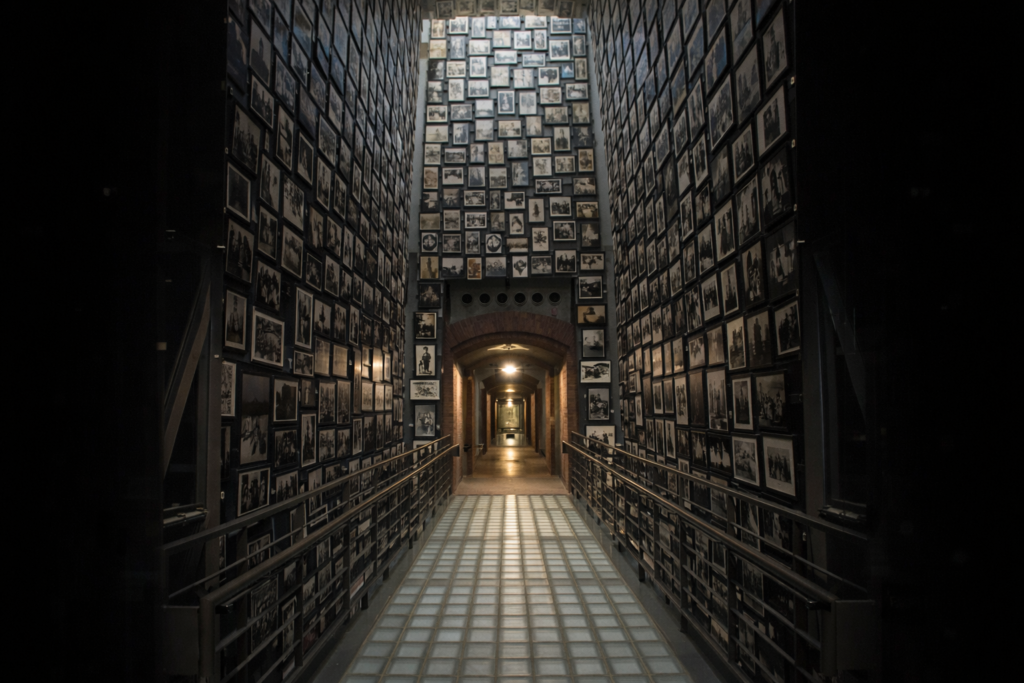
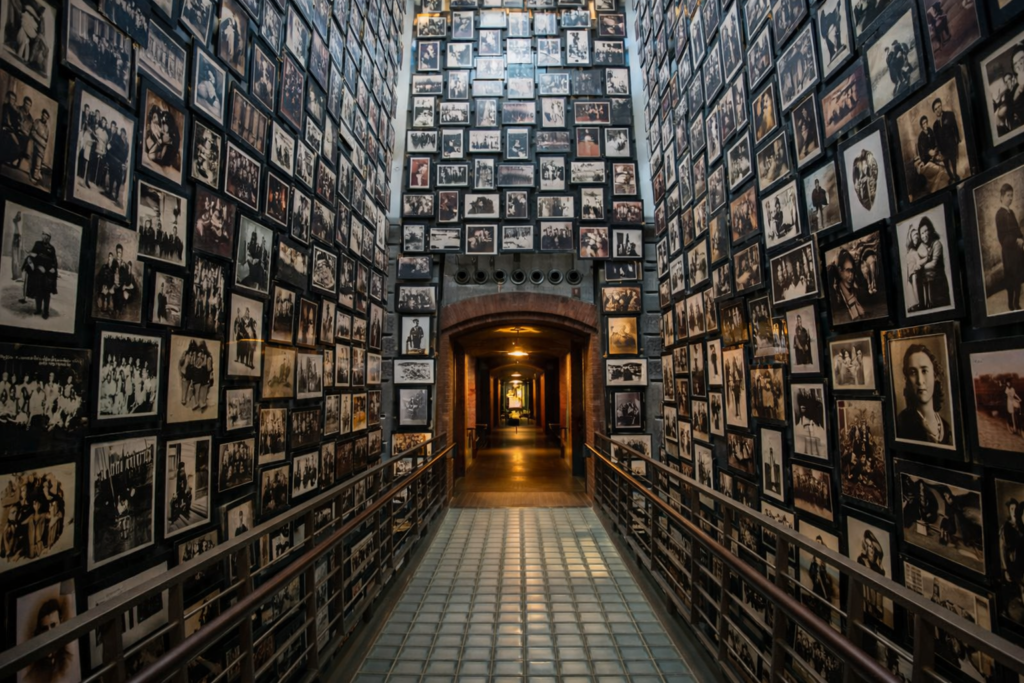
The museum’s role in preserving and presenting such testimony is therefore among its most enduring achievements. It extends the reach of witness across time. As fewer survivors remain alive to speak directly, institutions like the USHMM become even more essential. They help ensure that memory does not dissolve into generic commemoration or detached summary. They protect the voices that insist on specificity.
And specificity matters. It resists denial. It resists simplification. It resists the false comfort of distance.
The challenge of representing atrocity responsibly
Yet the work of such a museum is never simple. Representing the Holocaust in public space involves a long series of difficult choices. How much horror should be shown? How should visitors be guided through material that is emotionally devastating? How can the museum avoid turning suffering into spectacle? How can it remain accessible to a broad public without softening historical truth?
These are not technical questions only. They are ethical ones. The museum must constantly navigate the tension between exposure and restraint. Too little detail can flatten the enormity of the crime. Too much can overwhelm visitors to the point where they emotionally shut down. There is always the risk of fatigue, particularly for those who arrive with limited historical background and then find themselves confronted by an immense narrative of persecution, war, bureaucracy, and mass death.
There is also the challenge of representing the diversity of victim experiences. Although the Holocaust centrally targeted Europe’s Jews, it also affected other groups persecuted by the Nazi regime. A museum committed to accuracy must honor that complexity while still maintaining clarity about the Holocaust’s specifically anti-Jewish core. This requires intellectual precision and curatorial discipline. It demands a refusal to blur distinctions while still acknowledging the wider landscape of Nazi persecution.
In addition, the museum must address difficult human categories that resist comforting narratives. Not everyone was a hero or a monster in obvious ways. There were perpetrators, collaborators, bystanders, resisters, opportunists, rescuers, and those who moved between compromise and conscience under terrible pressure. Representing such complexity honestly is crucial because it reminds visitors that history is often shaped not only by extreme figures, but by ordinary people making choices within systems of fear and power.
Memory, politics, and the burden of public history
Because the museum operates in a national and international context, it also exists within a larger political world. Holocaust memory is morally necessary, but it can also be invoked selectively, interpreted polemically, or used for purposes that do not always honor historical complexity. Any institution dealing with such a charged subject must therefore protect its scholarly credibility carefully.
This means the museum has to do two things at once. It must speak to the public clearly and powerfully, while resisting the simplifications that public discourse often rewards. It must remain morally engaged without becoming historically careless. It must defend memory without turning it into rhetoric alone.
That is not an easy balance to maintain. Public institutions are always under pressure to communicate in ways that are immediate, emotionally legible, and widely understood. Yet the Holocaust is not a subject that can be responsibly reduced to a few moral slogans. Its lessons are profound, but they are not simplistic. The museum’s task is to help people understand both the emotional truth and the historical complexity of what occurred.
When it succeeds, it strengthens public culture. It reminds democratic societies that memory requires discipline as well as feeling. It teaches that remembrance without knowledge becomes vague, and knowledge without moral seriousness becomes cold.
The museum and contemporary moral dialogue
One of the museum’s most important functions lies in the way it connects historical memory with contemporary ethical awareness. This does not mean drawing careless analogies between every present crisis and the Holocaust. Responsible institutions must avoid that temptation. The Holocaust was specific in its ideology, machinery, and scale. Its uniqueness should not be diluted.
At the same time, the museum does invite reflection on broader questions that remain urgently relevant: how prejudice is cultivated, how minorities are dehumanized, how violence is rationalized, how state power can be turned against vulnerable people, and how the international community so often fails to act in time. By addressing these questions, the museum places Holocaust memory in dialogue with concerns about human rights, mass violence, and genocide prevention.
That wider role matters because memory should not be inert. A museum dedicated to the Holocaust cannot stop at retrospective sorrow. It must also encourage vigilance. It must cultivate habits of attention. It must ask visitors to consider what it means to live responsibly in a world where hatred still circulates, authoritarian tendencies still emerge, and antisemitism has hardly disappeared.
In this sense, the museum functions not only as a repository of the past, but as a civic teacher. It asks what remembrance requires from the living.
Why institutions like this still matter
In an era of digital misinformation, historical distortion, and shrinking attention spans, institutions like the United States Holocaust Memorial Museum become even more important. The danger today is not only forgetting. It is also fragmentation: the breaking apart of historical understanding into isolated images, slogans, emotional impressions, and manipulated narratives. The museum stands against that fragmentation by offering depth, structure, evidence, and historical seriousness.
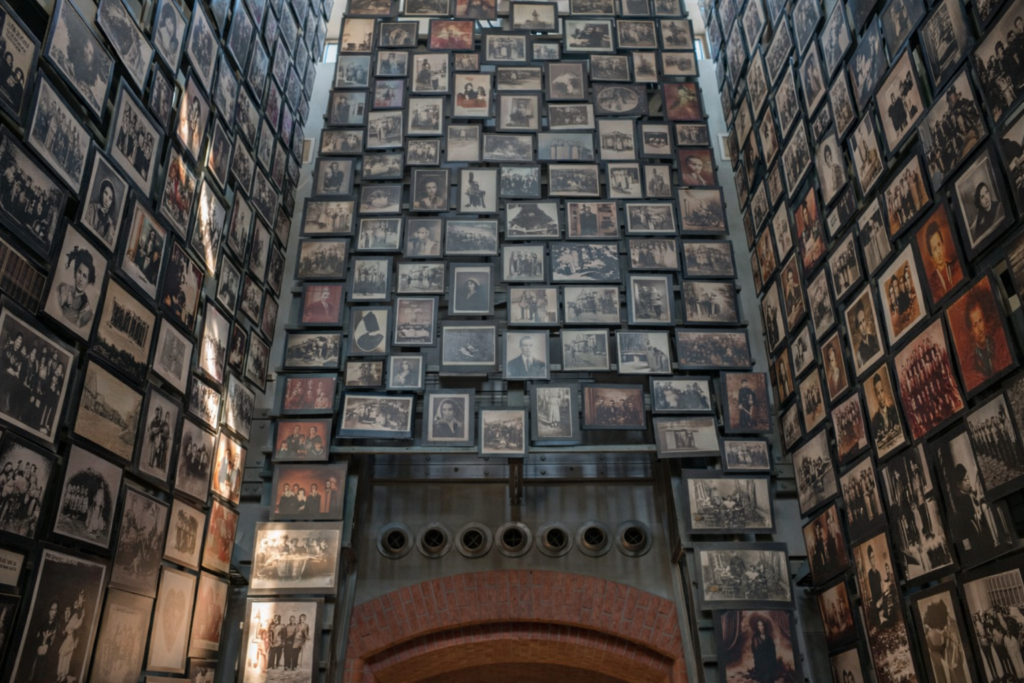
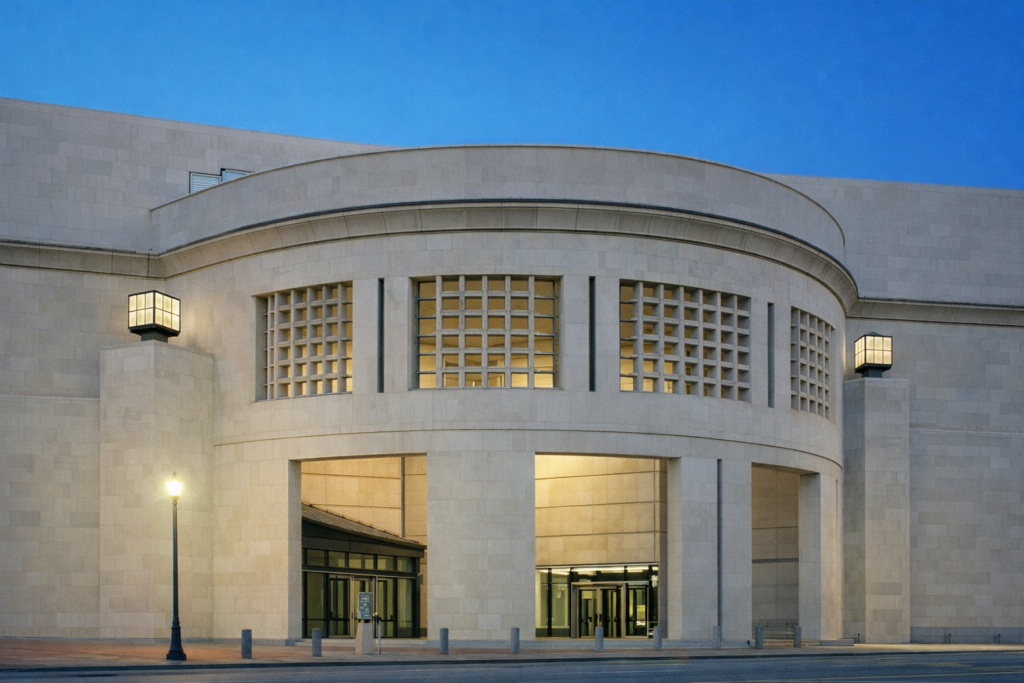
It also offers something less easily measured but equally important: a physical encounter with memory. In a culture increasingly mediated by screens, there remains a profound difference between reading about the Holocaust online and walking through a space deliberately built to hold that history. Physical presence changes the experience. It slows people down. It creates concentration. It gives weight to what might otherwise remain abstract.
For younger generations especially, this matters greatly. Many visitors now encounter Holocaust history with no direct familial or living generational connection to the events. The museum becomes, for them, one of the places where historical transmission still feels tangible. It becomes a bridge between lived memory and inherited responsibility.
A lasting institution of conscience
The United States Holocaust Memorial Museum endures because it does more than preserve a record of catastrophe. It shapes the way catastrophe is understood. It honors victims without reducing them to silence. It educates without flattening complexity. It warns without resorting to empty alarmism. It creates a space where history, ethics, scholarship, and citizenship meet.
Its role is therefore both historical and contemporary. Historically, it safeguards one of the most important archives of human suffering and endurance in the modern era. Publicly, it helps cultivate a society capable of remembering with seriousness. Morally, it reminds visitors that civilization is more fragile than it often appears, and that the descent into exclusion and brutality is always easier than people like to believe.
That may be the museum’s deepest contribution. It does not leave visitors with the illusion that the Holocaust belongs neatly to a sealed past. Instead, it leaves them with a harder and more necessary understanding: that remembrance is not passive, and that history becomes meaningful only when it reshapes the conscience of the present.
In that sense, the museum stands not only as a memorial to the dead, but as a test for the living. It asks whether memory can remain rigorous, whether empathy can remain alert, and whether public institutions can still teach moral seriousness in an age that often rewards haste, noise, and simplification.
That is why the United States Holocaust Memorial Museum remains so important. It is not merely a place people visit. It is a place that continues to work on them after they leave.
Read more
- importance of Holocaust education
- institutions dedicated to genocide prevention
- memory culture and public history