Marriage Abroad as a Moroccan Citizen: The Practical Questions That Matter Later
A marriage abroad often begins with something beautifully simple: a shared decision, a ceremony, a new chapter opening in the country where life already happens. For Moroccan citizens living overseas, however, that moment can also lead to quieter questions once everyday life resumes. How does this marriage exist in relation to Morocco? What needs to be registered, declared, or recognized? Behind the joy of the occasion, there is often an administrative reality that couples discover little by little. And for those who still carry strong ties to Morocco through family, children, property, or long-term plans, that reality matters more than it may seem at first.
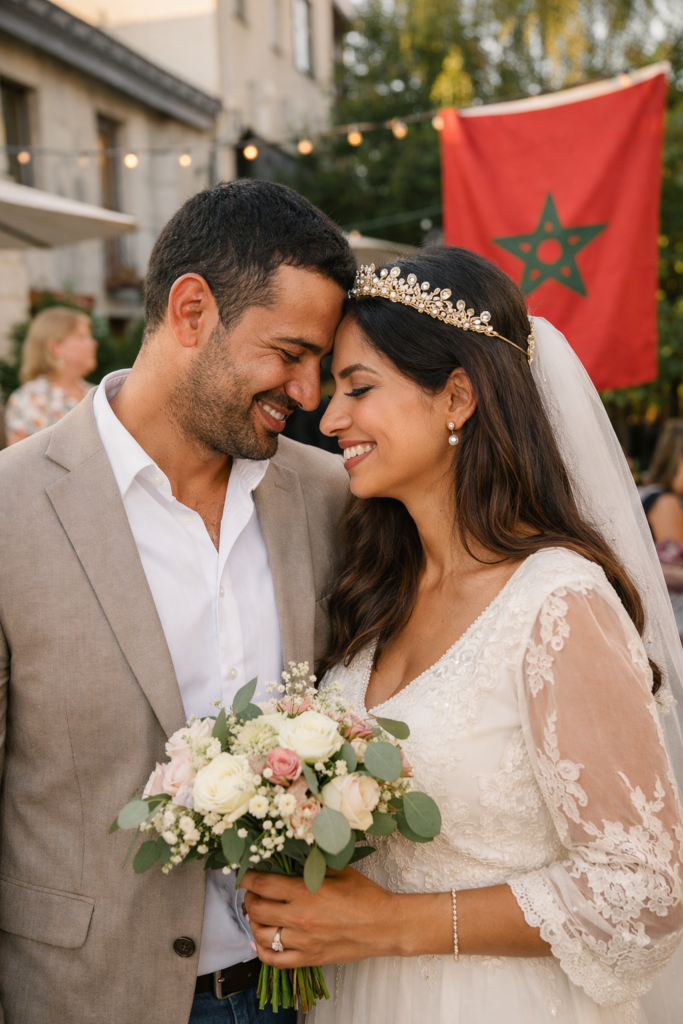
When Moroccans Marry Abroad: What Recognition, Registration, and Family Status Really Mean
For many Moroccans living abroad, getting married begins as a deeply personal moment. It is about building a life together, choosing commitment, and celebrating that decision in the country where daily life already unfolds. Yet after the joy of the ceremony, another reality often appears quietly in the background: marriage also has an administrative life. And for Moroccan citizens abroad, that part matters more than many couples first imagine.
A wedding abroad may be perfectly valid where it takes place. The certificate may be issued without difficulty. The couple may move forward with complete peace of mind. Then, months later, a practical question appears. Is the marriage also recognized in Morocco? Does it need to be declared? What happens later when children are born, when property is involved, or when an official document is needed back home?
These questions are common, and they are far from theoretical. They belong to the everyday reality of many Moroccan families living between two countries, two administrations, and sometimes two very different legal cultures. That is why understanding marriage abroad in relation to Morocco is less about legal complexity for its own sake and more about making family life clearer, safer, and easier in the long run.
Why Marriage Abroad Raises More Questions Than People Expect
At first, marriage can feel simple. A couple follows the procedure required in the country where they live, signs the necessary documents, receives a marriage certificate, and assumes the matter is complete. In everyday life abroad, that may indeed be enough for many immediate purposes.
The difficulty appears later, often at a moment when the couple is dealing with something else entirely. A birth registration. A family matter in Morocco. A property transaction. A request for documents. A legal form asking for proof of marital status. Suddenly, the marriage exists clearly in one country, yet its place in Moroccan records may still be uncertain.
That gap is what often catches people off guard. It is not always dramatic. It does not always create a crisis. Yet it can create delay, confusion, and unnecessary stress at exactly the wrong moment. A step that felt secondary in the beginning can become central later.
A Marriage Can Be Valid Abroad and Still Need Recognition in Morocco
One of the most important things for Moroccan citizens abroad to understand is this: a marriage celebrated in another country may be legally valid there while still requiring additional administrative steps to be fully reflected in Morocco.
This is where many couples misunderstand the situation. They assume that because the marriage is lawful where it took place, every country connected to their personal status will automatically treat it the same way. In practice, civil status records do not always move across borders on their own. Administrations need documents, declarations, and formal registration procedures so that the same family reality appears properly in their own system.
In other words, the marriage may already be real in life, emotionally and legally, yet Moroccan records may still need to be updated so that the union is recognized in an official and usable way.
Why This Recognition Matters in Real Life
For many readers, the most useful question is not whether registration is important in theory, but why it matters in practice. The answer becomes easier to understand when viewed through the ordinary events of family life.
Marriage status affects much more than a certificate stored in a drawer. It can matter when registering children, proving family relationships, managing inheritance issues, dealing with property, requesting official papers, or simply making sure that Moroccan records reflect a couple’s true situation.
A missing registration may remain invisible for years. Then one day, during a procedure that already carries emotional or financial weight, the missing link becomes obvious. At that point, what could have been handled calmly and early turns into an extra administrative burden.
That is why many families choose to regularize the marriage as soon as possible. It creates continuity. It reduces the risk of later confusion. It allows the couple to move forward with a clearer sense that both countries connected to their life recognize the same reality.
The Quiet Importance of the Moroccan Consulate
For Moroccans living abroad, the consulate often becomes the place where personal life meets official recognition. Many people think of consulates mainly in relation to passports or identity documents. Yet when it comes to marriage, they often play a much broader role.
A consulate can help citizens understand what needs to be submitted, which documents require translation, and how the marriage can be transmitted or recorded through the appropriate channels. For couples who feel uncertain about the process, this contact often brings a sense of order to something that at first seems vague or intimidating.
In a way, the consulate acts as a bridge. It helps connect the legal event that took place abroad with the Moroccan administrative framework that still matters for family status. That bridge can make all the difference.
What Couples Usually Need to Prepare
While the exact requirements can vary depending on the country and the consular office involved, most couples are asked to prepare a file that clearly identifies the marriage and the Moroccan spouse or spouses concerned.
In practical terms, this often means gathering the official marriage certificate, identity documents, proof of nationality, and certified translations when needed. That may sound simple, yet the experience becomes much smoother when these documents are prepared carefully and presented in a complete form.
The real challenge is often not the difficulty of the documents themselves, but the fact that couples postpone the process, assume it can wait indefinitely, or discover too late that a translation or legalization step is also needed. A little preparation early on can save a surprising amount of time later.
Mixed Marriages Often Bring Additional Questions
Many Moroccan citizens abroad marry partners from other national, cultural, or religious backgrounds. These marriages are common and often deeply enriching, yet they sometimes bring additional legal or administrative questions.
That does not mean the process becomes impossible or unusually difficult. It simply means the couple may need clearer guidance from the start. Certain supporting documents, specific declarations, or extra verification steps may apply depending on the country and the personal circumstances involved.
Beyond paperwork, mixed marriages often carry another reality as well: they bring together different ways of understanding family, identity, and legal status. That is why good information matters so much. It gives couples a stable foundation from which they can move forward with confidence rather than uncertainty.
What Happens When Couples Wait Too Long
Delaying registration is common. Life gets busy. Work, travel, pregnancy, housing, and everyday responsibilities push paperwork further down the list. At first, nothing seems urgent. Then time passes.
Years later, the couple may decide to sort everything out. In many cases, that is still possible. Yet the process can feel heavier. Documents may have been misplaced. Addresses may have changed. Family circumstances may have evolved. A child may already need to be registered. A legal matter may already be underway.
None of this means the situation is hopeless. It simply means that what was once a simple administrative formality can become more layered than it needed to be. That is why early action remains the wisest path whenever possible.
Marriage Abroad Is Also a Story of Belonging
For Moroccan citizens abroad, marriage is rarely just a legal event. It often expresses a larger story about identity, movement, and belonging. A couple may live in one country, speak several languages at home, celebrate with friends from many backgrounds, and still remain deeply connected to Morocco through family, memory, property, or future plans.
That is why the administrative side of marriage matters in such a particular way. It is not just about compliance. It is about making sure that a major life event is recognized across the different parts of a family’s world. It is about ensuring that the couple’s reality is coherent wherever it needs to be seen.
In that sense, registering a marriage is not a cold bureaucratic gesture. It is a way of giving the relationship its proper place across borders. It allows the legal record to catch up with the life already being lived.
A Clearer and Calmer Way Forward
The subject of marriage abroad can sound more intimidating than it really is. Once broken down into practical steps, it usually becomes much more manageable. What matters most is knowing that the issue exists, understanding why recognition in Morocco can be important, and taking action before an urgent situation forces the question.
For many Moroccan citizens abroad, that simple awareness changes everything. Instead of discovering the issue at a stressful moment, they deal with it early, calmly, and with a clearer sense of direction. The result is not just better paperwork. It is greater peace of mind.
Marriage begins with a private promise between two people. For citizens living across borders, it also deserves clear recognition in the systems that shape family life. When that recognition is handled properly, the couple gains something very valuable: the confidence that their life together is fully visible wherever it matters most.
Frequently Asked Questions About Marriage Abroad for Moroccan Citizens
These questions reflect the practical concerns many Moroccan citizens face after getting married outside Morocco, especially when administrative recognition, family status, or future legal steps become important.
Is a marriage performed abroad automatically recognized in Morocco
A marriage celebrated abroad may be legally valid in the country where it took place, yet that does not always mean it is automatically reflected in Moroccan civil records. In many situations, an administrative registration step remains necessary so the marriage can be recognized clearly within Moroccan documentation.
How can a Moroccan citizen register a marriage performed abroad
The usual path begins with the local marriage certificate issued by the foreign civil authority. After that, Moroccan citizens often contact the nearest Moroccan consulate to ask which documents, translations, and forms are required so the marriage can be entered into Moroccan records.
Do Moroccan citizens need to report a foreign marriage to a Moroccan consulate
In practice, this is often one of the most important steps. The consulate serves as the administrative link between citizens living abroad and Moroccan authorities. Reporting the marriage helps avoid future confusion when dealing with family status, children, inheritance, or official paperwork.
What documents are usually needed to register a marriage abroad in Morocco
The required file often includes the official marriage certificate, identity documents, proof of Moroccan nationality, and in some cases a certified translation. The exact list may vary depending on the country and the consular office handling the request.
Can a Moroccan marry a foreign citizen abroad
Yes, Moroccan citizens can marry foreign nationals abroad, provided the marriage follows the legal requirements of the country where it is celebrated. After the ceremony, additional administrative steps may be needed so the marriage is properly recognized in relation to Moroccan family law.
Does a foreign marriage certificate need to be translated for Moroccan authorities
In many situations, yes. When the certificate is issued in a language that does not match the administrative requirements of the Moroccan authorities receiving the file, a certified translation is often requested so the document can be processed correctly.
What happens if a Moroccan citizen does not register a marriage performed abroad
The marriage may remain valid in the foreign country while still being absent from Moroccan civil records. That gap can create complications later when dealing with administrative procedures involving children, inheritance, marital status, or legal documents linked to family life in Morocco.
Can children born after a marriage abroad be registered in Morocco
Yes, yet the parents’ marital status often needs to be clear in the records first. When the marriage has already been recognized or properly declared, later steps involving the child’s civil status tend to become much simpler and more consistent across administrations.
Can Moroccan citizens register a marriage abroad years after the wedding
Late registration may still be possible in many cases, although the process can become more delicate when several years have passed. Missing documents, changed residence, or family events that occurred in the meantime may make the file more complex, which is why early registration remains the safer option.
Does registering a marriage abroad in Morocco help with inheritance and property matters
Yes, it often helps create a clearer legal foundation. When the marriage is visible in Moroccan records, it becomes easier to establish family links in situations involving inheritance, ownership, succession procedures, or other legal matters connected to marital status.
Do Moroccan citizens living permanently abroad still need Moroccan recognition of their marriage
Many people living permanently abroad still choose to regularize their marriage in Morocco because family ties, property, inheritance, children, and future administrative needs often continue to connect them to the country. What seems secondary today may become essential later.
Is consular registration enough to protect a couple in both countries
Consular registration is usually an important part of the process, yet couples should always make sure that their documents are complete and properly reflected in the relevant civil records. The goal is to create coherence between the legal reality abroad and the administrative reality in Morocco.