US Morocco Treaty of Friendship 1836 — The Meknes Agreement That Strengthened a Historic Alliance
Signed in Meknes on September 16, 1836, the US Morocco Treaty of Friendship 1836 reinforced one of the oldest diplomatic relationships in American history. Far from being a symbolic gesture, this agreement confirmed mutual peace, commercial protection, and long-term cooperation between the United States and Morocco. At a time of shifting global trade and rising geopolitical tension, the treaty demonstrated continuity, sovereign diplomacy, and a shared commitment to stability that still shapes bilateral relations today.
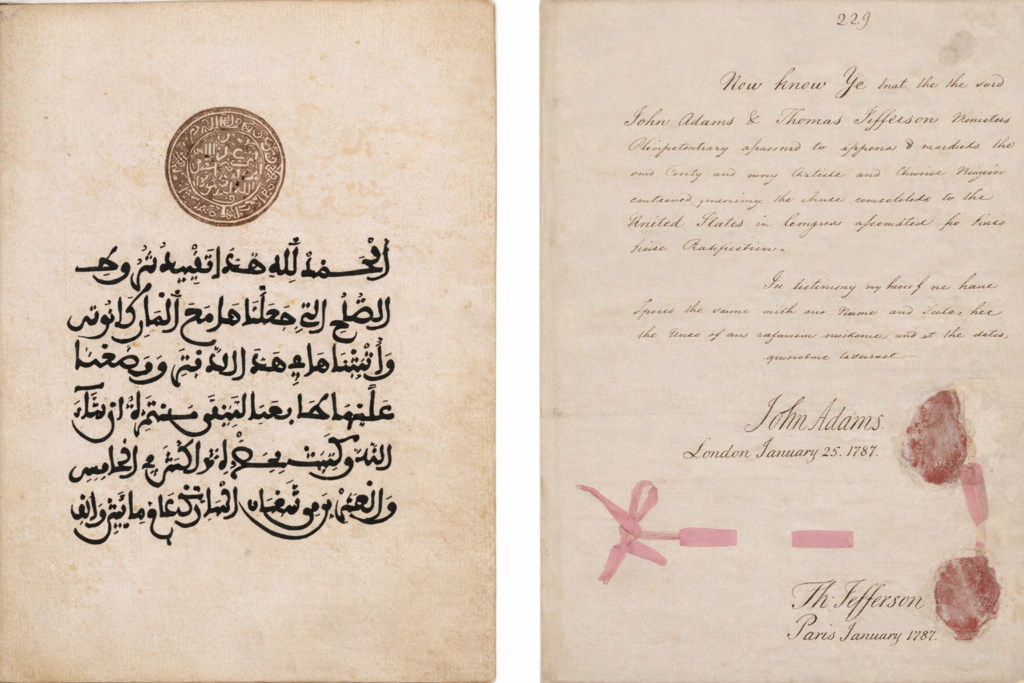
Morocco–US Treaty 1836 in Meknes
A human, story-driven look at the treaty signed in Meknes on September 16, 1836—one of the key moments that helped keep Morocco–US relations steady across centuries.
Verified references: U.S. Embassy Morocco history page, the treaty text (Avalon Project), and treaty summaries.
Quick facts
- What: Treaty of Peace / Friendship framework between Morocco and the United States.
- Where: Meknes, Morocco.
- When: September 16, 1836.
- Primary text: Avalon Project treaty transcription (Arabic original noted).
Sources: U.S. Embassy Morocco notes the treaty text in Arabic signed in Meknes (Sept 16, 1836) and the full treaty text appears in the Avalon Project.
Meknes, a treaty, and a quiet kind of diplomacy
If you ask most people about Morocco–US relations, they’ll mention the famous “old friendship” and jump straight to the late 1700s. That’s fair—those early agreements built the foundation. But relationships that last don’t survive on a single signature. They survive because, at key moments, leaders choose continuity over confusion.
One of those moments happened in Meknes. On September 16, 1836, Morocco and the United States signed a treaty there—an event recorded as being signed in Meknes, with the original text in Arabic. The treaty is commonly referenced as the Treaty with Morocco (1836) and is widely summarized as having been signed in Meknes.
Why 1836 mattered in real life
The 1830s were not calm years in the Mediterranean world. Trade was expanding, rival powers were watching North Africa closely, and maritime security still shaped reputations. In that environment, a treaty was not just symbolism—it was a practical framework: rules for ships, merchants, disputes, and the day-to-day basics that keep commerce from turning into conflict. The Avalon text itself shows how detailed that framework was, article by article.
Moroccan scholarly and diplomatic timelines also highlight the 1836 treaty as a significant renewal/continuation point under Sultan Moulay Abderrahmane, negotiated in Meknes. You can read this as Morocco asserting sovereign diplomacy, and the United States confirming that a stable relationship in the region was worth protecting.
Why Meknes
Meknes is often described through architecture and imperial heritage. Yet diplomacy also needs places—cities where authority is visible, decisions are formalized, and agreements become state-backed reality. The treaty being signed in Meknes is part of what makes the city more than a “beautiful setting.” It becomes a location where international history took a concrete turn.
A quick timeline you can remember
Why this story still lands today
What makes the 1836 Meknes moment memorable is its calm strength. It’s diplomacy without theatrics: a city, a signature, and an agreement designed to keep everyday relations predictable. That kind of predictability is exactly what allows a relationship to stretch across different centuries and different world orders.
FAQ: Morocco US treaty 1836 Meknes
Was the 1836 Morocco–US treaty signed in Meknes?
Yes. U.S. Embassy Morocco’s history page states the treaty text (Arabic original) was signed in Meknes on September 16, 1836, and the Avalon Project treaty page also describes it as signed at “Meccanez (Meknes)”.
Where can I read the treaty text?
A commonly used public transcription is available via the Avalon Project (Yale Law School), which presents the treaty article by article and notes the original Arabic.
Who negotiated the 1836 treaty on the Moroccan side?
Moroccan historical commentary frequently associates the 1836 Meknes treaty with the reign of Sultan Moulay Abderrahmane. One example is AL Academia’s overview of Morocco–US relations.
Is this connected to the older 1786 friendship treaty?
Yes. Official U.S. diplomatic history pages describe the long relationship beginning in the late 1700s and point to renewals/continuity through 1836.
What the 1836 treaty actually did
People often imagine historic treaties as a single promise. In reality, they work like a practical handbook: rules for ships, trade, disputes, and day-to-day safety. The 1836 treaty text reads exactly like that—structured, article by article, focused on keeping relations predictable and commerce protected.
Three practical themes you can remember
- Safe maritime conduct: rules designed to reduce incidents at sea and protect ships under recognized terms.
- Commercial clarity: agreed expectations for trade interactions and conduct between parties.
- Dispute handling: procedures and principles that lower the risk of escalation when disagreements happen.
Readers who want the full wording can consult the public treaty transcription (Avalon Project).
Why Meknes feels like the right place for this story
Meknes carries a special kind of authority. Its gates and walls speak in the language of statehood. A treaty signed here signals something subtle: diplomacy tied to a place where decisions feel official, deliberate, and anchored.
A short “human scene” to make the reader feel the moment
Imagine a warm day in Meknes. Inside a formal setting, papers pass between hands. Language matters, titles matter, the ink matters. Outside, the city continues its rhythm—markets, courtyards, footsteps on stone. The treaty feels quiet, almost ordinary in the room. Yet that quiet decision travels far: across oceans, across decades, across changing global orders.
That contrast is what makes Meknes unforgettable here: everyday life on one side, international continuity on the other.
What this means today (without the clichés)
Modern Morocco–US relations include security cooperation, trade, education, culture, and investment. The 1836 Meknes treaty moment adds depth to that present: it shows a habit of continuity, a preference for clear rules, and a shared interest in stability.
One takeaway line (easy to quote)
“Meknes reminds us that lasting diplomacy often looks simple: clear rules, renewed trust, and steady continuity.”
Historical Focus — Treaties of Friendship and Diplomacy
Is the Treaty of Peace and Friendship still valid?
Yes. The Treaty of Peace and Friendship between Morocco and the United States, renegotiated in 1836, remains in force today and is often described as the longest unbroken treaty relationship in U.S. diplomatic history.
Which two countries agreed to peace, friendship, and good understanding?
The treaty establishes peace and friendship between the United States of America and Morocco, confirming mutual respect, safe relations, and cooperation.
How did the United States force Japan to sign a treaty of friendship?
In the 1850s, the United States used what historians call gunboat diplomacy. Commodore Matthew Perry arrived in Japan with powerful naval warships, demonstrating military strength. Under this pressure, Japan agreed to sign the Treaty (Convention) of Kanagawa in 1854, opening relations with the United States.