Lalla Aisha Mubarka: The Enigmatic Power Behind the Alaouite Throne
In the annals of Moroccan history, where sultans, warriors, and viziers dominate the narrative, the figure of Lalla Aisha Mubarka emerges as one of intrigue, power, and quiet dominance. Though she was not a ruling monarch, her presence shaped the destiny of the Alaouite dynasty, influencing the course of governance from behind the palace walls.
As a woman of sub-Saharan origin, her rise to prominence in a deeply hierarchical and patriarchal society was nothing short of extraordinary. More than just a concubine or a member of the royal harem, she maneuvered through the intricate corridors of power, using intelligence, diplomacy, and patronage to leave a lasting imprint on Morocco’s history.
But who was Lalla Aisha Mubarka, and how did she become one of the most influential figures in the Moroccan court? This historical portrait unravels her story—a tale of ambition, cultural synthesis, and silent power.
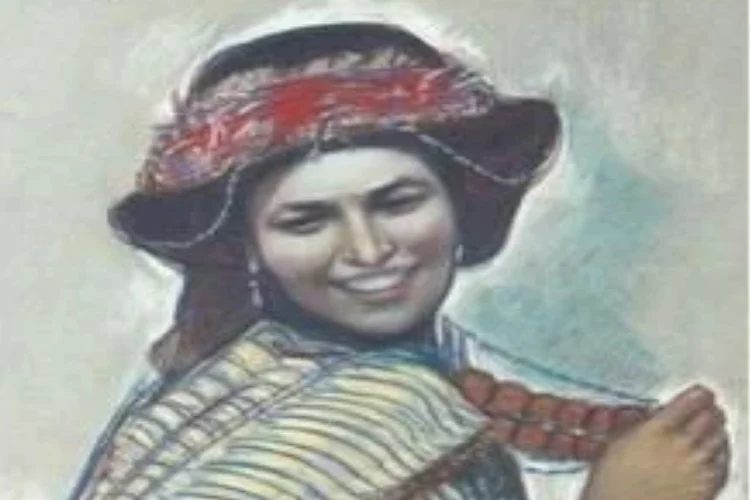
I. Origins: From Enslavement to Royalty
Lalla Aisha Mubarka’s story is unique because she was not born into nobility. She was of sub-Saharan African descent, and historical accounts suggest that she may have been brought to Morocco through the trans-Saharan trade routes. In the 17th and 18th centuries, the Moroccan court, like many Islamic royal courts, had a tradition of incorporating women from diverse ethnic backgrounds into the imperial harem.
Despite the constraints of her origin, Aisha Mubarka rose through the ranks of the royal household, distinguishing herself not just through beauty but through intellect, charisma, and political acumen.
1. Entry into the Royal Harem
Her introduction to the Alaouite court likely occurred during the reign of Sultan Moulay Ismail (1672-1727), a ruler known for his iron-fisted rule and vast ambitions. The Moroccan sultanate, in this period, was a political chessboard where women in the harem often held considerable, though concealed, power.
- The harem was not just a place of luxury; it was a political institution, where women could wield influence through their proximity to the Sultan.
- Aisha Mubarka quickly became a favorite, earning privileges and access to the Sultan’s inner circle.
2. More Than a Consort
Unlike many women of the harem who remained in the background, Lalla Aisha rose beyond the expected role of a concubine. She was educated, politically aware, and had a deep understanding of the court’s power dynamics. Her presence in the royal court was not passive—she actively shaped political decisions through advisory roles and patronage.
II. The Power Behind the Throne
1. Influence Over the Sultan
Lalla Aisha Mubarka’s influence grew during the later years of Moulay Ismail’s reign. As his health declined, the struggle for succession intensified, and the royal court became a hotbed of intrigue. She maneuvered within this chaos, ensuring that she remained relevant in the power transitions.
- She was known for her sharp political instincts, advising on matters of diplomacy and governance.
- Her opinions carried weight, and it is believed that she played a role in managing state affairs during the Sultan’s later years.
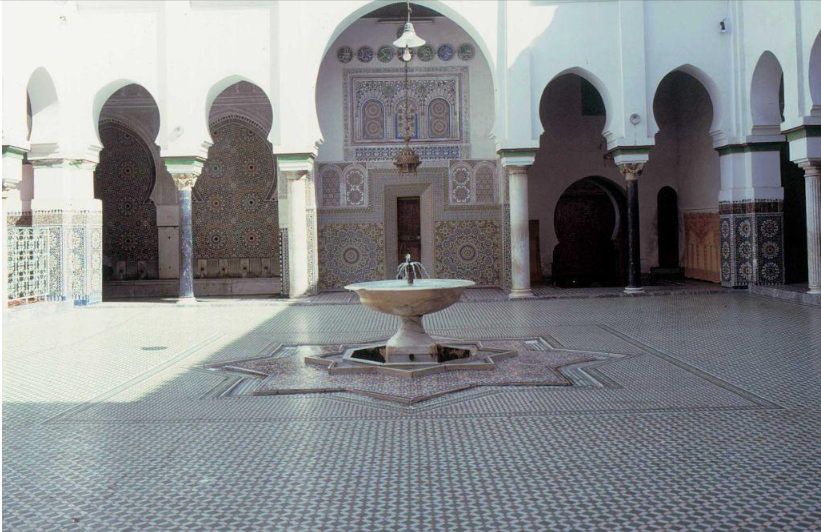
2. The Role in Succession and Governance
One of her most defining roles was her involvement in the succession struggles that followed the death of Moulay Ismail. The period after his death was one of instability, palace coups, and fratricidal conflicts among his sons.
- Aisha Mubarka aligned herself with key factions, helping to shape the eventual transfer of power.
- She acted as a regent-like figure, ensuring that her influence remained intact even after the Sultan’s death.
Her political acumen allowed her to navigate the volatile court politics with skill, proving that even in a male-dominated world, a woman could shape the course of a dynasty.
III. Cultural and Political Legacy
1. A Symbol of African Influence in Morocco
Lalla Aisha Mubarka’s legacy is not just political—it is cultural. As a woman of sub-Saharan African descent, her rise in Moroccan society highlighted the fluidity of cultural and racial identities in the royal court.
- She became a symbol of African heritage in Moroccan elite circles.
- Her story challenges conventional narratives about racial and social mobility in the Moroccan monarchy.
2. Patronage and Court Life
As a woman of influence, she engaged in patronage, supporting scholars, artists, and courtiers who sought her favor. This elevated her status and ensured her immortalization in Moroccan historical memory.
- She played a significant role in court culture, influencing fashion, etiquette, and even political alliances.
IV. The Mystery and the Myth
The life of Lalla Aisha Mubarka is shrouded in mystery, largely because historical records about women in the royal court are scarce. Much of what is known about her comes from oral traditions, fragmented historical texts, and references in Moroccan court chronicles.
Despite this, her story continues to fascinate historians, as she represents the untold stories of women who shaped history from behind closed doors.
- Was she merely a consort, or was she a de facto ruler in certain moments of crisis?
- Did she act independently, or was she a figure manipulated by more powerful court factions?
While these questions remain open, one fact is undeniable: Lalla Aisha Mubarka was far more than a footnote in history—she was a key player in Morocco’s royal saga.
The Silent Architect of Power
Lalla Aisha Mubarka’s life is a testament to the fact that power in history is not always wielded by those on the throne—sometimes, it is shaped by those who operate behind it.
In an era when women were often relegated to the shadows, she emerged as a formidable force, navigating court politics, influencing rulers, and leaving a cultural and political impact that resonates through the annals of Moroccan history.
Today, her legacy serves as a reminder of the hidden yet profound role women have played in shaping Morocco’s destiny. Though she may not have held a formal title of rulership, she ruled in ways that history often overlooks, but never truly forgets.
alla Aisha Mubarka, also known as Zaydana, passed away in 1716.owever, specific details regarding her burial site are not well-documented in historical records.iven her significant status as a wife of Sultan Moulay Ismail, it is plausible that she was interred in a prominent location, possibly in Meknes, where the Sultan’s mausoleum is situated.nfortunately, the exact location of her grave remains uncertain due to the limited historical documentation available.
The Marriages and Myths of Mawla Ismail: The Sultan of Many Wives and Legends
Introduction: The Sultan of an Unparalleled Legacy
Few rulers in history have commanded the kind of awe, fear, and fascination that Mawla Ismail Ibn Sharif (also spelled Moulay Ismail) of Morocco did. Reigning from 1672 to 1727, he was one of the most powerful and longest-serving sultans of the Alaouite dynasty. He was a man of iron discipline, ruthless ambition, and absolute monarchy. But beyond his military conquests and the fearsome creation of the Black Guard (Guich Abrid), another aspect of his life captured the imagination of historians and storytellers alike—his extraordinary number of marriages, concubines, and children.
The myths surrounding Mawla Ismail’s marriages and relationships are legendary, with claims that he fathered over 1,000 children, possibly making him one of the most prolific fathers in recorded history. His relationships with his wives and concubines were intertwined with politics, alliances, and royal intrigue, shaping the dynamics of his court in ways few monarchs ever have.
But how much of this is historical fact, and how much is embellished legend? Let us delve into the myth and reality of Mawla Ismail’s marriages.
I. The Politics of Marriage in the Alaouite Court
1. Marriage as a Political Tool
For Mawla Ismail, marriage was not merely a romantic or personal affair—it was a political instrument. His marriages helped him:
- Secure tribal alliances: By marrying daughters of powerful Berber, Arab, and sub-Saharan African families, he ensured loyalty and pacified rebellious factions.
- Strengthen his rule through diplomatic unions: Some of his wives were of Andalusian and European descent, reflecting his far-reaching influence.
- Expand his royal lineage: Like many monarchs, he believed that a large number of royal offspring would reinforce the stability of his dynasty.
2. The Harem: A Symbol of Power
The Moroccan royal harem in Meknes, the capital he built, was a fortified city within a city, guarded by his elite Black Guard, an army composed primarily of enslaved sub-Saharan Africans whom he had freed and trained to be fiercely loyal. The harem was home to:
- Wives of noble or royal lineage who held official status.
- Concubines and favored women, often foreign captives or gifts from allies.
- Attendants and servants, many of whom wielded indirect influence over court affairs.
Mawla Ismail was known for his strict control over his harem, ensuring that no other man except him had access to his wives and concubines. Any violation of this rule was punishable by death.
II. The Most Famous Wives and Consorts
Among the many women in his court, a few stood out due to their historical significance and the myths surrounding them.
1. Lalla Aisha Mubarka (Zaydana): The Enigmatic Powerbroker
One of his most powerful wives was Lalla Aisha Mubarka, also known as Zaydana. Unlike many of the other women in his life, she was not just a consort—she was a political force.
- She was of sub-Saharan African descent, which challenged traditional norms of royal women in Morocco.
- She held immense influence over the Sultan, often acting as a trusted advisor.
- Some legends claim that she used her power to manipulate court politics, supporting favored officials and eliminating rivals.
Lalla Aisha Mubarka’s mysterious aura and political maneuvering made her one of the most feared and respected women of the Alaouite court.
2. The Myth of the European Queen
There are accounts—part historical, part mythical—of a European princess or noblewoman being among Mawla Ismail’s wives. Some versions claim that she was:
- A Spanish or French noblewoman given to him as part of a diplomatic treaty.
- A Christian who converted to Islam to join his harem.
- A woman whose presence was meant to solidify Morocco’s relations with Europe.
Though these claims remain largely unverified, they reflect the fascination that Mawla Ismail’s marriages had on both Moroccan and European observers.
III. The Myth of 1,000 Children: Fact or Fiction?
Perhaps the most enduring legend of Mawla Ismail is his supposed record-breaking number of children. According to historical accounts:
- He fathered over 1,000 children, possibly as many as 1,171.
- His court maintained strict records of births and royal lineage, which helped support these claims.
- His children were strategically placed in positions of power across the empire.
Modern scholars and scientists have debated whether such a number is biologically possible. Some researchers suggest that, assuming:
- He had four sexual partners per day (as some sources claim).
- His wives and concubines were highly fertile.
- He ruled for over 50 years…
It is theoretically possible that he fathered hundreds of children, but the precise number is difficult to verify.
Regardless of the exact number, one thing is clear: his dynasty flourished, and his bloodline expanded far and wide.
IV. The Brutality and Control Over His Marriages
Mawla Ismail was a strict and often ruthless ruler, and his control extended over his personal life as well.
1. The Absolute Control Over His Wives
- He personally oversaw the harem’s security, making sure that only eunuchs and his most trusted guards had access.
- If a woman in the harem was suspected of infidelity, she could face severe punishment, including execution.
2. The Fearsome Punishments
Legends abound of Mawla Ismail’s merciless nature, even towards his own family:
- If a concubine or wife was caught in an affair, the punishment was death by beheading.
- He reportedly executed some of his own sons who defied him.
These strict measures were meant to ensure absolute loyalty and the legitimacy of his heirs.
V. The Legacy of Mawla Ismail’s Marriages
Mawla Ismail’s vast network of wives, concubines, and children was not just about personal pleasure—it was a dynastic strategy.
1. Dynastic Strength
By having numerous children, he ensured that his bloodline would never be extinguished. His descendants continued to rule Morocco for generations, with the Alaouite dynasty remaining the ruling family of Morocco to this day.
2. A Symbol of Absolute Monarchy
His harem and his approach to marriage symbolized his absolute control. Just as he ruled Morocco with an iron fist, he ruled his household with an unbreakable grip.
3. A Figure of Fascination
Even centuries after his death, the mystique of Mawla Ismail’s marriages continues to capture the imagination of historians, storytellers, and researchers.
Mawla Ismail: The Sultan of Legend and Reality
Mawla Ismail was a man of excesses, both in power and in personal life. His marriages and his supposed 1,000 children have left behind a legacy that blurs the line between historical fact and myth. Whether the numbers are accurate or exaggerated, what remains undeniable is his monumental impact on Morocco.
His rule was marked by military conquest, grand architectural projects (such as Meknes), and a dynasty that endures to this day. But within the high walls of his palaces, his marriages and relationships painted another story—one of power, control, and the ambition to build an empire not just through war, but through bloodline and legacy.
Mawla Ismail may have died in 1727, but his legend never faded. His name remains etched in Moroccan history as one of the most enigmatic and commanding figures of all time.