Understanding Morocco’s Government — Organization, Foundations, and How Power Really Works
Morocco’s political system is often described with big words—constitutional monarchy, parliament, institutions—but that doesn’t always help you understand how things work in real life. The purpose of this article is to give you a clear, human-friendly map: who holds which responsibilities, where decisions are made, and what elections genuinely influence. By the end, you won’t just recognize the names of Morocco’s institutions—you’ll understand how they connect, why some powers are designed for long-term stability, and how voting at national and local levels shapes everyday policies that people actually feel (schools, services, budgets, development).
Morocco’s Government: Organization, Institutions, and Types of Elections
If you ask ten people to explain how Morocco’s government works, you may get ten different answers—because most explanations skip the part that actually makes it understandable: Morocco is built on two realities that operate together. One is the monarchy, which gives the state continuity and a strong national “center.” The other is a full set of modern institutions—government, parliament, courts, elections—that shape policies, representation, and public life.
So instead of treating Morocco like a “mystery system,” let’s read it the way you would read a well-designed map: who sits where, what each institution does, and what elections really change.
Morocco in plain terms
Morocco is a constitutional monarchy. That means:
- the country has a King as Head of State
- the country also has a constitution, elected bodies, and laws that organize political life
- elections matter, but they operate inside a system where the monarchy remains a central institution
Think of it as a structure designed to combine stability with political representation.
1. The King’s role
Why the monarchy is not only symbolic
In Morocco, the monarchy is not a decorative layer placed on top of government. It is a core institution tied to national identity and constitutional life.
The King is generally seen as:
- the symbol of national unity
- a constitutional guarantor of institutional continuity
- a strategic actor in major state matters, especially long-term priorities
- a religious authority, which is historically significant in Morocco
For many Moroccans, the monarchy represents the “long line” of the state—something that remains steady while governments and parliaments change through elections.
2. The Government
Where day-to-day decisions are made
When you want to understand what is happening right now—education policy, healthcare programs, budgets, infrastructure, jobs—you look at the Government.
The government is led by the Head of Government, supported by ministers who manage sectors such as:
- finance
- education
- health
- interior affairs
- foreign affairs
- transport and infrastructure
The Head of Government
After parliamentary elections, the Head of Government is usually appointed from the party that wins the most seats. This person:
- coordinates the work of ministries
- proposes reforms and policy programs
- represents government action in parliament
- manages how public administration carries out decisions
In real life, this is the level of power people feel most directly—because it touches salaries, prices, services, schools, hospitals, and public projects.
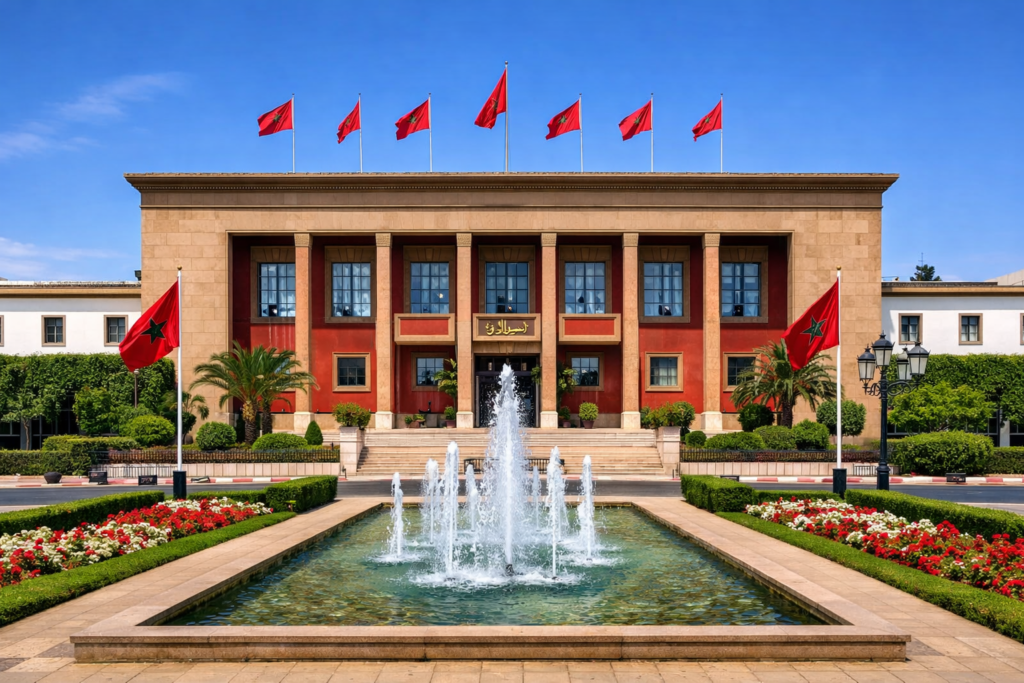
3. Parliament
Where representation becomes law
Morocco’s parliament has two chambers. This is important because it shows Morocco does not represent society through only one channel.
House of Representatives
This is the chamber elected directly by citizens. It is the most “electoral” part of national politics. Its members:
- debate and vote on laws
- approve the national budget
- question ministers
- hold the government politically accountable
House of Councillors
This chamber is elected more indirectly through regional councils and representative bodies. It exists to give voice to:
- territories and regions
- professional sectors
- socio-economic interests
If the House of Representatives reflects political competition and party programs, the House of Councillors adds a layer of territorial and institutional representation.
4. The judiciary
The system’s protection layer
Courts matter in any state that claims the rule of law. Morocco’s constitution supports the idea that judges and courts should work independently from political influence.
The judiciary:
- applies laws
- resolves disputes
- protects rights
- ensures the legal system remains consistent
In the simplest terms: politics may argue, but the law is supposed to remain the reference.
5. Elections in Morocco
What people vote for and why it matters
One of the reasons Morocco can feel complex is that elections happen at different levels—because governance happens at different levels too.
Parliamentary elections
These elections choose the House of Representatives. They matter because they shape:
- the political balance of parliament
- the formation of government
- the direction of national policy
Local and regional elections
These elections may not always get the same spotlight, but they directly shape daily life. They choose councils that manage:
- local services
- city planning
- local infrastructure
- regional development programs
If you want to understand why a city develops faster—or why certain services improve—local governance is often where the real story is.
Indirect representation elections
Some positions are filled indirectly through institutions, unions, and councils. The idea is to reflect social and economic realities inside the national institutional structure.
6. The political reality
Why coalitions and negotiation are common
Morocco’s political landscape is multi-party. That usually means one party rarely governs alone. Coalitions and negotiated programs are common, which can be frustrating for people who want quick decisions—but it also reflects diversity.
In practice, Moroccan politics often looks like:
- alliances built after elections
- shared responsibility across parties
- long negotiation around reforms
This is not unique to Morocco; it is typical in systems where proportional representation encourages pluralism.
7. A human way to understand Moroccan governance
Here is a way to picture Morocco’s political system without getting lost in legal language:
- the monarchy provides the long-term frame of state continuity
- elections provide renewal through representation
- the government turns political programs into real policies
- parliament debates and approves the rules and budgets
- courts help keep the system inside the law
It is a system built to manage both stability and change at the same time.
Morocco’s government is not one institution—it is a network. The monarchy, government, parliament, judiciary, and elections all interact in a structured way. Once you see these connections clearly, Morocco stops looking “complicated” and starts looking like what it really is: a political model designed to combine historical continuity with modern institutional governance.
Morocco Government Facts
A practical snapshot of Morocco’s political architecture: institutions, how elections work, and the main parties you will see in national debates.
Core institutions
Morocco’s political system is organized around executive, legislative, and judicial powers under a constitutional monarchy.
- Head of State with constitutional roles
- Ensures continuity of the state
- Key reference in national unity and long-term strategy
- Led by the Head of Government
- Ministries implement policies and manage public administration
- Accountability through parliamentary oversight
- House of Representatives elected directly
- House of Councillors elected indirectly via territorial and socio-professional representation
- Interprets and applies the law
- Protects rights and resolves disputes
- Designed to function independently
Types of elections
Elections happen at different levels because governance happens at different levels.
- Elect the House of Representatives
- Shape the political balance in parliament
- Influence government formation
- Elect local and regional councils
- Impact services and development priorities
- Often decide what citizens feel daily
- Some bodies are elected through councils and professional or territorial structures
- Designed to represent regions and socio-economic groups
- Multi-party competition
- Coalitions are common in practice
- Representation is built across several institutions
Fast explanation of proportional representation
Proportional representation tends to distribute seats among several parties based on vote shares, which often makes coalition-building part of normal politics.
Historical milestones
A timeline that helps readers understand why today’s institutions look the way they do.
-
1956
Independence and the modern state structure takes shape.
-
2011
Constitutional reform strengthens institutional language around separation of powers and the role of the Head of Government.
-
2021
Parliamentary elections produce a major reshuffle in party seat distribution and government formation.
Main parties you will often encounter
A neutral orientation list for readers who want to recognize names in elections and parliamentary coverage.
- RNI National Rally of Independents
- PAM Authenticity and Modernity Party
- Istiqlal Istiqlal Party
- PJD Justice and Development Party
- USFP Socialist Union of Popular Forces
- PPS Party of Progress and Socialism
- MP Popular Movement
- UC Constitutional Union
- Some parties are older and tied to long political traditions
- Some are newer or reorganized and focus on modern governance themes
- Coalitions can shift, so parties may be partners in one term and opponents in another
Tip for readers: follow program themes (jobs, education, prices, regional development) more than slogans. That is where politics becomes visible.
Quick glossary
- Head of State the constitutional figure representing the state
- Head of Government leads government action and coordinates ministers
- Legislature the institution that debates and votes laws
- Constituency an electoral district where seats are contested
- Coalition parties governing together after elections
How a law usually moves
- Proposal prepared by government or parliament
- Debate and review in parliament
- Voting process in both chambers
- Promulgation and implementation through administration
This is a simplified reading path that helps non-specialists follow politics without legal overload.
FAQ for readers
Does voting matter in Morocco
Elections shape representation in parliament and local councils, which influences government formation and policy priorities.
Why are there two parliamentary chambers
The bicameral design combines direct citizen representation with a second chamber linked to territorial and socio-professional representation.
Why do coalitions happen so often
Multi-party competition and proportional representation commonly produce parliaments where cooperation is needed to govern.
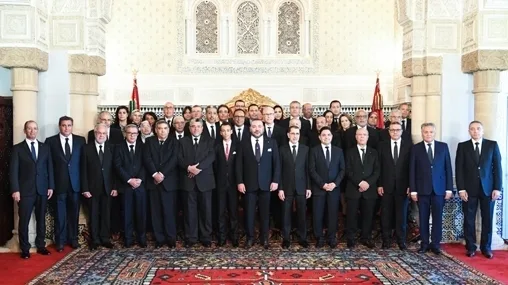
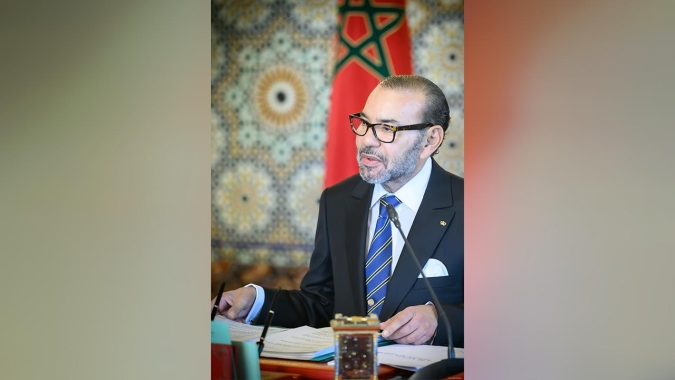
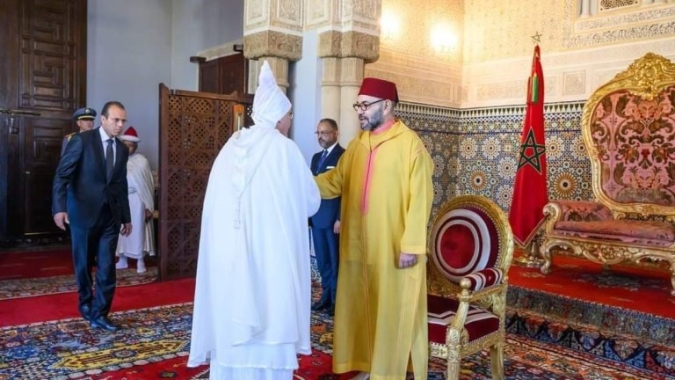
Morocco’s Government in Pictures — Ministers, Ceremonies, and the Monarchy
A visual snapshot of how Morocco’s executive power is organized and how key moments (appointments, councils, oaths) are staged in the Kingdom’s institutional protocol.
Fast facts readers usually want (at a glance)
System
Constitutional monarchy
Executive leadership
Head of Government + Cabinet
Elections
Parliamentary (party lists & constituencies)
Typical “high protocol” moments
Appointment, oath, Council of Ministers
-
Appointment ceremonies
Cabinet members are presented in formal ceremonies that reflect constitutional and royal protocol.
-
Council of Ministers
A key institutional format where strategic orientations and major appointments can be addressed.
-
Oath and official group photos
The “souvenir photo” becomes a public, symbolic record of a government’s composition.
How to expand this gallery (the smart way)
- Prefer official portals and agencies (MAP / government portals) when possible.
- Use clear captions: who, what, where, year.
- Keep credits visible (source + license if available).
- Add 1–2 photos per decade for a “through history” narrative.