Morocco Dos and Donts : A real-world guide for traveling smoothly, not just “getting by”
Morocco is welcoming, lively, and deeply layered. You can be sipping mint tea in a quiet riad courtyard in the morning, bargaining in a crowded souk at noon, and sharing a family-style dinner in the evening. The country is easy to love—but it’s also a place where social cues matter. Many “mistakes” aren’t dramatic; they’re small frictions that make interactions feel awkward or disrespectful.
This guide is meant to help you move through Morocco with ease: warmer conversations, smoother logistics, and fewer cultural missteps—without turning your trip into a list of rules.
Morocco Quick Card
One compact tool that prevents the most common travel friction: price confusion, taxi stress, etiquette mistakes, and missing emergency info.
Why these Dos and Donts actually matter
In Morocco, good manners are not “extra.” They’re a social language. People often evaluate intention through tone, patience, and respect rather than blunt efficiency. When you align with that rhythm, Morocco opens up: better service, kinder help, and invitations you didn’t expect.
Morocco Etiquette Quick Checker
Choose your travel profile, destination, and focus. Get instant cultural guidance and a smooth-travel score.
Greetings and everyday respect
Do: greet properly before asking for anything
A quick “Hello” is often not enough—especially in smaller cities, shops, and offices.
- Use “Salam alaykum” (hello/peace be upon you) or “Bonjour” in French-speaking areas.
- Add “Labas?” (How are you?) if you want to sound friendly and natural.
- In more formal settings, a short greeting + smile is already a strong start.
Don’t: jump straight into demands
Walking into a shop and immediately pointing at items or asking the price without greeting can feel cold. Even one sentence of politeness changes everything.
Do: accept the pace of conversation
You may hear quick social lines before business starts. That’s normal. It’s not “wasting time”; it’s relationship-building.
Don’t: overdo physical contact
Handshakes are common, but affection varies by context.
- If you’re unsure, let the other person initiate.
- Public affection is generally toned down compared to many Western countries.
Dress and appearance
Do: dress “smart casual” in public
Morocco is diverse, and you’ll see many styles. Still, modesty is a safe default, especially outside beach areas and resort zones.
- Think: covered shoulders, mid-length shorts/skirts, lightweight layers.
- In religious sites or traditional neighborhoods, modest clothing is a sign of respect.
Don’t: treat Morocco like a beach-only destination
In coastal tourist areas, clothing is more relaxed. But in most city streets and villages, very revealing outfits draw attention and discomfort—sometimes even harassment.
Food, invitations, and hospitality
Do: respect hospitality—it’s a big deal
If you’re offered tea, it’s often an expression of welcome, not a sales tactic (though in very touristy areas, it can be both). Either way, respond politely.
- If you accept, take a moment and be present.
- If you decline, do it kindly: “Thank you, maybe later.”
Don’t: refuse everything too quickly
Repeated refusal can look like distrust. If you truly don’t want something, stay warm in tone.
Do: use your right hand when possible
Eating, receiving items, or handing money with the right hand is commonly preferred. Nobody expects perfection—just effort.
Don’t: criticize food or traditions at the table
If you’re a guest, keep comments respectful. Ask questions instead of comparing or judging.
Souks, shopping, and bargaining
Do: bargain respectfully (when bargaining is normal)
In many markets, negotiation is part of the culture.
- Start friendly, smile, and be patient.
- If the price is too high, make a counteroffer calmly.
- If you agree on a price, follow through—walking away after agreement is seen as rude.
Don’t: bargain where it doesn’t belong
In supermarkets, pharmacies, malls, and most modern stores, prices are fixed. Bargaining there feels awkward.
Do: ask before taking photos
Many vendors and artisans dislike being photographed without permission, especially if you’re capturing their face or their work up close.
Don’t: assume “tourist = unlimited access”
Souks are daily working spaces. Treat them like someone’s workplace, not a stage set.
Money, tipping, and small transactions
Do: carry small cash
Cash is useful for taxis, street food, tips, and small shops. Smaller bills make life easier and reduce “I don’t have change” moments.
Don’t: flash large amounts of money
It’s not just about safety—it can also shift how people treat you.
Do: tip when the context supports it
Tipping practices vary by place and level of service. In many everyday situations, small tips are appreciated (especially for helpful service).
Don’t: feel pressured by “helpers”
In tourist zones, you might meet unofficial guides offering help and then requesting payment. Decide early, be polite, and keep boundaries.
Taxis and getting around
Do: confirm the price before the ride
In many cities, especially for small taxis, it’s smart to confirm whether they will use the meter or agree on a price upfront.
Don’t: assume every taxi follows the same rules
Taxi norms vary by city. Some places use meters more consistently than others. Staying calm and clear is your best tool.
Do: learn a few location phrases
Even basic French or Moroccan Arabic place words can prevent confusion.
- “Where is…?”
- “How much to…?”
- “Stop here, please.”
Religion and sensitive spaces
Do: be discreet around prayer times and religious settings
You’ll hear the call to prayer. It’s part of the soundscape and the rhythm of the day.
Don’t: enter religious spaces casually without checking rules
Some mosques are not open to non-Muslims (with notable exceptions that may have specific visiting guidelines). When in doubt, ask politely.
Do: be extra respectful during Ramadan
Even if you’re not fasting, avoid eating, drinking, or smoking publicly in conservative areas during daylight hours. In more international districts, it can be more relaxed—but discretion is still wise.
Relationships, gender dynamics, and social boundaries
Do: keep interactions polite and clear
Morocco is friendly, but social boundaries can differ from what you’re used to.
- A warm tone is good.
- Overly familiar behavior can be misread.
Don’t: escalate conflicts publicly
Shouting, sarcasm, or humiliation is rarely productive. If something goes wrong, calm firmness works better than confrontation.
Do: be mindful with compliments
Complimenting someone’s outfit or appearance can be taken differently depending on context. Safer compliments: craftsmanship, hospitality, service, food, design.
Business etiquette in Morocco
Do: prioritize relationship and trust
In business contexts, personal rapport often matters as much as the contract.
- Expect greetings and small talk.
- Follow up respectfully; persistence is normal.
Don’t: rush into blunt negotiation
Directness can work, but overly aggressive pressure can backfire. A measured tone builds long-term credibility.
Do: dress professionally in meetings
Even in warm weather, professional presentation matters in many sectors.
Safety and common sense
Do: plan like a traveler, not a target
- Keep valuables discreet.
- Use licensed guides when you want guiding.
- Know your route at night.
Don’t: rely on strangers for navigation in tourist hotspots
Sometimes people genuinely want to help. Sometimes they want to guide you into a shop or demand money. You can say: “Thank you, I’m fine.”
The one thing to understand first
Morocco runs a lot on respect + relationship. People often read your intention through:
- how you greet
- how patient you are
- whether you treat someone like a person… or like a function (driver, waiter, vendor, etc.)
When you get this right, Morocco feels warm and effortless. When you don’t, things can suddenly feel “difficult” even if nobody is openly rude.
Greetings and first contact
✅ Do: greet before you ask
In Morocco, starting with a greeting is like opening a door properly.
Use:
- Salam alaykum (very safe everywhere)
- Bonjour (common in cities)
- Labas? (friendly “Are you good?”)
Even in a tiny shop, this changes the whole vibe.
❌ Don’t: walk in and point
Pointing, rushing, or asking prices immediately can come off as cold. Not “criminal.” Just… unpleasant.
✅ Do: keep it calm
If something goes wrong (wrong item, wrong direction, misunderstanding), calm + firm works better than intensity.
❌ Don’t: argue like you’re trying to “win”
Public conflict escalates faster than you expect. In Morocco, saving face matters. Staying composed often gets you more cooperation.
Clothes and public comfort
✅ Do: dress in a way that makes your day easier
Morocco is diverse, but modesty still helps you blend in and avoid unwanted attention—especially outside beach areas.
A good rule: smart casual.
- light layers
- covered shoulders
- shorts not too short in city streets
- a scarf can be useful (sun + discretion)
❌ Don’t: treat the whole country like a resort
A swimsuit belongs at the pool or beach. In normal streets and small towns, very revealing outfits attract attention and discomfort—sometimes the kind you really don’t want.
Tea, invitations, and hospitality
✅ Do: take hospitality seriously
If someone offers tea, it often means: welcome, relax, you’re safe here.
Sometimes it’s also business, especially in tourist zones—but even then, politeness is expected.
❌ Don’t: reject everything instantly
Rapid “no no no” can feel suspicious. If you want to decline, do it gently:
- “Thank you, maybe later.”
- “I appreciate it, not now.”
✅ Do: use your right hand when possible
Eating, receiving things, handing money—right hand is the norm. Nobody will punish you if you forget, but it’s a good gesture.
Souks and bargaining (the part everyone gets wrong)
✅ Do: bargain like it’s a conversation
Bargaining isn’t war. It’s social. A smile and a calm counteroffer go far.
Better approach:
- ask the price
- react politely
- offer a number
- meet somewhere in the middle if you want it
❌ Don’t: agree on a price and then walk away
If you say yes, then change your mind, it looks disrespectful. If you’re unsure, say:
- “Let me think”
- “I’ll come back”
✅ Do: ask before taking photos
Many people don’t want their face photographed, and some vendors don’t want their work copied. Ask first. It’s simple, and it prevents drama.
Money, tipping, and “helpers”
✅ Do: carry small cash
Small bills make taxis, street food, and tips easier. It also reduces the classic “no change” situation.
❌ Don’t: let “help” become a trap
In busy tourist areas, someone may “guide” you and then demand payment. If you don’t want it, stop early with a calm line:
- “No thank you, I’m good.”
No long explanations. No argument.
✅ Do: tip when it makes sense
Tipping is common for helpful service. You don’t need to overdo it—small tips can mean a lot.
Taxis and getting around
✅ Do: confirm the price before you ride
Either:
- confirm they’ll use the meter, or
- agree on the fare before you enter
❌ Don’t: assume taxi rules are identical everywhere
Each city has its habits. If you stay calm and clear, you’ll be fine.
Religion, Ramadan, and sensitive moments
✅ Do: be discreet around religious settings
You’ll hear the call to prayer. It’s normal. Respect the atmosphere and follow local cues.
❌ Don’t: enter religious places casually
Some mosques have restrictions. If you’re not sure, ask politely first.
✅ Do: be considerate during Ramadan
Even if you’re not fasting, try to avoid eating or drinking openly in conservative areas during daylight. In international districts it can be looser—but discretion is still smart.
Social boundaries and gender dynamics
✅ Do: keep friendliness clear and respectful
Morocco is warm, but social signals can be interpreted differently.
- Friendly tone: yes
- Overly familiar behavior: risky
❌ Don’t: assume your normal style translates perfectly
What feels “casual” in one country can look too intimate or too intense in another. When in doubt, go one step more respectful.
Business etiquette in Morocco
✅ Do: build trust before pushing deals
In many Moroccan business contexts, people work with people they trust.
- greet properly
- be patient with small talk
- follow up politely (and more than once)
❌ Don’t: be aggressively direct
You can be clear without being forceful. A measured tone often gets better results.
The simplest Morocco checklist (easy to remember)
If you remember nothing else, remember this:
- Greet first.
- Slow down a little.
- Ask before photographing people.
- Agree on prices before services.
- Carry small cash.
- Keep your voice calm.
- Respect the setting (especially Ramadan and religious places).
Morocco in 48 Hours — Survival Basics
If you only have two days in Morocco, the goal is simple: stay relaxed, greet people properly, and avoid small cultural frictions. Morocco rewards calm energy and visible respect.
Do
- Say “Salam alaykum” or “Bonjour” before asking anything.
- Carry small cash for taxis, tips, and street food.
- Confirm taxi price or meter before the ride.
- Dress smart-casual in city streets and traditional areas.
- Ask before photographing people or artisans.
- Use your right hand when giving or receiving items.
Don’t
- Don’t rush conversations or point at people/items.
- Don’t argue loudly in public—stay calm and firm.
- Don’t bargain in supermarkets or modern malls.
- Don’t flash large amounts of money.
- Don’t treat religious places like tourist attractions.
Golden rule: greet first, smile, and slow down a little. Two small gestures can open ten doors.
Real Situations Travelers Face in Morocco
Taking a Taxi
Always confirm the price or ensure the meter runs before departure. Negotiation belongs to daily life and remains respectful.
Asking Directions in the Medina
Many locals help naturally. A polite greeting before asking creates a positive exchange.
Photography Moments
Ask permission before photographing people, especially artisans and elders.
Café Culture
Cafés function as social observatories where conversation matters as much as coffee.
Friday Rhythm
Friday afternoons follow a calmer national rhythm linked to prayer and family gatherings.
Morocco — Practical Tips for Women Traveling Solo
Morocco is generally welcoming and lively. Solo women travel here every day. A few practical habits simply make the experience smoother and more comfortable.
Do
- Dress in a way that makes you comfortable and reduces unwanted attention (light layers, covered shoulders in city centers).
- Walk with confidence and purpose—even if you check maps discreetly.
- Use licensed taxis and confirm the price before entering.
- Choose riads/hotels with good reviews and central locations.
- Learn two or three phrases in French or Moroccan Arabic.
- Trust your intuition—if a situation feels off, step away calmly.
Don’t
- Don’t feel obligated to respond to persistent street comments—ignoring is acceptable.
- Don’t share hotel details or full travel plans with strangers.
- Don’t walk isolated streets late at night without purpose.
- Don’t mistake friendliness for obligation—you can politely decline invitations.
Reality check: most interactions are kind and helpful. A calm tone, clear boundaries, and simple planning go a long way.
Business Etiquette in Morocco — Conferences & Official Meetings
Professional settings in Morocco balance formality with relationship-building. Efficiency is appreciated, but trust and tone often influence outcomes just as much.
Do
- Begin meetings with a proper greeting and brief small talk.
- Dress professionally even in warm weather (light suits, neat presentation).
- Exchange business cards respectfully—take a moment to read the card.
- Confirm agendas and follow up politely after meetings.
- Show patience with timing; flexibility is often part of the process.
Don’t
- Don’t rush straight into hard negotiation without rapport.
- Don’t criticize partners publicly or raise your voice.
- Don’t assume silence means disagreement—sometimes it signals consideration.
- Don’t over-promise quick delivery if local processes require approvals.
Key insight: clarity + courtesy + follow-through build long-term credibility faster than pressure.
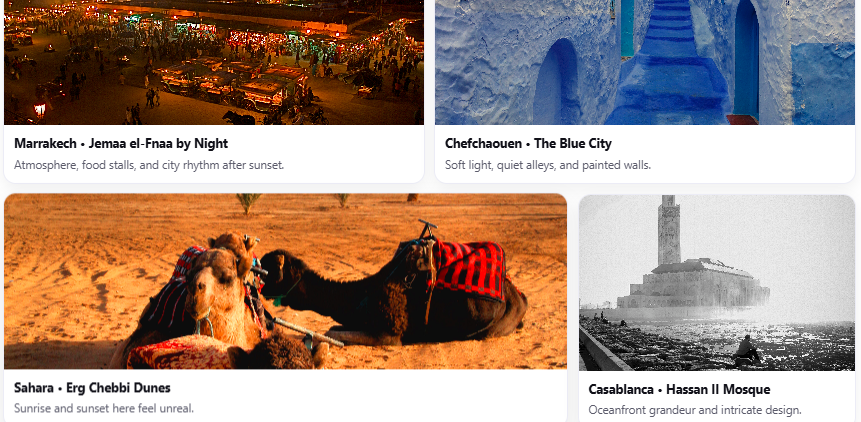
Morocco Photo Album
A compact visual journey: Marrakech by night, Chefchaouen’s blue streets, Sahara dunes, and Casablanca’s iconic mosque.

Marrakech • Jemaa el-Fnaa by Night
%20-%20Chaouen.jpg)
Chefchaouen • The Blue City

Sahara • Erg Chebbi Dunes

Casablanca • Hassan II Mosque
Frequently Asked Questions About Morocco Etiquette
Is Morocco welcoming for first-time travelers?
Morocco offers a strong culture of hospitality where respectful behavior creates warm interactions.
What behavior shows respect in Morocco?
Greeting first, dressing thoughtfully, and showing patience in conversations reflect cultural awareness.
Can tourists negotiate prices?
Bargaining forms part of traditional commerce and takes place with courtesy and humor.
Do cultural rules change by city?
Large cities feel more relaxed while traditional towns preserve stronger customs.
- APA Citation Generator APA 7 That Builds Real Confidence
- Travel Tips for Morocco : Understanding Morocco’s Diverse Landscape