Mohammed VI Tower: When a Skyline Learns to Breathe Again
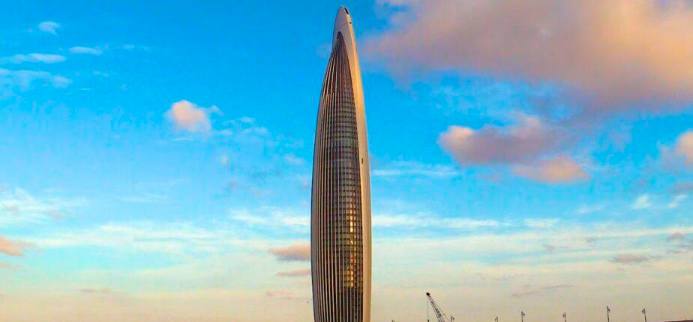
The skyline of Rabat and Salé has shifted—quietly, almost imperceptibly—yet irreversibly. Rising above the Bouregreg, the Mohammed VI Tower does more than add height to the city; it alters its rhythm, its perspective, and perhaps even its ambitions. What began as a distant construction project has become a lived presence—one that reflects a country moving forward with composure, clarity, and a deeply rooted sense of identity.


There are moments when a city changes without noise. No rupture, no sudden break—just a quiet shift that, once noticed, becomes impossible to ignore.
The Mohammed VI Tower belongs to that category of transformation.
For years, the skyline of Rabat and Salé remained stable, almost introspective. The horizon unfolded in long, horizontal lines, shaped by institutions, history, and a certain restraint. Then came the cranes—persistent, patient, almost discreet. They stayed long enough to become familiar. People passed them daily without thinking much about what they were building.
Now that the tower stands complete, something subtle has shifted. The skyline feels deeper. The city, in a way, feels taller—even for those who never set foot inside the building.
Time, Patience, and the Weight of Expectation
Eight years is a long time in the life of a city. Long enough for a project to become part of the background. Long enough for expectations to fade, then quietly return.
When Crown Prince Moulay Hassan Crown Prince of Morocco inaugurated the tower in April 2026, the gesture marked more than the end of construction. It marked the end of waiting.
Yet the most interesting aspect lies elsewhere. During those years, the tower existed before it was visible. It lived in conversations, in projections, in doubts, in curiosity.
Completion does not close that story—it transforms it.
The Facts, Grounded and Clear
A structure of this scale inevitably invites precision:
| Element | Detail |
|---|---|
| Height | 250 metres |
| Status | Tallest building in Morocco |
| Continental Position | Among the tallest in Africa |
| Construction Period | 8 years |
| Investment | ≈ 6.5 billion MAD |
| Inauguration | April 13, 2026 |
| Media Opening | April 20, 2026 |
| Location | Bouregreg Valley (Rabat–Salé) |
| Functions | Hotel, offices, cultural spaces, observation deck |
These figures provide structure. They do not capture the atmosphere.
A Building That Feels Anchored
What surprises many visitors is how naturally the tower fits into its surroundings.
Height often creates distance. Here, it creates continuity. The design avoids the cold neutrality seen in many global skyscrapers. Instead, it carries traces of Moroccan identity—subtle patterns, controlled textures, a sense of rhythm that recalls traditional craftsmanship without imitating it.
Inside, the experience remains coherent. Nothing feels excessive. Materials speak softly. Light is used with intention. The building does not overwhelm—it guides.
This sense of balance gives the tower something rare: legitimacy.
The Bouregreg, Reimagined
For a long time, the Bouregreg river functioned as a line—a separation between Rabat and Salé. Bridges connected the two, but perception remained divided.
The tower changes that perception.
Placed at this precise point, it acts as a visual anchor. From afar, it draws both banks into a single frame. From above, the river no longer divides—it organizes.
Such a shift may seem symbolic. In reality, it shapes how people understand their own city.
Urban geography is not only physical. It is mental.
A Space That Lives
The Mohammed VI Tower avoids the trap of becoming a frozen symbol. It is designed to be inhabited.
A hotel introduces movement—arrivals, departures, temporary lives intersecting. Office spaces promise daily routines, decisions, negotiations. Cultural venues open the building to a broader public. The observation deck offers something simpler: perspective.
Each function adds a layer of life. Together, they create continuity.
In the coming months, residential and commercial spaces will enter the market. That moment will test the building in a different way. Admiration is immediate. Adoption takes time.
A Different Kind of Ambition
Across the world—and increasingly across Africa—towers often compete for visibility. Height becomes a metric, sometimes an obsession.
The Mohammed VI Tower follows another logic.
It does not try to dominate the continent. It does not rush to claim records. Instead, it integrates itself into a larger vision—one that includes infrastructure, diplomacy, tourism, and cultural influence.
This approach changes the tone. The tower feels less like a statement of power, more like a demonstration of control.
Living with the Tower
What happens after inauguration often defines the true success of such projects.
Gradually, the tower will enter daily life. People will refer to it casually. It will become a point of reference: directions, meetings, memories. Taxi drivers will use it. Visitors will photograph it. Residents will stop noticing it—until they leave the city and realise something is missing.
That moment—when a landmark becomes invisible through familiarity—is the final stage of integration.
A New Scale of Imagination
Perhaps the most lasting impact of the tower lies in what it allows people to imagine.
Once a city accepts verticality, new possibilities emerge. Other projects follow, not necessarily similar in form, but influenced in scale. The limits of what feels “appropriate” expand.
This does not mean Rabat will transform overnight. It means the city now has a reference point—a new measure.
A Quiet Confidence
There is no urgency in the way the Mohammed VI Tower presents itself. No need to impress through excess. No attempt to overwhelm.
That restraint feels intentional.
It reflects a form of confidence that does not rely on demonstration. A country that builds like this does not seek approval. It expresses continuity.