Meknes: A City of History, Architecture, and the Grandeur of Moulay Ismail
💡 Meknes remains a testament to the era of Moulay Ismail, with its majestic architecture and long walls that never stray far from view. This city was not just a capital but a symbol of the sultan’s ambition to etch his name into the annals of history. It is a city imbued with a blend of grandeur and legend, encapsulating the spirit of Morocco in its most magnificent form.
Meknes stands as a living testament to the grandeur of Moroccan architecture, with its atmosphere steeped in history interwoven with tales of power and ambition. Among its iconic landmarks is Bab Mansour, the magnificent gate designed by a Christian convert to Islam. Today, this gate remains one of the greatest examples of Moroccan architectural engineering, reflecting the brilliance of its design and the richness of its era.
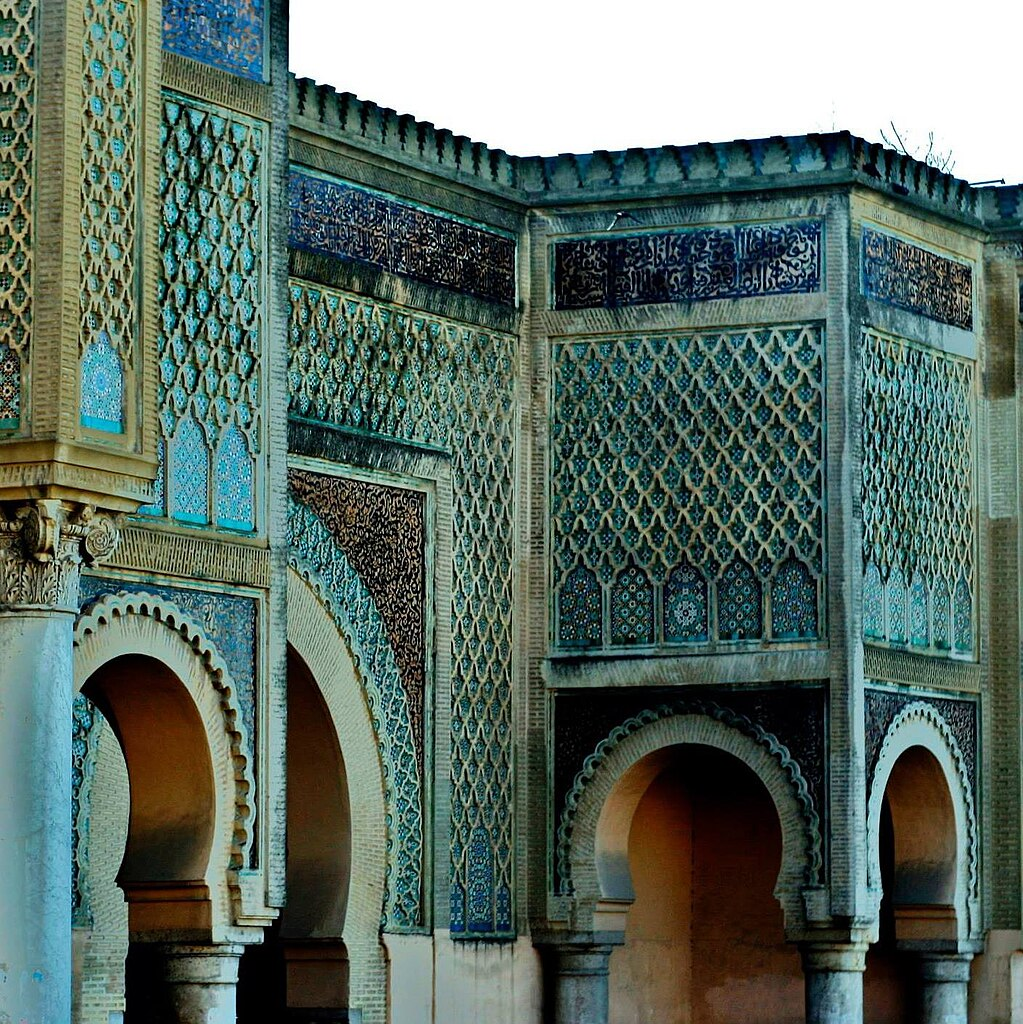
The Palace of Moulay Ismail: A Dream Rivaling Versailles
During the reign of Moulay Ismail, the ambition to construct a palace matching the splendor of Louis XIV’s Versailles was a driving force for the sultan. He had heard of the marvels built at Versailles and resolved to create his own equivalent in Meknes, worthy of his stature. To achieve this, he mobilized thousands of workers, including prisoners and Christian captives, who labored to build these monumental structures. Even today, the remnants of massive walls and a vast underground vault, once used as a prison for captives, bear silent witness to the brutal realities of their construction. It is said that the blood of these workers mixed with the clay used in the building, making the architecture a poignant testament to the harshness of the era.
The Military Legacy of Moulay Ismail: Armies and Security
Moulay Ismail was the first to establish an organized army of Black soldiers, who became a cornerstone of Morocco’s military forces. Service in this army was not just an obligation but became a hereditary tradition among soldiers and their families. With this army of 100,000 troops, the sultan extended his control over territories that neither his predecessors nor successors managed to reach.
The Legendary Harem: A Symbol of Power and Uniqueness
If Moulay Ismail’s reputation rested solely on the architecture he built, it would be a source of immense pride. However, what also made him an extraordinary figure were the tales of his legendary harem. According to reports, he fathered 867 children, making his harem rival the stuff of legends. Even Suleiman the Magnificent seems modest in comparison, as if hosting a small gathering in a tiny room. An entire neighborhood in Meknes was dedicated solely to the sultan’s descendants, reflecting the vast social and demographic legacy he left behind.
The Sanctuary of Sidi Mohammed Ben Aissa: A Unique Spiritual Landmark
In a corner of Meknes, near Bab Berdaïne, lies the shrine of Sidi Mohammed Ben Aissa, also known as “Son of the Messiah.” This saint’s fame extended beyond Morocco, as he founded a religious brotherhood that remains one of the most prominent Sufi orders, with followers numbering in the thousands. His annual celebrations are held in winter in Meknes, though I personally witnessed one of their majestic ceremonies in Kairouan, Tunisia. The event seamlessly blended the spiritual with the historical, creating a captivating spectacle.
The Contradictions of Moulay Ismail’s Legacy
What is striking about Moulay Ismail’s legacy is the dichotomy it presents. While he brought order and security to Morocco and expanded its borders, he was also a figure of both admiration and criticism. Moroccans would raise his name in reverence for the glory of his victories, yet they would complain about France, which brought stability through very different means. This duality in their sentiments reflects a tension between pride in their history and a recognition of contemporary realities.
The Agricultural and Commercial Heart of Meknes
Beyond its historical and architectural grandeur, Meknes also served as an essential agricultural and commercial hub during Moulay Ismail’s reign. The city’s strategic location in Morocco’s fertile plains made it a center for the production of grains, olives, and fruits. To support this economic activity, Moulay Ismail constructed vast granaries and stables, some of which, like the Heri es-Souani, remain significant historical landmarks.
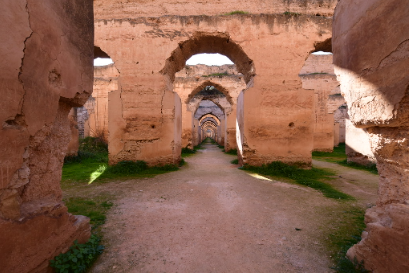
The Heri es-Souani complex was a remarkable example of engineering and foresight. These granaries and storehouses were designed not only to safeguard the city’s food supply but also to ensure the stability of the kingdom during sieges or famines. The attached stables, which could house up to 12,000 horses, symbolized the sultan’s military strength and readiness for war. The vaulted architecture and ingenious ventilation system of these structures highlight the advanced architectural techniques of the time.
Meknes also thrived as a trading center, with caravans arriving from the Sahara, sub-Saharan Africa, and the Mediterranean. The city’s markets, or souks, were bustling with activity, offering goods such as spices, textiles, and precious metals. This vibrant commercial life was a testament to the city’s importance as a link between Morocco’s interior and the broader Mediterranean trade network.
Meknes as a Center of Art and Culture
Under Moulay Ismail, Meknes became a cultural and artistic beacon. The city was not just a place of political and military significance but also a hub for scholars, poets, and artisans. The sultan’s patronage of the arts fostered a flourishing cultural environment, as seen in the intricate zellige tilework, carved cedar wood, and exquisite plaster decorations that adorn Meknes’ palaces and mosques.
The Grand Mosque of Meknes, one of the city’s oldest and most revered religious sites, exemplifies this artistic and cultural heritage. Its architecture blends elements of Andalusian and Moroccan styles, reflecting the cultural exchanges that defined the era. The mosque was a center for learning and spiritual growth, attracting scholars and theologians from across the Islamic world.
Meknes also became a place where oral traditions and storytelling thrived. The city’s public squares, like Place El-Hedim, were venues where storytellers, musicians, and performers entertained crowds, keeping Morocco’s rich oral traditions alive.
Meknes After Moulay Ismail: A City of Resilience
While Meknes flourished under Moulay Ismail, its fortunes waned somewhat after his death in 1727. The city’s importance as a capital diminished as subsequent sultans shifted their focus to other cities like Marrakesh and Fez. However, Meknes retained its architectural splendor and historical significance, becoming a symbol of resilience and Morocco’s rich heritage.
In 1755, the catastrophic Lisbon earthquake caused significant damage to Meknes, particularly to its monumental structures. Despite this, the city’s core architectural marvels, including Bab Mansour and the royal stables, survived, standing as enduring reminders of its golden age.
Meknes Today: A UNESCO World Heritage Site
In modern times, Meknes has been recognized as a UNESCO World Heritage Site, celebrated for its unique blend of Islamic and European architectural influences. The city continues to attract visitors from around the world who come to admire its historical landmarks, vibrant markets, and rich cultural traditions.
While Meknes may no longer hold the political prominence it once did, it remains a proud testament to Morocco’s imperial history. The city embodies the legacy of Moulay Ismail, whose vision and ambition transformed it into a jewel of Moroccan heritage.
Meknes is more than just a historical city; it is a living narrative of Morocco’s past, echoing tales of ambition, resilience, and cultural brilliance.