Mohammed VI and the Remaking of Morocco
When Mohammed VI became king in July 1999, Morocco was entering a new chapter, though few people could yet say exactly what it would look like. He inherited a country shaped for decades by the long and powerful reign of Hassan II, along with a monarchy that stood firmly at the center of national life. There was continuity, certainly, yet there was also curiosity. People wanted to know what kind of ruler he would be, what kind of tone he would set, and how Morocco might change under his reign.
More than two decades later, the answer has emerged slowly, through time rather than spectacle. Mohammed VI’s reign has not been defined by one dramatic break with the past. It has taken shape through a steady series of reforms, large-scale projects, and strategic choices that have gradually altered the country’s direction. The Morocco of today is more connected, more ambitious in its infrastructure, more present in Africa, and more visibly engaged in long-term development than it was at the end of the 1990s. That evolution did not happen all at once. It came piece by piece, through decisions whose full significance often became clear only years later.
A different tone at the top
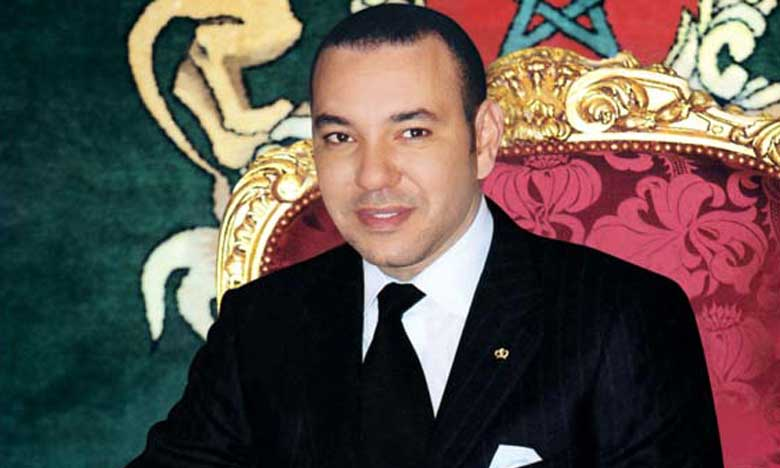
From the beginning, Mohammed VI seemed to bring a different style to the throne. The institution remained the same, and the continuity of the monarchy was never in question, yet the tone changed. His public image appeared more direct, less distant, and often more focused on social realities. Visits to rural areas, development zones, and regions far from the traditional centers of influence became part of that image.
This mattered because style, in politics, often shapes perception before policy does. The impression that took hold early in the reign was that Morocco would move toward reform without abandoning stability. That combination became one of the defining features of the era. The monarchy would continue to serve as the central pillar of the state, while also presenting itself as a driver of modernization.
It was a careful balance, and in many ways it still is.
Reforming society through the Moudawana
One of the earliest major markers of the reign came in 2004 with the reform of the Moudawana, Morocco’s family code. It was one of those moments that reached far beyond the legal sphere. Family law is never just a technical matter. It touches personal life, social norms, gender relations, and the way a society understands itself.
The reform introduced important changes that strengthened women’s rights and reshaped parts of the legal framework around marriage, divorce, and parental responsibility. What gave the reform its weight was not only the content of the law itself, but the fact that such a sensitive subject was addressed at all, and with real ambition.
For many observers, this became one of the clearest signs that Mohammed VI’s reign would try to move Morocco forward through calibrated reform rather than rhetorical rupture. The change was meaningful, but it was framed in a way that sought legitimacy within Morocco’s own social and institutional fabric.
Development that tries to reach the margins
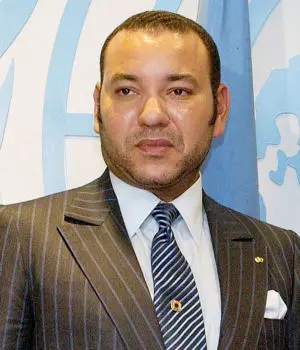
Another central theme of the reign has been the idea that development should not remain confined to major cities or headline economic figures. In 2005, Mohammed VI launched the National Initiative for Human Development, known widely as the INDH. The name may sound administrative, yet its purpose was simple enough: to reduce poverty, address social vulnerability, and bring support closer to communities that had long felt overlooked.
Through local projects, social programs, infrastructure improvements, and support for small initiatives, the INDH became one of the most visible social frameworks of the reign. Its importance lies as much in what it represented as in the projects themselves. It suggested that development should not only be measured in ports, highways, or investment figures, but also in daily conditions, local opportunity, and social inclusion.
The results have been uneven in places, as large programs often are, but the broader message has endured. Under Mohammed VI, the language of development has consistently included a human and territorial dimension.
The age of major projects
If social policy gave the reign one of its moral narratives, infrastructure gave it one of its most visible ones. Modern Morocco is difficult to imagine without the large projects that came to define the era.
The Tangier Med port complex stands out as one of the clearest examples. More than a port, it became a statement about Morocco’s place in the world. Positioned near the Strait of Gibraltar, it turned the country into a much stronger logistics hub, linking Africa, Europe, and global trade routes with a new level of ambition.
Then came Al Boraq, inaugurated in 2018, Africa’s first high-speed rail line. The project immediately became a symbol, not only because of its technical significance, but because it captured something larger about the image Morocco wanted to project: modern, capable, and ready to invest in infrastructure that signals confidence as much as utility.
These projects matter because they changed both function and perception. They improved connectivity, certainly, yet they also helped shape a national narrative of momentum. They gave visible form to the idea that Morocco was moving forward.
A stronger African presence
One of the most striking shifts of Mohammed VI’s reign has taken place on the diplomatic front, especially in relation to Africa. Over the years, Morocco has deepened its ties across the continent through state visits, financial partnerships, business expansion, religious cooperation, and political engagement.
This long-term orientation culminated in Morocco’s return to the African Union in 2017. The move carried symbolic and strategic importance. It confirmed a change that had already been unfolding: Morocco was no longer looking at Africa as a secondary horizon, but as a central one.
That repositioning has shaped the country’s diplomatic identity in a lasting way. Moroccan banks, companies, and institutions have built a broader presence across the continent, and the monarchy has placed African relations at the heart of its external strategy. The result is a Morocco that increasingly presents itself as both African and Mediterranean, regional and global.
Energy and the long view
The reign has also been marked by a strong investment in renewable energy, an area where Morocco has tried to think ahead rather than merely react. The Noor solar complex near Ouarzazate became the most visible symbol of this ambition. Stretching across the landscape with its vast solar installations, it quickly came to represent a country trying to position itself on the side of energy transition and long-term resilience.
For Morocco, this is more than an environmental story. It is also an economic and strategic one. Energy independence matters. Planning for the future matters. And projects like Noor helped convey the sense of a state willing to commit to large, forward-looking choices in an increasingly uncertain world.
More than policies and statistics
Still, the story of Mohammed VI’s reign cannot be told through reforms, infrastructure, and diplomacy alone. It is also a story of symbols, scenes, and recurring images. The king visiting a project site, meeting African leaders, inspecting a major development, or appearing in regions far from the capital has all contributed to the atmosphere of the era.
These images have helped shape the perception of a Morocco in motion. They suggest a country trying to modernize without severing itself from its deeper structures, trying to project confidence while managing complexity, trying to grow while preserving cohesion.
That may be one of the clearest ways to understand the reign: not as a single grand rupture, but as a long attempt to guide transformation without destabilization.
A reign still being judged in real time
After more than twenty-five years on the throne, Mohammed VI presides over a Morocco that has undeniably changed. The country is more visible internationally, more developed in its infrastructure, more embedded in African diplomacy, and more advanced in certain areas of social and legal reform than it was in 1999.
At the same time, the larger judgment on the reign is still unfolding. No long period of rule can be reduced to achievements alone. Economic inequality, youth unemployment, territorial disparities, and social expectations remain part of Morocco’s reality. That is why the meaning of this era continues to be debated, not only in terms of what has been built, but also in terms of what remains unresolved.
Even so, one conclusion already seems difficult to avoid. Mohammed VI’s reign has left a deep mark on modern Morocco. It has shaped the country’s institutions, infrastructure, diplomacy, and development model in ways that will likely define the kingdom for years to come.
In that sense, the story of Mohammed VI is also the story of a Morocco that has spent the past quarter-century trying to find its place in the modern world with greater confidence, broader ambition, and a clearer sense of direction.
Visual Timeline of Mohammed VI’s Reign
From accession and institutional reform to major infrastructure, African diplomacy, and social protection, this timeline presents key milestones that have shaped Morocco under Mohammed VI between 1999 and 2026.
Accession to the Throne
Mohammed VI accedes to the throne in July 1999. His accession marks the beginning of a new chapter in the reign of the Alaouite monarchy, with strong expectations around modernization, social reform, and institutional continuity.
Reform of the Family Code
The reform of the Moudawana, adopted in 2004, becomes one of the most important social and legal markers of the reign. It reshapes family law and is widely seen as a major turning point in Morocco’s legal and social landscape.
Launch of the National Initiative for Human Development
The INDH is launched in 2005 with the stated aim of addressing poverty, vulnerability, and territorial inequality. It becomes one of the most visible social pillars of the reign and a long-term framework for local development projects.
Constitutional Referendum
Morocco holds a constitutional referendum on 1 July 2011. The revised Constitution becomes a central institutional milestone of the reign and frames a new phase in the country’s constitutional and political organization.
Noor Ouarzazate and the Energy Transition
The inauguration of Noor I near Ouarzazate in 2016 becomes a major symbol of Morocco’s renewable energy ambitions. It strengthens the image of a reign associated with large-scale strategic infrastructure and long-term energy planning.
Return to the African Union
Morocco is readmitted to the African Union in 2017. This moment is widely regarded as a major diplomatic milestone and reflects the stronger African orientation that had been taking shape during Mohammed VI’s reign.
Inauguration of Al Boraq
Al Boraq is inaugurated in November 2018, becoming Africa’s first high-speed rail line. The project quickly turns into one of the strongest visual symbols of infrastructure modernization under Mohammed VI.
Generalization of Social Protection
The rollout of generalized social protection becomes one of the major social projects of the reign in the early 2020s. Official public-policy documents present it as a broad social transformation linked to health coverage and social support.
A Reign Stretching Across Twenty-Seven Years
By 2026, Mohammed VI’s reign spans twenty-seven years. Read in perspective, this period combines institutional continuity, major social and legal reforms, strategic infrastructure, African diplomacy, and long-term state-building projects.