Jewish Morocco A History from Pre-Islamic to Post-Colonial Times
The long, luminous memory of a people in Morocco
There are histories that move like a sequence of dates, treaties, dynasties, and administrative changes. Then there are histories that feel alive long after the last page, because they were shaped as much by human presence as by political events. The story of Jewish Morocco belongs to that second category. It is a history of rootedness and movement, of prayer and commerce, of neighborhoods filled with voices, of thresholds crossed in silence, of loyalty carried across centuries, and of memory that refused to fade.
To speak of Jewish Morocco is to speak of something deeper than a minority experience. It is to enter one of the most intimate layers of Moroccan civilization itself. Jewish life in Morocco was not an isolated parenthesis at the edge of national history. It lived inside the country’s cities, its ports, its mountains, its melodies, its markets, its spiritual imagination, and its social rhythms. For centuries, Jewish communities helped shape the texture of Morocco while preserving a religious and cultural identity of their own. That delicate balance gave rise to one of the richest Jewish cultures in the wider Mediterranean world.
What makes this history so compelling lies in its complexity. It carries warmth and uncertainty, recognition and hierarchy, flourishing and rupture. It cannot be captured by a sentimental image of eternal harmony, and it deserves far more than a harsh reading built only around hardship. Its truth rests in the long human experience of continuity under changing skies.
Before Islam, Jewish life had already taken root
The origins of Jewish presence in Morocco reach far into antiquity. Some traditions place them in a distant age, linking early Jewish settlement in North Africa to ancient migrations across the Mediterranean world. Historical caution remains important when approaching the earliest layers of this story, yet one point stands firmly: Jewish communities existed in what is now Morocco long before the rise of Islam.
That fact matters because it shifts the discussion away from the idea of a later arrival and toward something far more profound: permanence. Jewish life belonged to the Moroccan landscape from an early age. It emerged within an ancient environment shaped by trade, empire, movement, and religious diversity. These first communities likely included merchants, craftsmen, and families who found in the western reaches of North Africa both opportunity and continuity. They adapted to local conditions while preserving ritual memory, communal bonds, and a faith anchored in transmission.
Even in these early centuries, one already senses a defining quality of Jewish Morocco. It did not grow through withdrawal from its surroundings. It developed through contact. Jews lived among other populations, participated in economic life, and absorbed local influences without losing their own internal structure. That blend of rootedness and distinct identity would remain one of the enduring signatures of Jewish Morocco across the ages.
Under Islam, coexistence acquired form, limits, and texture
The coming of Islam changed the political and cultural order of North Africa, and Jewish communities entered a new world. As People of the Book, Jews were granted protection and allowed to maintain their faith, communal institutions, and internal legal life. This status made continuity possible. It also established a hierarchy that placed them in a subordinate position within the wider social order.
That double reality shaped Jewish existence for centuries. There were constraints, visible distinctions, and moments of insecurity. There was also room for religious life, social organization, commercial success, scholarship, and cultural expression. The balance varied from one period to another and from one city to the next. Certain rulers fostered relative stability. Other moments brought fear, humiliation, or sharper pressures. History moved in waves, and Jewish communities learned how to endure through change without surrendering their sense of self.
In daily life, Morocco offered a setting of proximity. Jews and Muslims did not inhabit separate civilizational universes. They met in markets, courts, workshops, and streets. They shared languages, local customs, culinary habits, and urban spaces, even while maintaining clear religious and communal boundaries. One of the most striking features of Jewish Morocco lies precisely there: a form of coexistence that was intimate without being identical, shared without being dissolved.
Cities of prayer, study, trade, and craft
Over time, Jewish life flourished in some of Morocco’s most important urban centers. Fez, Marrakesh, Meknes, Tetouan, Essaouira, and later Casablanca each became part of a broader Jewish Moroccan map, with their own spiritual lineages, social rhythms, and communal styles. In these cities, Jewish families built houses of worship, schools, charitable institutions, trading networks, artisan workshops, and familial worlds shaped by ritual and memory.
Fez holds a special place in this story. It became one of the great centers of Jewish learning in the western Islamic world, a city where scholarship, legal reflection, and spiritual life acquired unusual depth. Here, the history of Moroccan Jewry reveals one of its most refined dimensions. Jewish life was not defined only by endurance. It also produced thought, commentary, poetry, communal leadership, and intellectual influence.
The marketplace, meanwhile, told another part of the story. Jews played visible roles in commerce, craftsmanship, metalwork, textile trades, mediation, diplomacy, and urban production. Their contribution to Moroccan economic life was practical, constant, and often indispensable. Goldsmiths, tailors, merchants, interpreters, scribes, and brokers helped connect local realities to larger networks of exchange. This was a civilization of hands as much as minds, of skill as much as doctrine.
The shadowed brilliance of the medieval centuries
Like many long histories, the Jewish experience in Morocco moved through periods of radiance and periods of trial. Some eras offered relative stability and space for communal development. Others turned hard. The medieval centuries reveal this contrast with particular force.
There were moments when Jewish scholarship and urban life reached impressive levels of vitality. There were also periods when the broader political climate tightened dramatically, and Jewish communities faced pressure, insecurity, or forced adaptation. Under more severe dynastic rule, that pressure could become acute. Families sometimes fled. Others concealed their convictions, adjusted their public lives, or endured in silence.
That tension between flourishing and vulnerability forms one of the deepest emotional truths of Jewish Morocco. Great culture often arose alongside fragility. The synagogue, the study house, the merchant quarter, and the family courtyard all existed within larger systems that could shift suddenly. Yet it is precisely this vulnerability that makes the endurance of Moroccan Jewish life feel so extraordinary. It survived not because history was gentle, but because the community learned how to remain whole inside instability.
The Sephardic arrival gave Jewish Morocco a new resonance
No chapter transformed Jewish Morocco more visibly than the arrival of Sephardic Jews after the expulsions from Spain and Portugal at the end of the fifteenth century. Refugees crossed into North Africa carrying grief, memory, liturgical traditions, family lineages, legal habits, and a refined Iberian Jewish culture marked by learning and urban sophistication. Morocco became one of the great lands of reception.
This arrival changed everything, though it did not erase what came before. The newcomers encountered older Jewish communities already rooted in Moroccan soil. Over time, these populations interacted, merged, influenced one another, and created a new cultural synthesis of remarkable richness. The result was a Judaism at once deeply Moroccan and unmistakably marked by the memory of al-Andalus.
The Sephardic imprint could be heard in prayer, music, family names, domestic customs, and forms of scholarship. It entered the heart of communal life. Moroccan Judaism became more layered, more cosmopolitan, and more deeply connected to the wider western Mediterranean. Exile from Iberia, so often narrated through loss, also produced an astonishing act of cultural rebuilding on Moroccan ground.
In this sense, Morocco offered more than shelter. It offered continuity. The expelled found a land where their traditions could survive, evolve, and be reborn in local form. The pain of departure from Spain became part of Morocco’s own civilizational memory.
The mellah, between refuge and distinction
One cannot imagine Jewish urban Morocco without the mellah, the Jewish quarter whose name still carries enormous symbolic power. The mellah was more than a neighborhood. It was a social universe. Its streets held prayer houses, kitchens alive with family rhythm, workshops echoing with skilled labor, children moving between home and school, and generations of memory housed within walls that knew ceremony, mourning, and celebration alike.
Yet the mellah also embodied a tension that runs through the whole history of Jewish Morocco. It offered protection, communal density, and institutional coherence. It also marked distinction. Jews belonged to the city, though often within a clearly defined spatial frame. The mellah was therefore both intimate and political. It expressed belonging and separation at once.
Still, life in Morocco rarely followed the fantasy of sealed communities. Jewish and Muslim neighbors met constantly through labor, commerce, shared sounds, mutual dependence, and everyday observation. Familiarity crossed walls. The mellah gave Jewish life a center of gravity, yet Moroccan urban life as a whole remained interconnected. This closeness, imperfect and deeply human, shaped the emotional tone of coexistence for generations.
Colonial modernity altered the horizon
The nineteenth and twentieth centuries brought new pressures and new openings. European influence expanded, and colonial power gradually reshaped Moroccan society. For Jewish communities, this period introduced a profound reconfiguration of education, language, professional opportunity, mobility, and self-perception.
Modern schools, especially those associated with new educational movements, widened access to literacy, French language, and modern professions. Young men and women entered a broader social world. Urban ambitions grew. Families discovered new pathways toward social mobility, professional advancement, and cultural transformation. The promise of education seemed to open a new age.
Yet colonial modernity also unsettled inherited balances. It created new distinctions, new sensitivities, and new forms of mediation between local society and foreign structures of power. Jewish communities, often positioned at the crossing point between tradition and modernity, experienced this change with both excitement and unease. Their role in Moroccan society became more layered than ever.
This period gave rise to a fascinating social portrait: a community still attached to sacred calendars, family continuity, and ancestral memory, yet increasingly exposed to cosmopolitan aspirations, European languages, and international networks. The old world still lived. A new one had already entered.
Independence, departure, and the sorrow of transition
When Morocco regained independence in 1956, the country entered a moment of national rebirth. For Moroccan Jews, however, independence also raised questions that touched identity, security, future prospects, and belonging in a rapidly changing political environment. Many remained devoted to Morocco and deeply attached to its soil. Yet the climate of the time, shaped by decolonization, regional tensions, shifting power structures, and growing opportunities abroad, altered the communal horizon.
Over the years that followed, large numbers of Moroccan Jews emigrated, especially to Israel, France, and Canada. The demographic change was immense. A civilization once spread across the country’s cities and regions became, within a few decades, a far smaller physical presence inside Morocco itself.
This exodus remains one of the most poignant chapters in Moroccan history. It was not simply a story of leaving. It was also a story of carrying. Families left with songs, recipes, blessings, memories of courtyards, voices of grandparents, names of saints, rhythms of feast days, and emotional geographies that no passport could dissolve. Morocco continued to live within them long after they crossed the sea.
What survives after the great departures
And this is where the story acquires one of its most moving dimensions. Jewish Morocco did not vanish. It changed form. It became diaspora, memory, heritage, and transmission. In Israel, France, Canada, and elsewhere, Moroccan Jews kept alive a relationship to Morocco that remained warm, sensory, and deeply personal. The country lived on through liturgy, accent, cuisine, gesture, reverence for ancestors, and attachment to hometowns remembered with extraordinary tenderness.
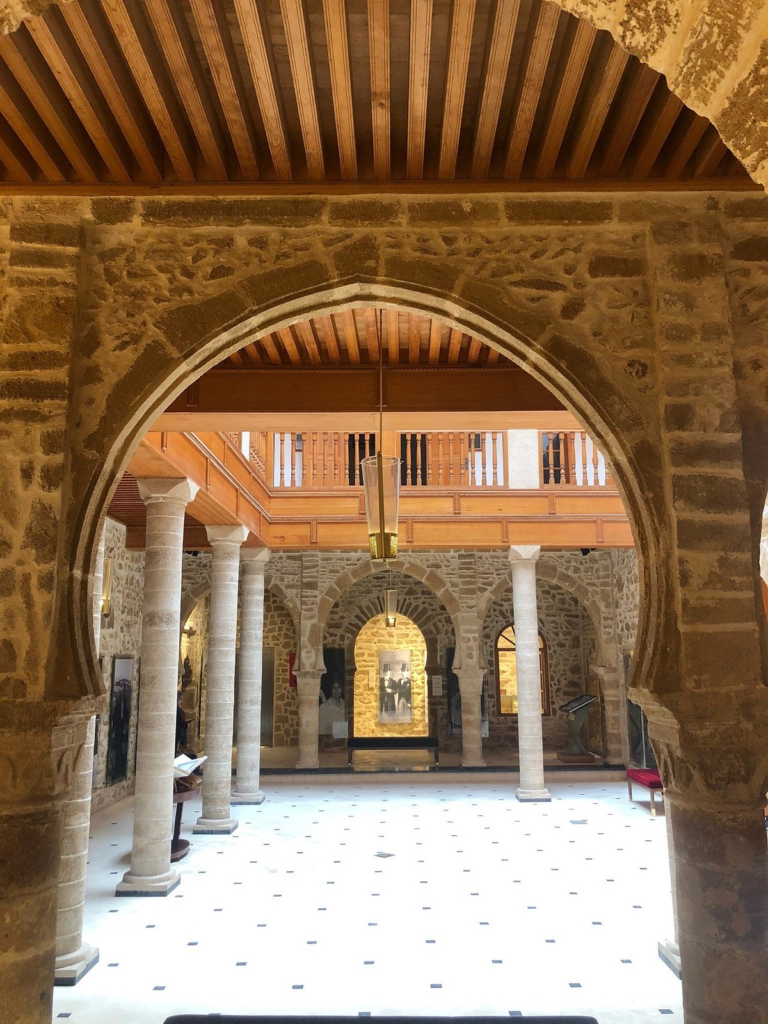
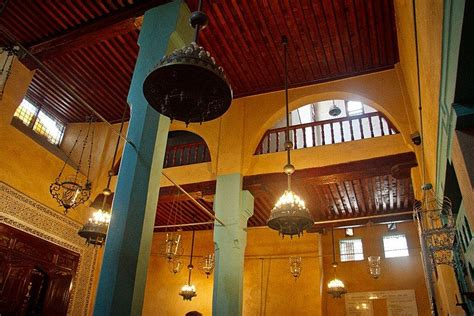
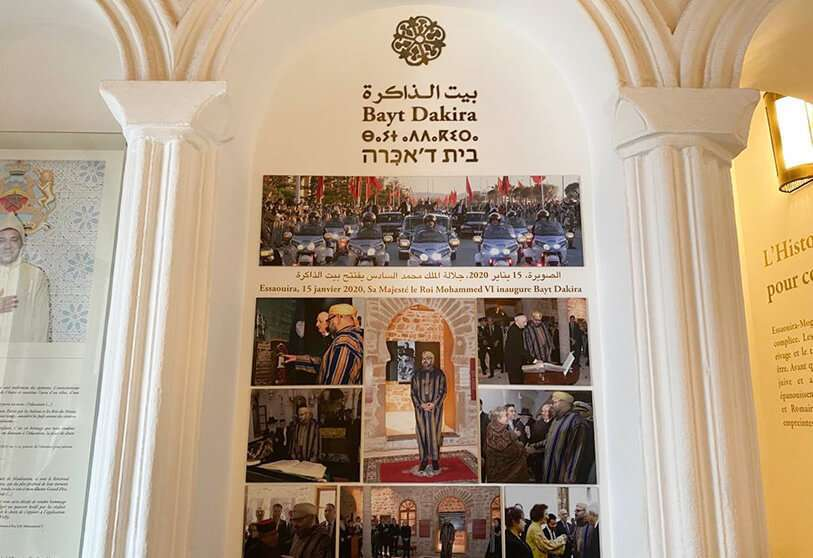
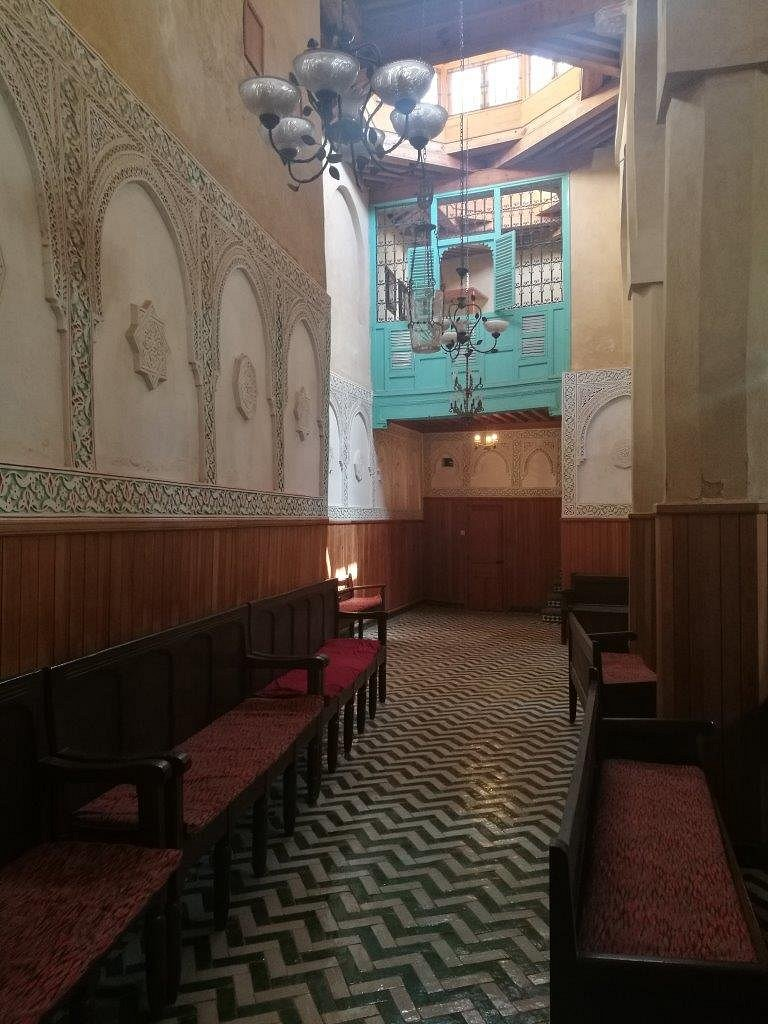
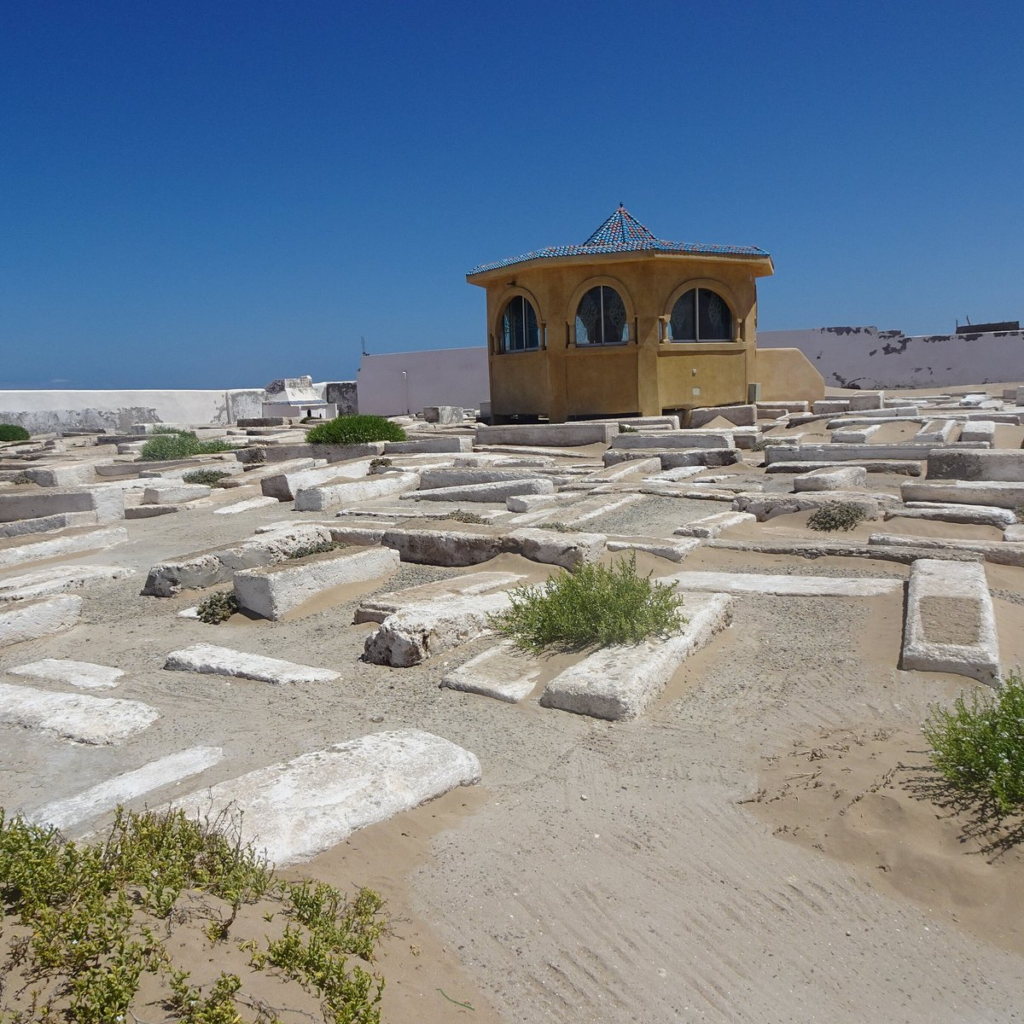
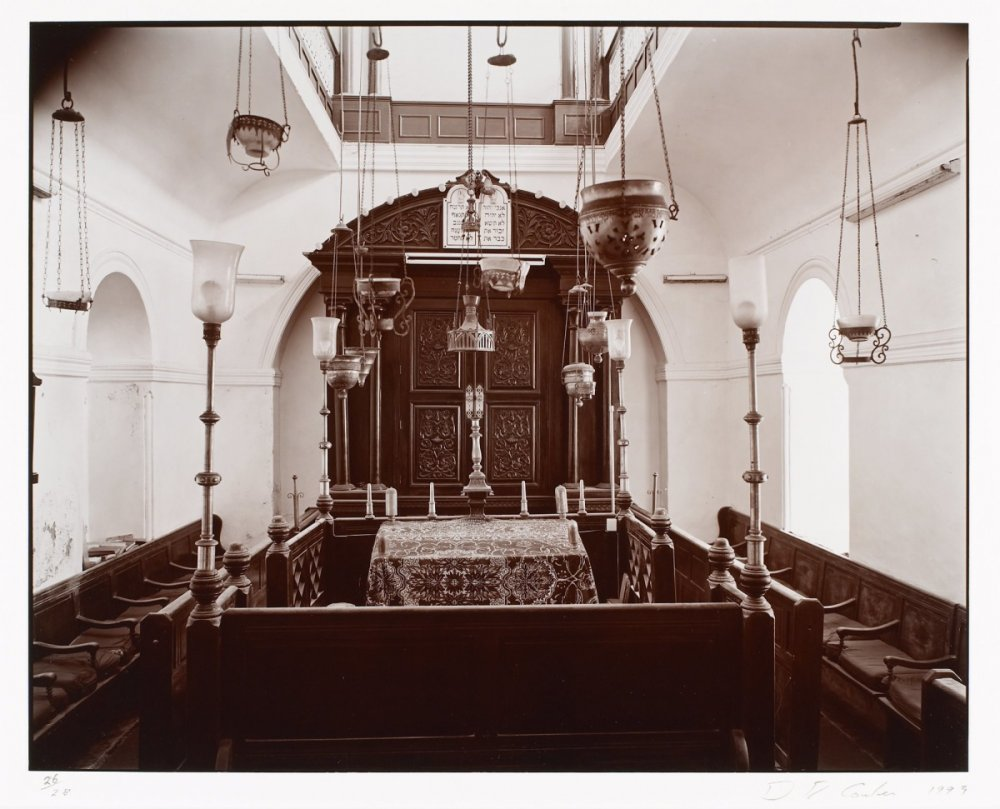
Within Morocco itself, Jewish heritage also remained present. Synagogues, cemeteries, shrines, old quarters, and archives continued to bear witness to a civilizational presence that shaped the nation for centuries. More importantly, Jewish memory increasingly came to be seen as part of Moroccan identity itself rather than as an external remnant. That recognition carries great symbolic force. It honors the truth that Jewish history in Morocco belongs to the national story in a full and organic way.
Why Jewish Morocco still speaks to the present
The story of Jewish Morocco feels so powerful today because it speaks beyond its own historical frame. It raises enduring questions about pluralism, identity, memory, and the human search for continuity in changing political worlds. It shows how a minority community can remain deeply itself while becoming inseparable from the wider culture around it. It shows how everyday coexistence is made less of grand declarations than of habit, exchange, mutual knowledge, and lived proximity.
Above all, it reminds us that belonging has emotional depth. Moroccan Jews did not simply reside in Morocco. They inhabited it through language, ritual, work, friendship, mourning, celebration, and inherited attachment. Even after departure, that bond survived. It survived because it had entered the soul of family memory and the cultural imagination of a people.
Jewish Morocco, then, is not merely a lost world. It is a living inheritance. It is a history of endurance that produced beauty, of difference that fostered closeness, of migration that never fully severed origin. Across pre-Islamic roots, Islamic centuries, Sephardic renewal, colonial change, and post-colonial dispersal, one thread remains unbroken: the quiet, dignified persistence of a community that helped make Morocco what it is.
Read more
- Moroccan cultural heritage
- North African Jewish communities
- post-colonial changes in Morocco