Houses for Rent in Kenitra: A Local Expert’s Perspective on the City’s Rental Market
Anyone who has worked in the property market of northern Morocco will tell you the same thing sooner or later: Kenitra often surprises people.
At first glance, the city rarely attracts the same attention as Rabat or Casablanca. It is quieter, less talked about, sometimes even underestimated by newcomers who pass through the region for the first time. Yet those who take the time to live here—or simply to search seriously for a house—often discover a city that offers something increasingly rare in Morocco’s major urban areas: space, accessibility, and a certain ease of living.
Over the past decade, Kenitra has gradually become one of the country’s most attractive rental markets. Students arrive for university studies, young professionals relocate for work opportunities, and families settle here after years spent in larger, more crowded cities. Many initially come for practical reasons. Quite often, they end up staying because the city offers a quality of life that feels both balanced and sustainable.
From a real estate professional’s point of view, the market for houses for rent in Kenitra reveals something particularly interesting. It shows how Moroccan housing continues to evolve without losing the architectural traditions and social habits that have shaped domestic life for generations.
For tenants searching for a home, understanding this balance makes all the difference. A rental decision here rarely depends only on the number of rooms or the monthly price. The structure of the house, the neighbourhood surrounding it, and even small architectural details all play a role in shaping daily life.
A Rental Market Shaped by Urban Expansion
Kenitra today is not the same city it was fifteen years ago. Anyone who knew the city in the early 2000s will immediately notice how much it has grown.
Part of this transformation comes from geography. Kenitra sits in a strategic position along Morocco’s Atlantic corridor. With Rabat only a short train ride away and Tangier connected through the high-speed rail network, the city has gradually become an attractive residential alternative for people working across the region.
For example, it is now quite common to meet professionals who work in Rabat but prefer living in Kenitra. The commute remains manageable, while housing costs and living conditions often prove more comfortable.
Industrial development has also played an important role. New manufacturing zones and logistics centres around the city have created employment opportunities that continue to attract residents from across Morocco.
Real estate agencies see the effects of this growth every day. Rental demand has become more diverse. A typical week might include students looking for shared accommodation near the university, young engineers relocating for work assignments, and families seeking larger houses in quieter neighbourhoods.
What makes Kenitra particularly interesting is that this growth has not erased the city’s architectural diversity. In many expanding cities, new construction quickly replaces older housing styles, leaving entire districts filled with identical apartment blocks.
Kenitra has largely avoided that scenario.
The rental market still includes a wide variety of homes. Modern villas stand next to renovated traditional houses. Family residences built decades ago continue to attract tenants who appreciate their generous space and solid construction.
For renters, this variety creates real choice.
Moroccan Architecture Still Shapes the Home
One of the first things newcomers notice when visiting houses in Kenitra is that Moroccan architectural traditions remain strongly present.
Even in newer neighbourhoods, many homes incorporate elements that have been part of Moroccan residential design for centuries.
A good example is zellige tilework. These colourful geometric mosaics appear in many houses, sometimes decorating courtyards, staircases, or patios. They are not only beautiful but also practical, helping to keep floors cool during warmer months.
Another common feature is the use of arches in doorways and windows. These curved openings soften the structure of the house and create a natural flow between rooms. Rather than rigid rectangular layouts, spaces often feel open and connected.
Wood also plays an important role in Moroccan interiors. Cedar doors, sometimes carved by hand, frequently mark the entrance of a house. Inside, wooden beams or decorative panels add warmth and texture.
From a property professional’s perspective, these details matter more than one might think. Many tenants today actively look for homes that reflect Moroccan identity rather than purely minimalist interiors.
A house with traditional features often feels more welcoming and authentic. It gives residents the sense that they are living in Morocco, not simply occupying a modern building that could exist anywhere.
The Courtyard: The Heart of the House
Among the most distinctive elements of Moroccan housing is the interior courtyard.
In traditional houses, rooms are arranged around a central open space. From the outside, the house may appear relatively closed, with high walls protecting privacy. Yet once inside, the atmosphere changes completely.
The courtyard becomes the centre of the home.
Architecturally, it allows natural light to enter the house while encouraging air circulation, which is especially valuable during warm seasons.
But its real importance lies in how people use the space.
In many families, the courtyard becomes the place where daily life naturally gathers. Children play there in the afternoon. Adults share tea in the evening. During warmer months, meals sometimes move outdoors.
Property agents often notice the same reaction when showing such houses to tenants unfamiliar with the concept. At first, the courtyard appears unusual. After a few minutes, it becomes the feature everyone talks about.
It introduces something that modern urban housing sometimes lacks: a sense of calm and intimacy.
The city may continue outside the walls, but inside the courtyard, life feels quieter and more private.
Modern Comforts for Today’s Tenants
Of course, tenants today also expect a certain level of modern comfort.
Over the past decade, many houses in Kenitra have been renovated or redesigned to meet these expectations.
Modern kitchens have become standard features in many rental properties. Reliable internet connectivity is equally essential, particularly for professionals working remotely and students studying online.
Heating systems and improved insulation are also increasingly common in newer villas or renovated homes.
From a real estate perspective, the most successful properties are usually those that manage to combine these modern conveniences with traditional architectural character.
Tenants rarely want to sacrifice comfort. At the same time, many appreciate houses that retain a sense of place and cultural identity.
Kenitra’s housing market reflects this balance remarkably well.
A tenant may rent a house with modern appliances, reliable infrastructure, and contemporary amenities, while still enjoying a courtyard, decorative tiles, or handcrafted wood details that connect the property to Morocco’s architectural heritage.
The Importance of Neighbourhood Choice
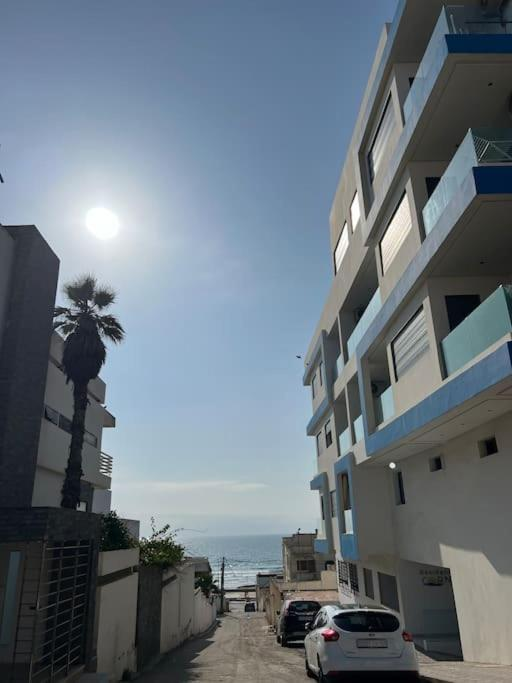
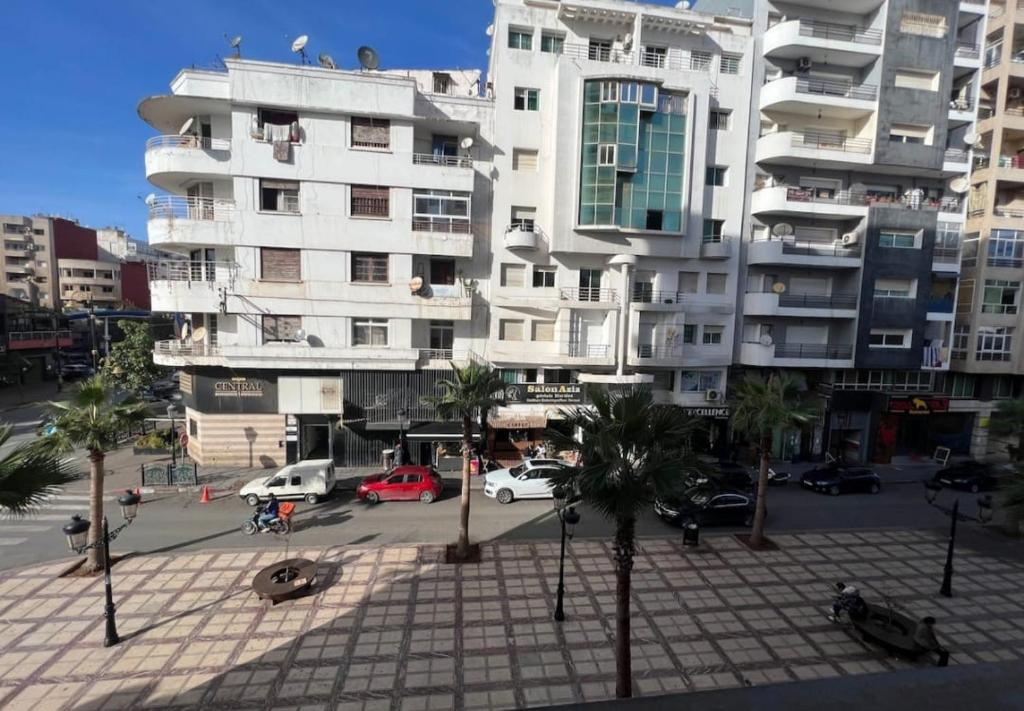
In Kenitra, the search for a house usually starts with a more essential consideration: which neighbourhood best matches the lifestyle a tenant is looking for? Two properties may seem comparable in terms of size, layout, or monthly rent. Yet once placed in different parts of the city, they can offer very different living experiences. Here, the surrounding area influences daily rhythm just as deeply as the house itself.
That is one of the first things local property professionals tend to explain to newcomers. A rental decision in Kenitra is rarely reduced to the walls of the property. It also involves the atmosphere outside the front door, the ease of moving around, the profile of nearby residents, the quality of local services, and the general pace of the area.
Some tenants arrive with very practical priorities. They want quick access to the train station, an easy route to Rabat, or proximity to a university campus. Others are guided by a more personal expectation: they are looking for a quieter environment, a more family-oriented setting, or simply a district where daily life feels more settled and more pleasant.
This is where Kenitra becomes particularly interesting. The city does not offer one single residential identity. It offers several.
Certain neighbourhoods are appreciated for their accessibility and structure. Streets are broader, services are close at hand, and the urban layout feels clear and efficient. These areas often appeal to professionals, civil servants, and tenants who value convenience above all. A young executive commuting several times a week, for instance, will often favour a district that allows a smooth departure in the morning and an easy return at the end of the day.
Elsewhere, the atmosphere changes. In more established residential areas, the city reveals a softer, more local face. Small shops remain active throughout the day, neighbours know one another, and the daily routine feels more rooted in long-standing habits. Here, renting a house offers something beyond accommodation: it offers a sense of belonging. Families tend to appreciate these districts because they create reassuring routines for children, from the corner bakery in the morning to the familiar faces encountered on the walk home.
There are also newer zones that attract households looking for modern standards: more recent construction, improved road access, better parking conditions, and a residential environment that feels cleaner and more orderly. These sectors often appeal to tenants seeking comfort, privacy, and contemporary amenities without giving up the advantages of city life.
From an agency perspective, this stage of the search is often decisive. A well-chosen neighbourhood can transform the entire rental experience. A beautiful house in the wrong setting may feel inconvenient after only a few weeks. By contrast, a property that fits naturally into the tenant’s routine usually proves far more satisfying over time.
That is why experienced agents in Kenitra tend to ask detailed questions before recommending a district. Do you work in Rabat? Are you moving with children? Do you prefer a lively environment or a quieter one? Do you want to be close to shops, schools, cafés, or the station? These questions may seem secondary at first, yet they often determine whether a tenant truly feels at home.
Living in Kenitra: The Experience Beyond the House
A house may be the starting point of the rental experience, though life in Kenitra quickly extends far beyond the property itself. What many tenants remember after a few months is not only the number of rooms or the style of the façade. They remember the mood of the street in the early morning, the convenience of the nearby market, the warmth of local interactions, and the particular balance the city offers between movement and calm.
Kenitra has a rhythm of its own. It feels active, yet rarely overwhelming. The city moves, works, grows, and modernises, while preserving a form of everyday simplicity that many residents find deeply appealing.
In the morning, neighbourhood life begins early. Bakers lift their shutters, cafés prepare the first coffees of the day, and residents step out for bread, milk, or a quick stop at the local grocery. In some districts, fresh produce arrives in small quantities several times a week, giving local shopping a more immediate, more human quality than what one finds in purely commercial zones.
These details may appear modest, though they matter enormously in practice. They define the comfort of ordinary life. A tenant does not live only inside a house. One lives between the house and the street, between the market and the café, between work obligations and moments of pause. In Kenitra, that in-between space often feels welcoming.
This is especially true for newcomers. Someone arriving from another Moroccan city—or from abroad—often discovers that Kenitra is easier to inhabit than expected. The city offers the infrastructure of a growing urban centre, yet preserves a scale that remains manageable. Distances are reasonable. Daily errands stay simple. Familiar habits form quickly.
For many families, this ease is one of the city’s strongest advantages. School runs, shopping, visits, and weekend outings can be organised without the constant pressure associated with larger metropolitan areas. For working professionals, the city offers a more breathable alternative to the intensity of Rabat or Casablanca. For students, it provides a lively setting without the disorienting scale of a much larger city.
And then there is the atmosphere itself. The call to prayer punctuates the day in a way that gives the city a recognisable cadence. Local cafés fill gradually rather than all at once. Conversations take place at street level. People stop, greet one another, exchange a few words, and continue on their way. This human density, more social than anonymous, gives many neighbourhoods in Kenitra their enduring charm.
From a real estate standpoint, this dimension is essential. A successful rental is not measured only by the quality of the property. It is measured by the quality of life built around it.
Why Kenitra Continues to Attract New Residents
Kenitra’s growing appeal is no coincidence. Over the years, the city has positioned itself as one of the most attractive residential alternatives in north-western Morocco. This momentum is driven by a combination of practical, economic, and lifestyle factors that continue to broaden its tenant base.
The first advantage is geographical. Kenitra enjoys a strategic position along one of the country’s most important corridors. For professionals connected to Rabat, Tangier, or Casablanca, the city offers valuable mobility. Rail and road links support regular travel while allowing residents to avoid the cost and pressure associated with larger capitals.
This accessibility has changed the profile of many tenants. Today, it is common to meet people who work in one city and choose to live in Kenitra for the quality of space it offers. They are looking for more than a commuting solution. They are looking for a city where daily life remains financially and personally sustainable.
The second factor is urban development. Kenitra has expanded in a way that continues to attract new residents without losing all sense of proportion. New residential areas, improved infrastructure, and stronger economic activity have increased the city’s credibility in the eyes of investors, landlords, and long-term tenants alike.
The presence of universities also plays a major role. Students, lecturers, administrative staff, and young graduates contribute to a steady demand for housing. This academic presence gives certain parts of the city a youthful and dynamic energy, while also supporting local commerce, services, and transport activity.
There is also a more subtle reason behind Kenitra’s attractiveness: the city feels livable. This may sound simple, though in real estate terms it carries considerable weight. People do not choose a city only for work. They choose it for the life that becomes possible there. In Kenitra, many residents find an equilibrium that proves harder to secure elsewhere: access to employment, acceptable travel times, manageable housing costs, and a day-to-day environment that remains relatively comfortable.
A family may appreciate the chance to secure a larger home than the same budget would allow in Rabat. Working professionals often value the prospect of returning each evening to a calmer, more breathable environment. Expatriates and newcomers, meanwhile, tend to discover a city that feels both welcoming and firmly rooted in local life.
In short, Kenitra attracts because it answers a very contemporary need: the search for urban opportunity without the exhaustion of oversized city life.
Renting in Kenitra: More Than a Property Decision
From a purely technical point of view, renting a house involves familiar criteria: budget, location, size, condition, access, and contract terms. Yet in Kenitra, the decision often carries a broader significance. Over time, many tenants come to realise that they have chosen more than a property. They have chosen a setting, a rhythm, and in many cases, a new way of living the city.
This is especially true in a market where architecture still reflects cultural values. Houses in Kenitra are rarely neutral spaces. Even the most contemporary ones often preserve certain principles that remain central to Moroccan residential life: a concern for privacy, generous living areas for receiving guests, a strong distinction between family space and public-facing space, and decorative details that create warmth rather than mere functionality.
These qualities matter because they shape the emotional experience of a home. A house is appreciated for its structure, of course, though also for the feeling it creates once inhabited. Does the home offer a sense of calm? Can it adapt naturally to family routines? Is it suited to receiving guests, unwinding at the end of the day, working comfortably, or bringing people together? These are often the questions that truly determine whether a rental feels right.
For this reason, experienced property advisers rarely present Kenitra as a city of simple transactions. They present it as a city of residential possibilities. A tenant may come for practical reasons—a transfer, a new job, a university placement—and remain because the city proves easier, warmer, and more balanced than expected.
That is perhaps the most accurate way to understand the local rental market. In Kenitra, a house does not serve only as accommodation. It becomes part of a wider residential experience shaped by neighbourhood life, local culture, urban accessibility, and the enduring appeal of Moroccan domestic traditions.
For many residents, that combination is precisely what gives the city its value.

Kenitra House Rental Matcher
Compare your lifestyle, budget, and housing preferences to find the most suitable rental profile in Kenitra.
Read more
- Moroccan architecture
- living in Kenitra
- Moroccan hospitality culture
- Kenitra neighborhoods explored
- traditional courtyard homes