Diplomatic Note Generator in Word and PDF
Use the Diplomatic Note Generator to create clear, properly structured diplomatic notes in just a few clicks—ready to export in Word and PDF formats. Instead of starting from a blank page, you follow a guided workflow that helps you set the context, choose the tone, and format your message according to diplomatic writing standards.
Whether you are preparing an official communication, a formal request, or a protocol note, the generator turns your inputs into a clean, ready-to-send document. Simply fill in the fields, review the preview, and download your note instantly in Word or PDF. It is fast, discreet, and built for real diplomatic and institutional use—so you can focus on the message, not the formatting.
Online Diplomatic Note Generator: Build a Note Verbale and Export to Word or PDF
A Quiet Exchange in an Ornate Hall
In a softly lit room hung with old tapestries and that familiar scent of polished, time-worn wood, an assistant steps forward and slips a folded sheet of cream paper into a diplomat’s hands. The gesture is small—almost effortless—but it lands with the calm gravity of ceremony. No microphones. No dramatic pause. Just a quiet exchange that everyone in the room understands.
At first glance, it’s only a page. But a diplomatic note is never just a page. It carries the weight of habits built over centuries: how to speak firmly without humiliating, how to disagree without closing the door, how to be clear without turning a sentence into a provocation. In diplomacy, words don’t merely describe reality—they shape what can happen next. That is why the phrasing is careful, why the tone is controlled, why even the most ordinary line feels deliberately placed.
The Quiet Architecture Behind Every Line
This is the kind of writing where “small” choices aren’t small at all. A greeting can signal warmth—or distance. A verb can soften tension—or sharpen it. The structure itself matters: a brief opening to set the frame, a clean statement of the point, a respectful request, a closing that keeps the relationship intact. It’s etiquette, yes—but it’s also strategy, because it protects dialogue when emotions, pride, and politics are all in the room at once.
And behind the formality, there are people. People trying to keep channels open while pressure builds. People doing the slow work of making conversation possible when it would be easier to escalate, dismiss, or walk away. The note becomes a kind of bridge: official enough to matter, restrained enough to avoid a rupture.
That’s why these documents endure. While headlines chase the loud moments—summits, speeches, confrontations—diplomacy often advances through quieter steps. A carefully drafted note, handed over without spectacle, can calm a situation, test a proposal, or simply remind the other side: we are still speaking.
The Cultural Roots of Diplomatic Communication
Diplomatic notes serve as official written communications between states, but their significance transcends mere formality. They are a cultural artifact reflecting the values, protocols, and historical contexts of the societies from which they arise. These notes follow conventions born from long-standing diplomatic practices, blending politeness with strategic messaging.
Consider the language choices: the tone is generally formal and indirect, a nod to the art of persuasion without confrontation. The diplomacy embedded in language mirrors cultural preferences for harmony, respect, and nuanced expression. Such style varies across regions, echoing the societal fabric of each nation.
The Ritual and Etiquette Behind the Note
Sending and receiving diplomatic notes is almost ritualistic. The method of delivery can carry weight—couriers, diplomatic pouches, or formal handovers in person all offer layered meanings. These protocols symbolize respect between nations, ensuring the note is treated with solemnity and care.
In many cultures, the way these notes are folded, the type of paper used, and even the choice of ink matter. They mirror traditional arts and calligraphy, anchoring the note in a cultural aesthetic that enhances the conveyed message.
Historical Echoes in Modern Notes
Tracing back to eras of monarchies and empires, diplomatic notes once bore seals and handwriting reflecting a ruler’s personal authority and the weight of state power. Today, while signatures and letterheads have evolved, the inherited formality connects diplomats across generations.
This continuity can be observed in kingdoms like Morocco, where the Alaouite dynasty has maintained a sophisticated tradition of statecraft. Understanding such dynastic histories enriches our appreciation for contemporary diplomacy.
The Diplomatic Note as Cultural Bridge
Far from being cold instruments, diplomatic notes offer windows into the cultural identities of nations. They allow countries to communicate positions while honoring diverse customs. This delicate balance helps maintain peaceful relations amid complex global interactions.
Moreover, diplomatic notes can include references to shared history or cultural markers, reinforcing bonds. Their role as cultural emissaries complements the work of diplomats on the ground who navigate multicultural landscapes every day.
Beyond Politics – The Human Dimension
At its core, diplomacy is a human endeavor, and diplomatic notes reflect this truth. They are expressions of respect, understanding, and the hope for mutual recognition. The elegance of the note’s language and formality showcases the human desire to resolve tensions creatively and respectfully.
As a cultural artifact, the diplomatic note reminds us that international relations blend power with artfulness. This interplay elevates the communication from simple messaging to a performance of cultural values and shared aspirations.
The Living Tradition and Its Future
In an age dominated by instant digital communication, the diplomatic note endures, adapting but preserving its symbolic significance. It connects the ephemeral digital exchange with lasting cultural heritage, reminding diplomats and citizens alike of the weight words carry in shaping history.
The continued respect for such traditions encourages us to seek deeper understanding beyond surface-level interactions. It also inspires interest in other cultural expressions, such as the rich musical heritage of nations, which like diplomatic notes, communicate shared identity and emotion across borders.
Diplomatic Note Generator – How to Use this tool?
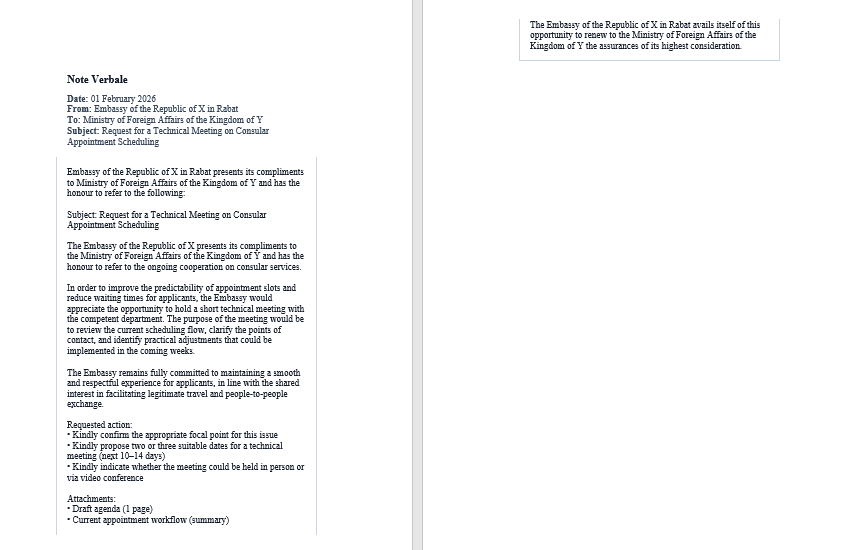
This tool helps you draft a diplomatic note with a clean structure, correct courtesies, and an export workflow that works in real life: Word for editing and PDF for sending/archiving.
1) Choose your note format
- Note Verbale (third-person): the most common official format. It writes in a formal, institutional voice (e.g., “The Embassy of … presents its compliments…”).
- Diplomatic Note (first-person): a more direct voice for certain contexts, while keeping diplomatic courtesy.
2) Fill in the essentials
Start with the fields that shape the whole document:
- Issuing Mission / Ministry: who sends the note (Embassy, Ministry, Permanent Mission).
- Recipient: who receives it (Ministry, Mission, Department, Office).
- Subject: one line that states the purpose clearly.
Tip: a strong subject is short and neutral (request, notification, arrangement, clarification).
3) Write the body like a calm staircase
In the Body box, write in a simple progression:
- Context (one or two lines)
- Main message (what you are saying)
- Request (what you want them to do)
- Proposed next step (how to move forward)
Keep sentences short. Avoid emotional language. Prefer “kindly” and “would appreciate” over pressure wording.
4) Add the action sought
In Request / Action sought, list what you want the recipient to do as bullets, for example:
- Confirm availability
- Provide written clarification
- Facilitate the requested arrangement
This section is the easiest part for the other side to answer—so it increases your chances of getting a response.
5) Add attachments (optional)
If you are sending supporting documents, list them in Attachments, such as:
- Draft agenda
- List of participants
- Supporting note / background
It keeps the note tidy and avoids burying details inside the body.
6) Select the closing courtesy
The tool includes standard diplomatic closings. In most cases, keep the default:
- “…renews the assurances of its highest consideration.”
The closing is not decoration—it’s a diplomatic “soft landing” that keeps the relationship intact.
7) Export to Word or PDF
- Download Word: exports a
.docfile you can open and fine-tune in Microsoft Word. - Print / Save as PDF: opens the print dialog so you can choose Save as PDF (perfect for official sending, archiving, or sharing).
Shortcut: Ctrl + Enter exports the Word file instantly.
8) Quick quality check before sending
Before you share the note, verify:
- Names of institutions are correct
- Subject is neutral and precise
- Request is clear and actionable
- Tone is respectful and non-accusatory
- Attachments match what you will include
Diplomatic Note Generator for Word and PDF: Draft an Official Note in Minutes
Diplomatic Note Generator
Draft a properly structured diplomatic note in minutes, then export it as a Word file or print it as a PDF. Built for clean language, correct courtesies, and a professional layout.
Diplomatic Note
Subject
Add a subject.
Note
Your note will appear here.
Closing
—
Diplomatic writing is never just about putting words on a page — it is about shaping relationships through language. A well-crafted diplomatic note can open doors, ease tensions, and keep dialogue alive even when positions differ. In international affairs, tone is not decoration; it is strategy. The way a message is framed often determines whether it will be received as cooperation, pressure, or respect.
This article matters because it focuses on how diplomacy actually moves forward in practice — not through grand speeches, but through precise, courteous, and intentional communication. Understanding the method behind a diplomatic note means understanding how governments signal intentions, request action without offense, and maintain dignity on all sides. Mastering this manner of writing is more than a technical skill; it is a quiet form of influence that keeps conversations possible when they matter most.
Method Box: The 6-Step Diplomatic Note Blueprint
Use this as your repeatable drafting routine. It keeps the note calm, precise, and easy to answer—without losing diplomatic courtesy.
Write it like a staircase
State the context in one or two lines. No history lesson—just the reason this note exists.
One clean paragraph for the core message. If it feels emotional, rewrite it until it sounds neutral.
Turn your ask into something the recipient can actually do: confirm, propose dates, designate a focal point, share a clarification.
Suggest a practical path forward (call, meeting, exchange of drafts). Momentum matters.
Do not bury supporting documents inside the body. Label them so the note stays readable.
Use the standard formula unless you have a strong reason not to. The closing is your “soft landing.”
Before you send it
- Names: institutions and titles are accurate (no shortcuts).
- Subject line: neutral and precise (request / arrangement / clarification).
- One ask: avoid stacking five requests in one note.
- Tone: firm without blame, respectful without weakness.
- Answerability: the other side can respond with a clear yes/no or next step.